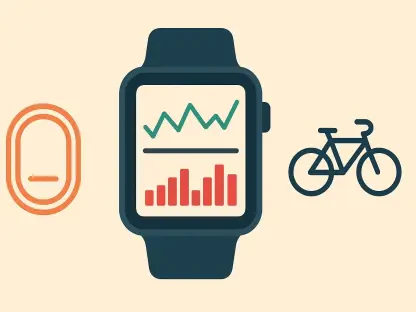

The evolution of personal health monitoring has reached a pivotal juncture where the distinction between consumer gadgets and medical instruments is becoming increasingly blurred. Devices like the Apple Watch and the Oura Ring have shifted from being expensive novelty items to becoming ubiquitous fixtures in the lives of millions. As of the current landscape, ownership of these wearables among adults in the United States has surged by approximately 36 percent, reflecting a widespread cultural movement toward proactive wellness management. This trend signifies a fundamental change in how individuals perceive their physiological data, moving from reactive treatments to real-time observations of heart rate, oxygen saturation, and sleep efficiency. However, a persistent integration gap remains a significant obstacle to full clinical utility. Despite the wealth of data generated every second, very few users actually bring these insights into the examination room, leaving a massive repository of personal health information underutilized during consultations.
Clinical Utility: Bridging the Divide Between Data Collection and Action
Healthcare professionals generally welcome the surge in patient engagement that accompanies the use of sophisticated wearable devices. When patients monitor their own biometric data, it creates a unique collaborative environment where individuals take greater responsibility for their long-term wellness and preventive care strategies. Doctors often view this heightened interest as a major victory for the patient-physician relationship, as it encourages more informed questions and a deeper commitment to prescribed lifestyle changes. This shift toward a participatory model of medicine allows for a more nuanced conversation about daily habits and their immediate physiological impacts. However, the sheer volume of data can also lead to misinterpretations if not properly contextualized within a broader clinical framework. The challenge lies in translating these digital insights into meaningful outcomes that align with traditional diagnostic procedures and treatment protocols. By fostering this engagement, wearables serve as a bridge that connects daily living with professional medical guidance.
Despite the enthusiasm for patient participation, a clear boundary exists between personal feedback metrics and formal medical-grade diagnosis. While many high-end wearables feature FDA-cleared components such as electrocardiograms, other popular metrics like sleep scores or recovery ratings are often viewed with skepticism by the clinical community. These proprietary algorithms are guarded as trade secrets by technology companies, making it nearly impossible for independent medical researchers to validate them as legitimate diagnostic tools. A doctor may trust a heart rate reading but may dismiss a proprietary score that claims to measure readiness without transparent physiological evidence. This lack of transparency creates a bottleneck in the diagnostic process, as physicians cannot rely on black box data to make critical decisions regarding a patient’s health. For these devices to move from the realm of fitness tracking to true clinical integration, there must be a move toward open-standard validation that satisfies the rigorous requirements of modern evidence-based medicine.
Pattern Recognition: Understanding the Importance of Longitudinal Trending
A fundamental strategy for deriving value from wearable technology is to prioritize longitudinal trending over isolated data points or daily fluctuations. Identifying how specific habits, such as alcohol consumption or chronic stress, affect a person’s baseline health over several months provides significantly more clinical value than reacting to a single spike in heart rate. This long-term perspective allows both the user and the healthcare provider to identify subtle shifts in health that might otherwise go unnoticed during a standard annual checkup. By smoothing out the temporary noise caused by a poor night’s sleep or an unusually active day, longitudinal data reveals the underlying physiological truth of a person’s lifestyle. Focusing on these broader patterns helps to mitigate the anxiety often associated with minor data anomalies, which are frequently benign. This big-picture approach is essential for turning a stream of raw numbers into a strategic roadmap for health improvement, enabling users to make informed adjustments to their daily routines.
New users of health-tracking technology must also account for an initial settling-in period that can temporarily distort the accuracy of the recorded data. This psychological phenomenon, often referred to as the Hawthorne effect, suggests that the mere awareness of being monitored can lead to unnatural changes in a person’s behavior, such as sleeping more intentionally or exercising harder than usual. During the first few weeks of ownership, the device is essentially capturing a performance rather than a true physiological norm. It is critical to allow the technology several weeks to establish a consistent baseline that accurately reflects a person’s typical activity levels and resting heart rate. Only after this initial adjustment phase can the resulting data be considered a representative sample of the user’s actual lifestyle. Understanding this behavioral curve prevents the misinterpretation of early data spikes as permanent improvements or causes for concern. Patience in the initial stages of device adoption ensures that the long-term data pool remains robust and reliable.
Systemic Integration: Navigating the Technical Barriers to Seamless Care
The medical industry is currently grappling with a massive data flood that complicates the integration of consumer-generated metrics into Electronic Health Records. Clinicians are often overwhelmed by the prospect of reviewing thousands of individual data points collected by various devices, most of which lack a standardized format for medical review. To be truly useful, this raw information must be distilled into refined, actionable insights rather than presented as a chaotic list of every heart rate reading from the preceding year. The future of this integration likely depends on the implementation of advanced artificial intelligence systems designed to filter these massive datasets into concise summaries. These AI tools could highlight significant deviations from a patient’s established baseline, alerting doctors only when a metric warrants clinical intervention. Without such a filtering mechanism, the potential for wearable data to enhance patient care remains buried under a mountain of irrelevant information. Streamlining this data pipeline is essential for moving toward a more efficient healthcare system.
The successful transition to data-driven wellness required consumers to choose their devices based on specific medical goals rather than marketing trends. It became evident that consulting with a primary care provider before purchasing a wearable ensured the technology functioned as a meaningful tool for health improvement. Stakeholders recognized that the value of the hardware was entirely dependent on its ability to provide accurate, validated metrics that aligned with personal health objectives. The medical community shifted toward a model where digital data served as a proactive strategy for well-being, rather than a source of confusion. Patients who focused on long-term physiological trends found that they could make more informed decisions about their daily habits and medical treatments. This strategic approach eventually bridged the gap between personal tracking and professional care, allowing for a more cohesive health management experience. By prioritizing clinical utility over aesthetic appeal, the industry moved closer to the goal of universal health integration.