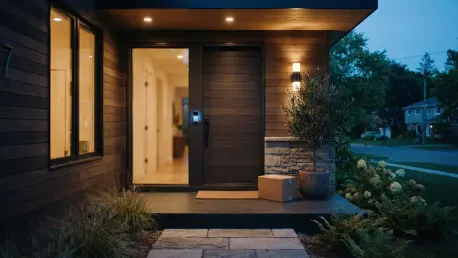

Utilizing Ultra Wideband technology, the collection’s smart deadbolt provides centimeter-level precision to ensure doors only unlock when a resident is standing directly at the entrance. This breakthrough marks a definitive departure from previous iterations of domestic security, where proximity sensors often struggled with the ambiguity of a user’s exact location, leading to accidental unlocks while a car was still being parked in the driveway. The introduction of the Apple Home Collection signals a fundamental transformation in how modern living spaces are conceptualized, shifting from a collection of isolated gadgets to a unified architectural layer. By moving beyond the role of a mere software facilitator, the company has entered the physical realm of hardware manufacturing through strategic alliances with industrial veterans LG Electronics and Schneider Electric. This transition addresses the historical frustrations of the smart home market, specifically targeting the friction caused by incompatible protocols and the lack of a cohesive design language across different household systems.
The strategic pivot toward dedicated hardware is not merely about aesthetic consistency but represents a deeper commitment to solving the fragmented nature of the Internet of Things. For years, homeowners have navigated a labyrinth of third-party applications, each requiring separate account registrations and proprietary cloud connections that often compromise privacy. The new collection seeks to eliminate this complexity by offering a “zero-app” setup experience where every device is recognized and configured instantly through a native interface. This holistic approach ensures that the hardware is not an afterthought but is deeply integrated with the operating systems that millions of people already use daily. By curating a selection of premium accessories that range from climate control to visual surveillance, the initiative provides a comprehensive blueprint for a domestic environment that prioritizes the user’s peace of mind and operational simplicity above all else.
A New Philosophy of Domestic Technology
Privacy and Local Intelligence as a Standard
The core philosophy driving this hardware expansion is the concept of “privacy by design,” which elevates security from a software feature to a foundational hardware requirement. In an era where data breaches and the unauthorized harvesting of domestic activity have become prevalent, the Apple Home Collection implements end-to-end encryption for every interaction within the household. This means that whether a resident is checking a live video feed or adjusting the bedroom temperature, the data packets are encrypted at the device level and can only be decrypted by the authorized user’s personal devices. Neither the manufacturing partners like LG nor the service providers themselves possess the keys to access this information. This architecture effectively creates a digital fortress around the home, ensuring that the most intimate details of a family’s daily routine remain strictly confidential and shielded from external surveillance or corporate data mining.
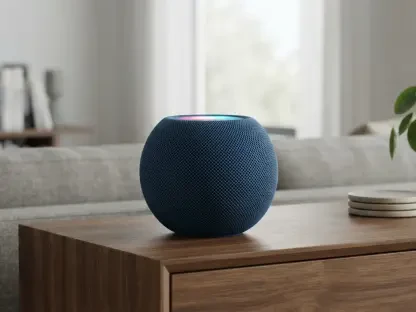
To facilitate advanced features like facial recognition and package detection without relying on vulnerable cloud servers, the system leverages local processing through dedicated home hubs and Private Cloud Compute. This shift toward edge computing ensures that the “intelligence” of the smart home resides within the physical walls of the residence. When a security camera identifies a familiar face or a delivery driver, the complex algorithmic analysis is performed locally on an Apple TV or HomePod, rather than being transmitted to a distant server farm. This not only significantly reduces latency, allowing for near-instantaneous notifications, but also provides a robust layer of anonymity. By processing sensitive biometric and behavioral data at the source, the system offers the benefits of modern artificial intelligence while completely bypassing the privacy risks associated with traditional cloud-based smart home platforms.
The collaborative model adopted for this initiative represents a strategic masterstroke in industrial engineering, blending high-end consumer electronics design with heavy-duty reliability. By partnering with Schneider Electric, a global leader in energy management and automation, the company ensures that its thermostats and power monitors meet the rigorous standards of professional electrical contractors. Similarly, the partnership with LG Electronics brings world-class optical engineering to the security camera lineup, offering a level of visual clarity that exceeds the typical plastic-lens consumer grade. This synergy allows the tech giant to maintain its signature minimalist aesthetic and intuitive user interface while benefiting from the deep manufacturing expertise of its partners. The result is a suite of hardware that feels like a permanent part of the home’s infrastructure rather than a disposable tech gadget, appealing to homeowners who value both performance and longevity.
Advanced Connectivity and Seamless Automation
The underlying technical architecture of the collection relies on the modern Thread and Matter protocols to create a resilient and self-healing network. Unlike traditional Wi-Fi-based smart homes that often suffer from congestion or “dead zones,” Thread establishes a low-power mesh network where each plugged-in device acts as a relay point for others. This means that as more accessories are added to the home—such as smart plugs or light switches—the overall network becomes stronger and more reliable. Matter compatibility further ensures that these devices can communicate across different platforms if necessary, though they are optimized to provide the highest level of performance within their native ecosystem. This focus on interoperability and network stability addresses one of the most significant pain points for early adopters, who frequently dealt with disconnected devices and the need for constant troubleshooting.
Artificial intelligence serves as the invisible conductor of this domestic orchestra, transforming the home from a collection of reactive tools into a proactive environment. Through the implementation of Apple Intelligence, the system learns the subtle nuances of a household’s schedule, such as the exact time the lights should begin to dim or the temperature should drop for optimal sleep. This is not based on rigid timers but on a fluid understanding of the resident’s habits and real-time context. For instance, if the system notices that the residents are still active in the kitchen later than usual, it will delay the “Good Night” automation sequence until it detects a shift toward the bedrooms. This level of sophisticated automation removes the burden of manual control from the user, allowing the technology to fade into the background while providing a more comfortable and efficient living experience.
The evolution toward a “Post-App” smart home suggests a future where the concept of individual gadgets is replaced by the concept of the “Scene.” In this new paradigm, the user no longer thinks about locking the door, turning off the lights, and setting the alarm as three separate actions. Instead, a single command or a detected change in occupancy triggers a coordinated response across diverse hardware types. When a resident activates the “Leaving Home” scene, the LG deadbolt engages, the Schneider thermostat enters eco-mode, and the outdoor cameras transition into a high-alert state. This level of orchestration is achieved through a single, unified interface that prioritizes the user’s intent over the technical specifics of the individual devices. This seamless integration ensures that the technology serves the lifestyle of the inhabitant, rather than requiring the inhabitant to adapt to the limitations of the technology.
Technical Breakdown of the Hardware Pillars
Home Monitoring and Visual Security
The collaboration with LG Electronics has resulted in a suite of monitoring tools that solve several of the most persistent issues in home surveillance, particularly regarding the “blind spot” phenomenon. The flagship video doorbell features a sophisticated dual-lens system designed to provide a comprehensive view of the entryway. While the primary high-definition lens captures visitors at eye level, a secondary downward-facing camera specifically monitors the area where packages are typically placed. This ensures that residents receive accurate notifications when a parcel arrives and can keep a constant watch on their deliveries until they are safely brought inside. By utilizing advanced machine learning, the doorbell can differentiate between a person, a pet, and a package, filtering out irrelevant movements and significantly reducing the frequency of unnecessary alerts on the user’s mobile devices.
Physical privacy is addressed through an innovative mechanical solution in the indoor camera units, which serves to alleviate the psychological discomfort many feel when a camera lens is present in private living areas. These cameras feature a precision-engineered tilting mechanism that physically rotates the lens into the device’s housing when the system is set to a “Home” or “Private” mode. Unlike software-based privacy modes that only disable the data stream, this physical shutter provides a clear visual confirmation to anyone in the room that the camera is incapable of recording. This design choice demonstrates a high level of empathy for the user’s need for personal space and represents a shift away from the “always-on” surveillance culture. It allows residents to enjoy the security benefits of indoor monitoring while maintaining total control over when and where the cameras are active.
For the exterior of the residence, the floodlight and outdoor cameras utilize professional-grade sensors and optics to provide superior visibility in all environmental conditions. These units offer color night vision that remains clear even in near-total darkness, allowing for much more accurate identification of individuals or vehicles. The integration with iCloud+ provides a seamless storage solution for video history, where recorded clips are analyzed locally and then stored with end-to-end encryption. The system’s ability to recognize familiar faces from a user’s photo library adds a layer of personalization to security notifications; instead of a generic “motion detected” alert, the user might receive a notification that a specific family member has arrived home. This deep integration between hardware, software, and personal data creates a security experience that is both highly effective and remarkably user-friendly.
Secure Access and Spatial Awareness
The Smart Deadbolt Lock is the centerpiece of the collection’s access category, representing a significant leap forward in spatial awareness technology for the home. By incorporating Ultra Wideband (UWB) chips, the lock can communicate with the user’s iPhone or Apple Watch to determine their exact position relative to the door. This allows for a completely hands-free entry experience that is far more reliable than traditional Bluetooth-based systems, which often suffer from signal interference or delayed responses. As the resident approaches the entrance, the lock recognizes the secure token stored on their device and engages the mechanism exactly as they reach the handle. This level of precision ensures that the door does not unlock prematurely while the user is still walking up the driveway, providing a perfect balance between modern convenience and rigorous security.
To ensure that the digital convenience does not become a liability during unforeseen circumstances, the lock is designed with multiple layers of redundancy. While the UWB hands-free entry is the primary method of access, the hardware also includes a sleek, capacitive PIN pad for guests or children who may not have a personal device. Additionally, the inclusion of NFC technology allows users to tap their phone against the lock for an “Express Mode” entry, similar to how one might use a digital transit card. For those who prefer traditional methods or in the event of a total electronic failure, a physical key slot remains available, discreetly hidden behind a magnetic cover. The lock also adheres to the new Aliro industry standard, which guarantees that the device remains fully functional and accessible through local communication protocols even if the home’s internet connection or cloud services are temporarily unavailable.
The aesthetic design of the access hardware reflects a “premium materials” philosophy, using high-quality metals and polymers that are built to withstand both the elements and heavy daily use. Available in sophisticated finishes such as Graphite, Silver, and White, the deadbolt is intended to complement a wide range of architectural styles, from modern minimalist to traditional. The focus on tactile quality and visual appeal ensures that the hardware does not look like a temporary technological add-on but rather a permanent, high-quality fixture of the home. This attention to detail extends to the internal motor, which has been engineered for silent operation, providing a smooth and premium feel that reinforces the overall quality of the collection. By prioritizing both form and function, the company has created an access solution that feels like a natural evolution of the door hardware that has existed for centuries.
Energy Management and Climate Control
In partnership with Schneider Electric, the collection introduces a smart thermostat that fundamentally changes the user’s relationship with their home’s energy consumption. Utilizing “Adaptive Temperature” technology, the device does not merely follow a static schedule; instead, it uses on-device intelligence to analyze the thermal characteristics of the building and the real-time habits of its inhabitants. It can detect when a room is likely to be occupied based on history and proximity sensors, adjusting the climate accordingly to ensure comfort without wasting energy on empty spaces. The interface is designed to be exceptionally intuitive, allowing users to make adjustments via voice commands or a simple touch, while the underlying algorithms work constantly to optimize performance and reduce the mechanical wear on the HVAC system itself.
The “Clean Energy Guidance” feature represents a significant advancement in sustainable domestic technology, allowing homeowners to align their energy usage with the health of the electrical grid. In regions where utilities provide data on the source of their power, the system can automatically shift energy-intensive tasks, such as heavy cooling or heating, to times when renewable energy sources like wind or solar are most prevalent. This “load shifting” not only helps to reduce the overall carbon footprint of the household but can also lead to substantial financial savings in areas with time-of-use electricity pricing. By providing clear, actionable insights through the Home app, the system empowers users to make more environmentally conscious decisions without requiring them to become experts in energy management or grid logistics.
To achieve a truly balanced environment, the collection includes modular sensors that monitor temperature, humidity, and air quality on a room-by-room basis. These small, unobtrusive units can be placed throughout the home to provide the thermostat with a complete picture of the indoor climate, rather than relying on a single reading from a main hallway. This prevents common issues like a second-floor bedroom remaining uncomfortably hot while the ground-floor living room is over-cooled. The sensors also monitor for subtle changes in air quality, such as the presence of volatile organic compounds or high levels of carbon dioxide, and can trigger air purifiers or ventilation systems as needed. This comprehensive approach to environmental control ensures that the home is not just a place of shelter, but a healthy and optimized living space that actively contributes to the well-being of its residents.
Logistics and the Future of the Ecosystem
Professional Installation and Network Resilience
One of the primary barriers to the widespread adoption of advanced smart home technology has always been the complexity of the “last mile”—the actual physical installation of the hardware. To address this, the initiative includes a robust partnership with professional service providers like ADT, offering homeowners the option of expert setup for more complex items like hardwired floodlights and smart deadbolts. This service ensures that the hardware is installed safely and configured correctly from the first day, providing a professional-grade experience for those who may not be comfortable with DIY electrical work. By offering this as a seamless part of the purchasing process, the company is effectively bridging the gap between high-tech gadgets and traditional home security, making the collection accessible to a much broader demographic of users who prioritize reliability over technical tinkering.
The collection also introduces a novel solution to the common frustration of maintaining network connectivity when household infrastructure changes. In the past, updating a Wi-Fi password or replacing a router often meant that every smart device in the home had to be manually reset and reconfigured—a tedious process that discouraged many from upgrading their home networks. The new Apple Home accessories solve this by utilizing a proximity-based credential update system. If a device loses its connection because of a network change, it can securely receive updated settings from the resident’s iPhone simply by being in close physical proximity. This self-managing approach to network resilience significantly reduces the long-term maintenance burden on the homeowner and ensures that the smart home remains functional and connected with minimal effort, even as the underlying technology evolves.
The global rollout of the collection is being executed through a strategic, phased approach that accounts for the varying regulatory and technical landscapes of different international markets. While the initial launch focuses on North America and the United Kingdom, where the necessary infrastructure for features like Clean Energy Guidance and professional installation is already in place, the company is working to expand availability throughout the rest of the world. This includes navigating complex discussions regarding data privacy and artificial intelligence integration in regions like the European Union. By taking a measured approach to global expansion, the company ensures that it can provide a consistent and high-quality experience for every user, regardless of their location, while adhering to the specific legal and cultural requirements of each individual market it enters.
The Value Proposition of a Unified Home
The premium pricing of the Apple Home Collection reflects a strategic bet that consumers are ready to invest in a more mature and reliable smart home experience. While budget-friendly alternatives have existed for years, they have often been marred by inconsistent performance, confusing interfaces, and questionable data practices. By positioning its hardware at the higher end of the market, the company is targeting individuals who view their smart home technology as a long-term investment in their property and their personal security. The integration with iCloud+ services further enhances this value proposition, providing a centralized platform for secure video storage and advanced AI features that grow more powerful over time. This creates a compelling ecosystem where the hardware and software work in perfect harmony to provide a level of utility that justifies the initial entry price.
Beyond the immediate benefits of convenience and security, the initiative is designed to influence the broader trajectory of the entire smart home industry. By setting a high bar for privacy, aesthetic design, and interoperability, the collection challenges other manufacturers to elevate their own standards. The success of this unified approach demonstrates that the future of domestic technology lies not in a collection of disparate gadgets, but in a cohesive system that is integrated into the very architecture of the home. As these products become more common in households worldwide, they are likely to drive a shift toward more sustainable and secure living environments. The long-term vision is one where the house itself becomes an intelligent partner in the resident’s daily life, managing complex tasks behind the scenes while allowing the inhabitants to focus on what matters most.
The realization of the “Unified Home” marks the beginning of an era where technology is no longer an intrusion into the domestic space, but a natural extension of it. The combination of industrial-grade engineering from leaders like Schneider and LG with the refined user experience of the tech giant creates a synergy that has been missing from the market for decades. This shift ensures that as we move deeper into the decade, our homes will become not only smarter but also safer, more efficient, and more responsive to our individual needs. The Apple Home Collection has successfully moved the conversation away from the technical specifications of individual sensors and toward the overall quality of life that a truly integrated home can provide. This transition represents the maturation of the Internet of Things, turning a collection of promises into a tangible, high-quality reality for modern homeowners.
Implementing a Cohesive Living Environment
The launch of this unified collection demonstrated that the maturation of the smart home required a fundamental shift toward hardware-software synergy and industrial collaboration. By moving away from a software-only strategy, the industry moved toward a model where privacy, reliability, and aesthetic quality were no longer mutually exclusive. Homeowners were encouraged to audit their existing domestic infrastructure and consider how a unified protocol like Thread could alleviate the persistent connectivity issues of the past. The strategic integration of professional installation services also proved to be a critical factor in moving these technologies from the enthusiast market into the mainstream, ensuring that the benefits of spatial awareness and adaptive energy management were accessible to a broader audience.
Moving forward, the primary consideration for anyone looking to modernize their residence was the long-term viability and security of their chosen ecosystem. The shift toward local processing and physical privacy safeguards established a new baseline for what consumers should expect from their devices, effectively ending the era of unsecured cloud-reliant hardware. For those seeking to transition into this new paradigm, the most effective first step was to prioritize foundational elements like secure access and energy management, which provided the most immediate and tangible benefits. This initiative ultimately proved that when technology is integrated with a focus on human-centric design and industrial-grade engineering, it ceases to be a distraction and instead becomes a seamless, invisible layer of the modern domestic experience.