
The rapid migration of consumer attention from wrist-worn wearables toward sophisticated optical interfaces represents the most significant paradigm shift in personal electronics since the introduction of the modern smartphone. While early iterations of smart eyewear struggled to overcome the hurdles of social acceptance and industrial design, the current technological landscape has matured to a point where high-performance sensors and artificial intelligence can finally reside within a standard spectacle frame. This transition is not merely about miniaturizing existing hardware but rather about fundamentally reimagining how users interact with their physical surroundings through a digital lens. As the market moves beyond simple notification mirrors, the demand for devices that offer genuine utility without sacrificing personal style has reached a critical peak, setting the stage for a new generation of high-stakes product launches.
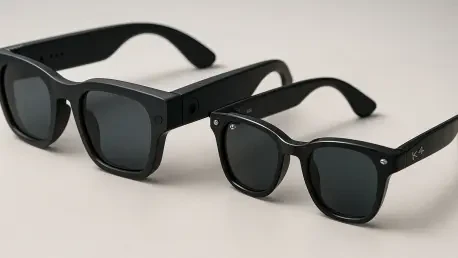
Industry observers and technical analysts have noted that Samsung is currently deep in development on a project known internally as the Galaxy AI Smart Glasses, a device that aims to serve as the definitive response to the current market leaders. Slated for a release during the summer of 2026, this hardware represents a formidable alliance between three of the most influential entities in the global technology sector: Samsung, Google, and Qualcomm. By merging Samsung’s world-class manufacturing and hardware design with Google’s cutting-edge software and Qualcomm’s specialized AR processing power, the initiative seeks to create a seamless bridge between a traditional fashion accessory and a powerful spatial computing platform. This powerhouse partnership suggests that the glasses will be more than a simple companion device; they are being positioned as a primary interface for the artificial intelligence era.
Benchmarking Against the Industry Standard
The emergence of the Ray-Ban Meta Gen 2 has established a rigorous baseline for what constitutes a successful consumer-grade wearable in the current year. By prioritizing a classic aesthetic that masks the sophisticated technology within, Meta has demonstrated that the key to mass adoption lies in invisibility rather than flashy, futuristic designs. These glasses have found success by offering a streamlined user experience focused on high-quality audio, basic AI interactions, and social-first content creation, all at a price point that makes them accessible to the general public. For Samsung to effectively enter this space, its engineers must find a way to exceed these capabilities while maintaining a form factor that does not feel overly technical or cumbersome to the average wearer.
The Competitive Threat of Meta and Ray-Ban
Samsung’s primary challenge lies in overcoming the “uncanny valley” of wearable tech, where a device feels too electronic to be fashionable yet too limited to be useful. The Ray-Ban Meta partnership succeeded because it leveraged a century of optical heritage to ensure the glasses were, first and foremost, a desirable accessory. Samsung must now navigate this same path, ensuring that its Galaxy AI Smart Glasses do not repeat the mistakes of previous years where bulky frames and exposed components deterred all but the most dedicated early adopters. The competition is no longer just about who can cram more pixels into a lens, but who can make those pixels feel like a natural part of the user’s daily attire while maintaining a high level of performance.
To truly surpass the existing standard, Samsung is expected to focus on a vertical integration strategy that Meta currently lacks. While Meta relies on third-party mobile operating systems to bridge the gap to its glasses, Samsung can offer a native, low-latency connection within its own ecosystem. This architectural advantage allows for deeper integration with mobile hardware, potentially resulting in better battery management and faster data transfer speeds. By focusing on these hidden technical efficiencies, Samsung aims to provide a smoother, more reliable user experience that feels less like a beta test and more like a finished consumer product designed for professional and casual use alike.
Engineering a Superior Visual Experience
The visual quality of point-of-view content remains one of the most critical metrics for users who integrate smart glasses into their social and professional lives. Samsung is widely anticipated to leverage its dominance in the mobile sensor market to equip its glasses with a camera system that far exceeds the current 12MP industry standard. This is not just a matter of increasing the megapixel count; it is about implementing advanced image signal processing that can handle the erratic movement and varying lighting conditions typical of head-mounted recording. By incorporating technologies derived from its flagship smartphone cameras, Samsung could provide a level of clarity and dynamic range that makes wearable footage indistinguishable from high-end mobile photography.
Beyond the raw capture capabilities, the way this visual data is processed in real-time will define the success of the Galaxy AI Smart Glasses. Sophisticated electronic image stabilization is a necessity for a device that moves with the user’s head, and Samsung is likely to utilize a dedicated neural processing unit to smooth out footage without the “jello effect” common in smaller sensors. Furthermore, the possibility of 4K video recording at higher frame rates would place these glasses in a league of their own, appealing to professional creators who require high-fidelity assets for modern platforms. This focus on premium optics ensures that the device serves a practical purpose as a content creation tool, rather than just being a notification hub.
Solving the Problem of Social Acceptance
History has shown that the greatest barrier to the success of smart glasses is not the technology itself, but the social friction caused by the presence of a camera on a person’s face. To avoid the public backlash that plagued previous attempts at this technology, Samsung is reportedly investigating innovative ways to make the operational status of the glasses completely transparent to bystanders. While current solutions rely on a small, easily obscured LED, Samsung’s approach appears to be rooted in hardware-level indicators that are impossible to bypass. This move is designed to foster a sense of trust between the wearer and the public, which is essential for the long-term viability of the product category.
Innovation in Privacy and Public Transparency
One of the most discussed rumors surrounding the Galaxy AI Smart Glasses involves the use of advanced electronic privacy tints that change the physical appearance of the lenses when recording is active. This technology would essentially turn the lenses into a high-visibility signifier, providing an unmistakable visual cue to anyone in the vicinity that the camera is in use. Unlike a simple light, which can be covered with tape, a lens that changes color or opacity at the pixel level represents a fundamental design choice that prioritizes social ethics. This commitment to transparency could be the deciding factor that allows Samsung to gain entry into professional and public spaces where cameras are typically viewed with suspicion.
In addition to visual indicators, Samsung is expected to implement rigorous software-level privacy controls that are integrated into the Galaxy ecosystem. These features could include “privacy zones” where the camera and microphone are automatically disabled based on GPS data or proximity to secure facilities. By giving users and organizations the tools to manage how and where the technology is used, Samsung is positioning its glasses as a responsible choice for the modern era. This proactive stance on privacy addresses the “creep factor” head-on, transforming the device from a potential surveillance tool into a legitimate productivity and lifestyle assistant that respects the boundaries of others.
The Intelligence Engine of the Future
The “AI” designation in Samsung’s upcoming wearable is not merely a marketing label but a reference to the deep integration of Google’s Gemini large language model. This partnership is expected to move the glasses away from being a passive recording device and toward becoming a truly proactive digital companion. By using the on-board camera to “see” and interpret the user’s environment, Gemini can provide real-time contextual information that was previously impossible. This could include everything from identifying landmarks and translating foreign text in the user’s field of vision to providing step-by-step instructions for complex physical tasks, all delivered through a sophisticated audio-visual interface.
The hardware side of this intelligence engine is equally impressive, with rumors pointing toward the inclusion of micro-LED or waveguide display technology. These high-transparency displays would project a “heads-up display” directly onto the lenses, allowing users to view digital overlays without losing sight of the physical world. This move toward true spatial computing means that the glasses could eventually replace the need for many traditional screen-based interactions. Whether it is a navigation arrow appearing on the sidewalk or a floating window showing a text message, the goal is to provide information at the speed of thought, powered by a dedicated Qualcomm AR architecture that ensures the experience is fast, fluid, and energy-efficient.
Strengthening the Hardware Ecosystem
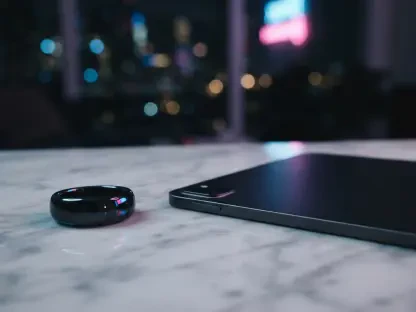
Samsung’s most potent weapon in the fight for wearable dominance is its massive and deeply interconnected ecosystem of Galaxy devices. The Galaxy AI Smart Glasses are being engineered as the central hub of this network, acting as a visual interface for the data gathered by the Galaxy Watch, the Galaxy Ring, and the user’s primary smartphone. This cross-device synergy creates a “unified body area network” where information flows seamlessly between different form factors. For example, a user could see their real-time heart rate and metabolic data from their Galaxy Ring projected into their field of vision while cycling, allowing them to stay focused on the road while monitoring their performance.
Seamless Synergy with the Galaxy Suite
The integration extends beyond just health data, as the glasses are expected to function as a wireless remote viewfinder and control center for the entire Galaxy suite. A user could theoretically place their Galaxy Fold on a tripod and use the glasses to perfectly frame a high-resolution shot from twenty feet away, seeing exactly what the phone sees through their own lenses. This level of hardware interoperability is something that Meta, as a software-first company, cannot easily replicate. By creating a walled garden where the glasses are exponentially more useful when paired with other Samsung products, the company is reinforcing brand loyalty while providing a tangible benefit to its existing user base.
Furthermore, the unified Samsung account system ensures that all AI preferences, captured media, and personalized settings are synchronized instantly across all platforms. This means that an AI interaction started on the glasses can be continued on a tablet or a laptop without any loss of context. This continuity is a key part of Samsung’s strategy to make the glasses an indispensable part of the user’s digital life. By offering a “continuous experience” that spans multiple devices, Samsung is making a strong case for why its glasses are the superior choice for anyone already invested in the Android and Galaxy ecosystems, turning the wearable into a gateway for a more integrated technological future.
Overcoming Technical and Market Hurdles
Despite the promising leaks, several significant technical challenges remain that could impact the successful adoption of the Galaxy AI Smart Glasses. The most pressing issue is battery density, as powering a high-resolution camera, an AR display, and a continuous AI connection requires a tremendous amount of energy. Samsung must find a way to house a battery large enough for full-day use without making the frames too heavy or causing them to overheat during intensive tasks. Industry experts anticipate the inclusion of a high-speed charging case that can provide multiple top-offs throughout the day, ensuring that the glasses remain functional during long commutes or professional events.
Pricing is another critical factor that will determine whether the glasses become a mainstream success or remain a niche tool for tech enthusiasts. While the Ray-Ban Meta glasses are priced competitively, the inclusion of AR displays and specialized Qualcomm processors could push Samsung’s product into a significantly higher price bracket. Samsung will need to carefully balance these premium features against the reality of consumer spending habits, perhaps offering tiered models that cater to different needs. If the company can deliver a product that feels like a legitimate replacement for other high-end gadgets, it may be able to justify a premium price point, but the margin for error is slim in a market that is still defining itself.
A Vision for a Screenless Future
The collaborative efforts of Samsung, Google, and Qualcomm are clearly aimed at establishing a new standard for personal computing that moves beyond the palm of the hand. By pooling their respective strengths in manufacturing, artificial intelligence, and silicon design, these companies are building a foundation for a future where digital interactions are as natural as a glance. The Galaxy AI Smart Glasses represent the first major step toward this vision, offering a glimpse into a world where information is no longer confined to a rectangular screen in a pocket. As the technology continues to evolve throughout 2026, the success of this initiative will be measured by how effectively it can blend into the lives of everyday users.
To prepare for this transition, consumers and professionals alike should begin considering how spatial computing will change their daily workflows and social interactions. The move to head-mounted displays suggests a future where hands-free productivity and real-time environmental augmentation are the norm. Organizations should explore the potential for these devices in training, remote assistance, and field service, while individual users may find new ways to document their lives and stay connected. As Samsung moves toward the official launch, the focus remains on whether the company can execute its complex vision with the precision required to move the industry forward and finally make smart eyewear a staple of modern life.