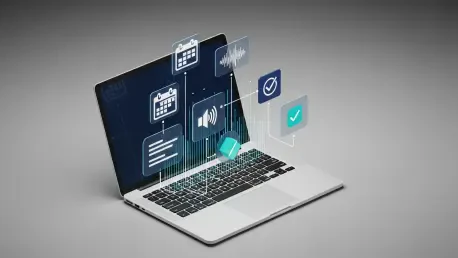

The relentless pace of digital communication often leaves professionals struggling to balance the cognitive demands of active listening with the administrative burden of recording critical business decisions during high-stakes meetings. To address this persistent friction, Wispr has officially transitioned from its origins as a dictation-focused software provider into a comprehensive developer of meeting intelligence through the launch of its latest tool, the Wispr Flow Notetaker. This innovative system was engineered to allow users to focus entirely on the nuances of their conversations by automating the recording and transcription of both digital and in-person interactions. By effectively removing the need for manual note-taking, the startup aims to significantly reduce the cognitive load associated with professional communication, ultimately seeking to replace traditional keyboard usage with advanced, context-aware speech-to-text intelligence that captures every detail.
Intelligent Meeting Management and Personalized Analytics
Automated Workflow and Preparatory Context
The functionality of the Notetaker is anchored in a specialized three-stage workflow that provides continuous support to the user before, during, and after every scheduled interaction. The process begins with a comprehensive meeting brief that automatically aggregates context regarding the various participants and the primary objectives of the session, allowing for better mental preparation. This anticipatory stage ensures that users are not walking into discussions blind but are instead equipped with relevant background information that can drive more productive outcomes. By integrating with existing calendar systems, the tool identifies the nature of the meeting and suggests specific focus areas that might require closer attention. This level of preparation transforms the tool from a passive recorder into an active assistant that anticipates the needs of the professional environment, ensuring that the initial minutes are used for meaningful dialogue.
During the actual call, the software provides live transcription that includes a sophisticated feature designed specifically for catching up on missed dialogue or clarifying points in real-time. This is particularly useful in dynamic environments where multiple speakers may overlap or where a participant might briefly lose focus due to external distractions or poor audio quality. Once the meeting concludes, the AI does not simply provide a wall of text; it generates a highly structured summary that categorizes information into key decisions, specific action items, and follow-up requirements. This synthesis ensures that every team member remains perfectly aligned on the next steps, effectively eliminating the ambiguity that often follows long business discussions. The ability to distinguish between casual conversation and binding commitments allows the summary to serve as a definitive record of truth, streamlining the transition from verbal agreement to actual project implementation.
Technical Differentiation and Personalized Accuracy
To achieve a level of differentiation in a crowded market, the platform utilizes a personal dictionary that recognizes user-specific acronyms, proprietary product names, and unique spellings that generic tools often miss. By pulling additional context directly from calendar entries and historical communication patterns, the software achieves a remarkably high level of accuracy in both speaker identification and content categorization. This creates a tailored experience where the AI understands the specific professional jargon and the unique linguistic environment of the individual user. The system learns the nuances of how a particular team communicates, which reduces the need for manual corrections and post-processing edits. This deep personalization ensures that the resulting transcripts are not just accurate in a literal sense but are also contextually relevant to the specific industry or niche in which the professional operates.
The platform also leverages the Model Context Protocol to integrate seamlessly with major AI assistants, such as OpenAI’s ChatGPT and Anthropic’s Claude, fostering a highly connected digital ecosystem. This specific connectivity allows meeting data to flow directly into existing professional workflows rather than being restricted to a single siloed application or interface. Consequently, a user’s extensive meeting history is transformed into an interactive and searchable knowledge base, allowing for long-term data retrieval and specialized querying of past conversations across different platforms. Users can ask their preferred AI models to synthesize themes across multiple meetings or find specific mentions of a project from months prior. This interoperability ensures that the intelligence gathered during a meeting remains useful long after the call has ended, turning ephemeral conversations into durable assets.
Ecosystem Connectivity and Security Standards
Wispr takes a unique and principled approach to privacy by recording audio locally on the user’s device rather than deploying a visible bot to join video conferences as an external participant. While this offers a significantly less intrusive user experience and avoids the awkwardness of a digital entity sitting in the meeting room, it shifts the legal responsibility for obtaining consent to the user. Since there is no automatic notification for other participants that a recording is taking place, the company advises manual disclosure to ensure compliance with varying jurisdictional laws. This bot-free architecture is a deliberate choice to prioritize the flow of natural conversation while maintaining a high level of technical privacy. The company is currently developing future features that will assist with automated consent messaging to mitigate these legal complexities, but for now, the focus remains on a discreet tool.
In terms of data protection, the organization maintained a strict policy of encryption and temporary cloud storage, ensuring that audio files were deleted immediately after the processing was complete. They distinguished their service by refusing to create biometric voiceprints or use customer data for model training without explicit consent, a move that resonated with security-conscious enterprises. This focus on data integrity, combined with the industry-wide transition toward generative memory, positioned the technology as a sophisticated assistant that prioritized both utility and ethical standards. Moving forward, professionals were encouraged to integrate these tools into their daily routines to reclaim time spent on administrative tasks. Organizations that adopted these bot-free intelligence solutions found themselves better equipped to manage the deluge of information. The focus shifted toward auditing internal consent protocols.