
The cluttered landscape of the contemporary corporate office has undergone a radical transformation as single-purpose hardware gives way to versatile, multi-functional mobile platforms that bridge the gap between mobility and fixed-station productivity. While the traditional desktop speakerphone was once a staple of every executive desk, the emergence of high-performance tablets has rendered these bulky, stationary devices increasingly obsolete. This shift is not merely a result of convenience but is driven by a profound evolution in how hardware and software ecosystems interact to facilitate seamless communication. Modern tablets now possess the processing power and specialized audio components necessary to manage complex, multi-party conversations without the limitations of a tethered handset. As professionals seek to declutter their workspaces while maintaining high standards for call clarity and multitasking, the tablet has stepped in as a sophisticated central hub. By integrating advanced cellular handoff technologies and high-fidelity audio arrays, these devices offer a more intuitive and responsive experience than the analog or early digital phones they are replacing. This evolution represents a broader trend in the tech industry where the boundaries between smartphones, laptops, and peripheral hardware are dissolving into a singular, cohesive digital workspace.
The Engineering Behind the Communication Shift
Integrated Connectivity: Bridging the Gap
Connectivity in the current professional environment has transitioned from a simple convenience to a fundamental requirement for high-level operational efficiency. Hardware manufacturers have responded by refining the distinction between WiFi-only and cellular-enabled models to serve diverse professional lifestyles. For the desk-bound professional, the emergence of advanced Bluetooth calling protocols has been a significant development, allowing a tablet to act as a primary interface for a smartphone’s cellular network. This mirroring of notifications and call controls creates a centralized hub where a user can answer an incoming call on a fourteen-inch screen while simultaneously reviewing a spreadsheet or drafting an email. The ability to manage these interactions without physically touching a smartphone minimizes distractions and preserves the workflow of the professional environment. Furthermore, the integration of intelligent handoff features ensures that a call initiated on a mobile device can be transferred to the tablet’s superior audio system with a single tap, effectively turning the tablet into a high-end desktop speakerphone. This synchronization is facilitated by low-latency wireless standards that maintain voice synchronization, ensuring that the transition between devices is imperceptible to the parties on the other end of the line.
Audio Hardware: The Rise of High-Fidelity Arrays
The transition from a secondary media device to a primary communication tool has necessitated a complete overhaul of internal audio engineering within modern tablets. Leading manufacturers are no longer satisfied with basic stereo speakers; instead, they are implementing complex arrays of up to eight high-fidelity speakers paired with advanced digital signal processing. These systems are often designed in collaboration with specialized audio engineering firms to ensure that vocal frequencies are prioritized and reproduced with exceptional clarity. Technologies like Dolby Atmos and spatial audio are being utilized to create a more immersive conferencing experience, where the voices of different participants can be electronically positioned to mimic a real-life meeting room layout. Beyond the output, the input side has seen equal innovation through the use of beamforming microphone arrays. These multiple-microphone setups are programmed to isolate the user’s voice while active noise-cancellation algorithms filter out the hum of air conditioning or the clatter of a busy office. This combination of crystal-clear output and intelligent input allows the tablet to outperform traditional speakerphones, which often struggle with echo and ambient noise. By focusing on these acoustic details, manufacturers have created a device that is as capable of a high-stakes board meeting as it is of a casual video call.
Tailoring Hardware to Professional Personas
Performance Metrics: Power for the Modern Creative
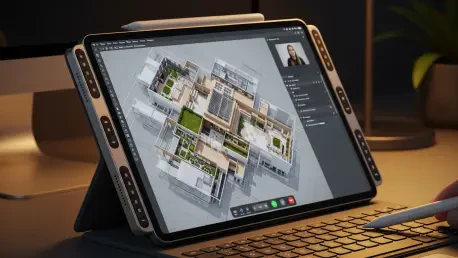
For the creative professional, the choice of a tablet often hinges on its ability to handle demanding graphical tasks while maintaining a seamless communication stream in the background. High-performance models are now equipped with flagship-grade processors that feature dedicated neural engines, which are specifically optimized to handle the background processing required for clear audio and video during calls. These devices often boast ultra-smooth screen refresh rates, sometimes reaching 120Hz or 144Hz, which reduces eye strain during long virtual meetings and makes navigating complex interfaces feel instantaneous. The power of these machines allows for a “tethered but powerful” workflow, where the tablet remains the center of the creative process, handling high-resolution video editing or 3D rendering while simultaneously hosting a high-definition conference call. Because these professionals often work in environments with high-speed internet, they typically rely on Bluetooth or WiFi for their calling features, prioritizing a stable and fast connection that can handle large data transfers alongside voice traffic. This integration of raw power and sophisticated communication software ensures that the creative process is never interrupted by the need to switch devices, allowing for a level of focus that was previously unattainable in a multi-device setup.
Academic Versatility: AI and the Large-Format Advantage
Students and researchers represent a unique demographic that requires significant digital real estate to manage large volumes of information alongside frequent collaboration. Large-format tablets have become the preferred tool for this group, offering screens that are large enough to support side-by-side application usage without sacrificing legibility. This physical space is particularly beneficial during academic seminars or research meetings, where a student might need to keep a textbook open on one half of the screen while participating in a video call on the other. A major breakthrough in this sector is the integration of AI-powered productivity tools that can transcribe spoken dialogue in real-time or provide immediate summaries of long discussions. These features effectively turn the tablet into an intelligent secretary, capturing every detail of a lecture or a brainstorming session while the user remains fully engaged in the conversation. While these larger models are often heavier and more suited for a desk-bound existence, their specialized hardware makes them indispensable for intense productivity. The ability to use digital ink for annotation during a live call further enhances this experience, allowing researchers to mark up documents and share them instantly with collaborators, creating a dynamic and interactive environment that a traditional desktop phone could never facilitate.
Addressing Specialized Use Cases
Media-Centric Design: The Tablet as a Communication Hub
There is a growing segment of the market dedicated to users who prioritize audio and video clarity above all else, leading to the development of media-centric tablets that serve as dedicated communication stations. These devices often feature built-in kickstands that allow for multiple viewing angles, ensuring that the camera is always at eye level for professional video conferences. The physical design of these tablets is often dictated by the inclusion of massive speaker chambers that dominate the chassis, providing a depth of sound and a level of volume that smaller, more portable devices cannot match. These models are the most direct answer to the desktop speakerphone query, as they are designed to live on a desk and handle a constant stream of online classes and video meetings. By prioritizing vocal clarity and high-volume output, they cater to professionals who spend several hours a day on calls and require a reliable, high-performance audio platform. The software on these devices is frequently optimized to prioritize communication apps, ensuring that they launch instantly and run with maximum stability. For the home office or a dedicated workspace, these tablets provide a centralized point of contact that combines the best features of a traditional phone, a high-definition monitor, and a premium audio system into a single, elegant unit.
Mobile Solutions: Field Work and Continuous Connectivity
In contrast to the desk-bound hub, tablets designed for mobile field workers focus on the practical realities of working in unpredictable environments. These devices are characterized by their ruggedized builds and their reliance on 4G or 5G SIM slots, which provide a constant and secure connection to the internet and cellular networks. This independence is crucial for professionals who travel frequently or work in locations where public WiFi is either non-existent or unsecure. By using a dedicated cellular connection, these users avoid the battery drain associated with using a smartphone as a hotspot, ensuring that both their primary phone and their tablet remain functional throughout the workday. While these mobile-centric tablets may offer more modest processing specifications compared to high-end creative models, they provide a reliable communication “safety net” that is essential for remote operations. The ability to take a cellular call directly on the tablet while accessing cloud-based schematics or inventory systems makes them an invaluable tool for technicians, site managers, and sales representatives. This specialized focus on utility and connectivity ensures that the professional remains reachable and productive regardless of their physical location, proving that the tablet’s role as a communication tool extends far beyond the traditional office walls.
Market Standards and Final Selection Criteria
Essential Standards: Security and Longevity in 2026
As the tablet has cemented its place as a primary tool for business communication, certain technical features have transitioned from luxury additions to industry-wide standards. Buyers in the current market expect long-lasting battery life that can support several hours of continuous video conferencing without needing a charge. This has led to the adoption of more efficient power management systems and larger battery capacities across all price points. Security has also become a paramount concern, with secure biometrics like facial recognition and ultrasonic fingerprint scanners becoming standard on professional-grade models. These security measures ensure that sensitive corporate communications and data remain protected, even when the device is used in public spaces. Furthermore, the longevity of these devices is supported by long-term software update commitments from manufacturers, ensuring that the tablet remains compatible with the latest communication protocols and security patches for several years. This shift toward durable and secure hardware reflects the tablet’s status as a critical piece of infrastructure in the modern digital workspace. When these standards are met, the tablet becomes more than just a gadget; it becomes a reliable and secure extension of the user’s professional identity, capable of handling the most sensitive and demanding tasks of the modern work environment.
Final Considerations: Choosing the Right Workspace Extension
Selecting the appropriate tablet to serve as a desktop speakerphone required a careful evaluation of how a professional actually interacted with their digital environment. Many users found that the initial appeal of raw processing power was eventually superseded by the practical need for superior microphone arrays and speaker clarity. The market moved toward a model where the decision-making process was guided by the specific frequency of calls versus the intensity of multitasking. It became clear that those who prioritized cellular independence for frequent travel often opted for smaller, more portable 5G models, while desk-bound professionals leaned toward the larger fourteen-inch displays that offered better visual ergonomics. Organizations that implemented these devices as standard desk equipment saw a marked reduction in hardware clutter and an increase in the fluidity of cross-platform communication. The transition proved that the integration of a smartphone’s cellular capabilities with a tablet’s superior audio-visual hardware created a synergy that the traditional desk phone could not replicate. Ultimately, the successful adoption of this technology depended on the user’s ability to align the device’s hardware strengths with their specific daily habits. By choosing a device that balanced audio quality, connectivity, and screen real estate, professionals effectively built a more versatile and responsive workspace that was well-equipped for the challenges of a modern, interconnected world.