
Workplace impersonation scams frequently involve fraudsters posing as department chairs or executives to request immediate wire transfers or gift cards from staff. This specific type of social engineering is part of a broader, more industrialized threat landscape in 2026, where short message service (SMS) phishing, or smishing, has become a primary vector for credential theft and financial fraud. Unlike email, which often features robust filtering, text messages land directly in a user’s most personal communication space, achieving significantly higher open rates and faster response times. Attackers have recognized this vulnerability and have built sophisticated traffic brokerage frameworks capable of exploiting trust in over 300 global brands. These operations are no longer the work of isolated individuals but are run by organized groups using Phishing-as-a-Service models to target users across more than 100 countries simultaneously. By leveraging localized lures that resonate with the recipient’s daily life—such as an expected package or a banking notification—threat actors can profile targets in real time and initiate multi-stage deceptions that often extend far beyond the initial text message interaction.
1. Delivery and Financial Institution Lures
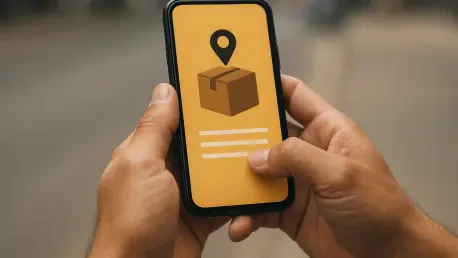
Package delivery smishing has emerged as one of the most pervasive tactics due to the global reliance on e-commerce and logistics. On September 9, 2026, various postal authorities, including PHLPost, issued warnings regarding fraudulent messages that claimed a parcel was held at a local hub due to an incomplete address or an unpaid redelivery fee. These messages are designed to trigger an immediate reaction, as the recipient is often already expecting a shipment and views the requested small payment or address correction as a minor administrative hurdle. However, the links provided in these texts lead to sophisticated replica sites where users are prompted to enter their full name, home address, and credit card details, including sensitive CVV codes. Once this information is harvested, the attackers can perform unauthorized transactions or sell the verified personal data on underground marketplaces, turning a simple delivery notification into a significant financial breach.
Banking smishing follows a similar psychological blueprint but leverages the high stakes of personal finance to create panic. In September 2026, law enforcement agencies like the Derbyshire Constabulary documented cases where attackers sent fake fraud alerts to unsuspecting account holders, claiming that an unauthorized transaction had occurred. This approach relies on a two-stage deception; after obtaining initial credentials through a phishing link, the fraudster often follows up with a phone call impersonating a bank representative to secure additional information. For instance, in a notable case this month, a scammer named Mohammed Gulzar successfully defrauded several individuals of over £30,000 by combining SMS lures with secondary impersonation calls. This highlights how smishing is frequently just the entry point for a more complex fraudulent exchange where the attacker builds rapport and authority to bypass the victim’s natural skepticism regarding sensitive financial data.
2. Government Impersonation and Account Verification Tactics
The weight of official authority is a powerful tool in the hands of smishers, particularly when they impersonate government agencies or legal entities. In early September 2026, the U.S. District Court for the District of Maine warned the public about fraudulent texts that appeared to come from judges or court officials. These messages falsely informed recipients that they had failed to report for jury duty, subsequently threatening arrest or demanding immediate payment of a fine to “resolve” the matter. Because the consequences of ignoring a legal summons are severe, many individuals are pressured into clicking links that request Social Security numbers and other personally identifiable information. This type of identity-focused smishing allows threat actors to build comprehensive profiles of their victims, which can then be used for long-term identity theft or the fraudulent opening of new lines of credit under the victim’s name.
Account verification scams complement these authority-based lures by focusing on the daily digital services that people use for work and personal life. On August 6, 2026, the Canada Revenue Agency documented a widespread campaign where users were notified of a supposed “error” with their online account and were instructed to reply with a specific keyword like “HELP” to begin the resolution process. This tactic is particularly dangerous because a single reply confirms to the attacker that the phone number is active and the user is responsive, leading to more targeted and aggressive follow-up attempts. Once the victim is engaged, the scammer provides a link to a fraudulent login page designed to harvest usernames and passwords. These credentials are then funneled into automated credential-stuffing tools, allowing the attacker to test the same password across multiple high-value platforms, including banking portals and corporate cloud environments.
3. Multi-Factor Authentication and Workplace Security Threats
As multi-factor authentication (MFA) has become a standard security requirement, attackers have shifted their focus to intercepting the secondary codes that are supposed to protect users. On September 15, 2026, UC Riverside issued an advisory regarding smishing messages that directed students and faculty to fake login pages specifically built to collect passwords alongside Duo MFA codes or one-time passwords (OTPs). The danger of MFA theft lies in the fact that the attacker is acting in real time; as the victim enters their code into the fake site, the attacker simultaneously enters it into the legitimate service to gain instant access. This bypasses the security benefits of MFA entirely by turning the user into the unwitting facilitator of their own account compromise. The university emphasized that users should never provide authentication codes through unsolicited links, as these short-lived values are the final barrier preventing unauthorized access to sensitive institutional data.
Beyond the technical bypass of MFA, smishers frequently target the internal hierarchy of organizations through workplace impersonation. This involves a fraudster posing as a high-ranking executive or department head to send urgent, seemingly internal requests to lower-level staff. Organizations like Columbia University have warned that these scams often take the form of an urgent text from a “dean” or “chair” who claims to be in a meeting and needs the recipient to purchase gift cards for a client or initiate a wire transfer for an “emergency” vendor payment. The professional pressure to comply with a superior’s request, combined with the casual and immediate nature of a text message, often overrides standard verification protocols. This demonstrates why technical defenses alone are insufficient; internal culture must emphasize that sensitive financial actions should never be initiated through a text message, regardless of the perceived authority of the sender or the stated urgency of the task.
4. Recruitment Scams and Technical Support Exploits
The search for employment is another high-emotion state that attackers exploit through job offer smishing. On September 3, 2026, the Western Cape Education Department reported a series of fraudulent WhatsApp and SMS messages impersonating school principals and district officials. These messages offered non-existent permanent teaching positions and eventually requested payment for “authorization fees” or “appointment letter processing.” By targeting individuals seeking professional stability, scammers can extract significant sums of money before the victim realizes the job does not exist. These campaigns often involve a prolonged engagement phase where the attacker asks for “background check” documents, such as copies of passports and bank statements, providing them with a wealth of personal data that can be used for secondary fraud or identity theft in the future.
Technical support smishing takes the opposite approach by using fear and the threat of service interruption to drive action. In late July 2026, Virginia Commonwealth University documented texts threatening to shut down student and faculty email accounts unless they followed specific troubleshooting steps. These steps usually involve calling a supplied phone number or visiting a “support portal” where the user is pressured to disclose their current credentials to “verify” their account status. In some more advanced variations, the support site may even prompt the user to download a small diagnostic tool that is actually a remote access trojan (RAT), giving the attacker full control over the mobile device. This move from a simple information request to a full device compromise represents a significant escalation in the technical capabilities of modern smishing operations, making it vital to only use official, known contact channels for technical assistance.
5. Incentive-Based Prizes and Strategic Rapport Building
In contrast to threats of account closure or legal action, prize and reward smishing utilizes positive reinforcement to manipulate targets. In August 2026, Macquarie reported that customers were being targeted with messages claiming their loyalty rewards points were about to expire. The urgency of “losing” something of value creates a compelling reason for the recipient to click a link and log in to “claim” their points. These links inevitably lead to fake branded websites that mirror the legitimate financial institution’s interface perfectly. Once the login details are captured, attackers can drain digital wallets or convert points into gift cards that are easily liquidated. This strategy proves that attackers do not always need to use fear; the promise of a reward or the avoidance of a loss can be just as effective at bypassing a user’s critical thinking.
Perhaps the most insidious form of smishing is the “wrong-number” hook, which is the starting point for long-term “pig butchering” scams. On September 3, 2026, the Cuyahoga County Consumer Affairs office noted that victims were entering high-loss investment scams after responding to what seemed like an accidental text message. These attacks begin casually—perhaps a simple “Are you the person I met at the cafe?”—to establish rapport and trust over several days or weeks. Eventually, the fraudster introduces a fraudulent investment application that displays fake gains to encourage larger and larger deposits. Because the interaction feels like a genuine relationship rather than a cold call or a formal notification, the psychological barrier to providing money is significantly lowered. This long-term engagement model highlights that modern smishing is often about building a narrative that eventually leads to a devastating financial conclusion.
6. The Systematic Lifecycle of a Smishing Operation
Modern smishing attacks follow a structured sequence that begins with the delivery of a believable lure. This phase relies on industrial-scale infrastructure to send thousands of messages that utilize recognizable brand names and localized context to secure the recipient’s attention. Once the message is opened, the second phase involves building pressure through urgency, authority, or financial concern. This pressure is designed to shorten the time the victim has to think critically, making the situation feel too important to ignore. By the time the recipient moves to the third phase—triggering the action—the psychological groundwork has been laid. Whether it is clicking a link, replying to a thread, or calling a number, this step moves the victim beyond the relatively safe confines of their SMS app and into an environment fully controlled by the attacker.
The final stages of the attack involve moving the conversation off the SMS platform and exploiting the resulting response. If a victim clicks a link, they are often directed to a high-fidelity replica of a banking or corporate portal where their credentials, payment data, and MFA codes are harvested in real time. If the attack involves a phone call or a long-form chat, the fraudster works to deepen the deception, potentially installing malware or convincing the victim to perform a direct wire transfer. This multi-step progression ensures that even if the initial SMS is flagged by the carrier later, the fraud can continue independently through other channels. Understanding this lifecycle is critical for defense, as it demonstrates that the initial text is merely the catalyst for a much larger and more dangerous operation designed to extract maximum value from every successful interaction.
7. Institutional Safeguards and Future Resilience Strategies
In the months leading up to late 2026, organizations significantly adapted their defensive postures to counter the rising tide of sophisticated smishing campaigns. Security teams shifted their focus toward implementing robust verification protocols that required any sensitive instruction received via SMS to be confirmed through a separate, established channel such as a corporate directory or a physical phone call. This approach successfully mitigated the risks associated with workplace impersonation by creating a “verify-then-trust” culture where no financial transaction or account change could be authorized through a mobile message alone. Furthermore, the adoption of FIDO2-compliant hardware security keys became more widespread, providing a technical barrier that prevented attackers from successfully using intercepted one-time passwords to gain access to critical cloud environments.
The proactive monitoring of external digital risks also played a pivotal role in neutralizing threat infrastructure before it could impact employees. By utilizing advanced risk protection platforms, organizations were able to detect and take down lookalike domains and fraudulent brand assets that were being staged for upcoming smishing waves. This shift from reactive response to proactive threat hunting allowed security analysts to identify patterns in the “BigBear 2.0” and other Phishing-as-a-Service frameworks, enabling them to block malicious URLs at the network level. Looking forward, the key takeaway from the challenges of 2026 was that technical controls must be combined with realistic, scenario-based training. By teaching staff to recognize the emotional hooks used in package delivery, banking, and government lures, institutions built a human firewall that complemented their automated defenses, ensuring a more resilient posture against the evolving tactics of global fraud syndicates.