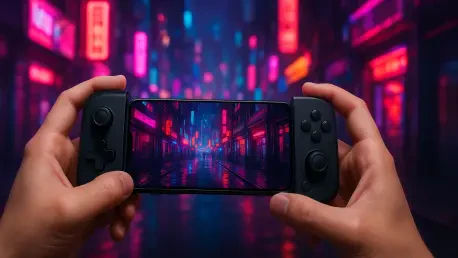

The lack of a robust mobile app for on-the-fly adjustments remains a missed opportunity for a device specifically designed for portable gaming environments. For thirteen years, 8BitDo has focused on building a reputation for high-quality, retro-inspired, and modern gaming peripherals that resonate with both enthusiasts and casual players alike. Historically, the brand has been defined by two primary lineages: the Pro line, which favors a D-pad-first layout reminiscent of the classic SNES era, and the Ultimate line, which provides a more modern, ergonomic experience for PC and console users. The Ultimate Mobile Gaming Controller represents a strategic pivot for the company as it attempts to adapt its premier Ultimate DNA into a telescopic form factor designed specifically for the mobile market. This transition reflects a broader industry trend where mobile hardware is increasingly capable of delivering console-quality experiences, demanding high-tier inputs to match high-fidelity visuals.
Design: Structural Integrity and Handheld Ergonomics
8BitDo maintains its high standards for structural integrity by utilizing the same premium plastics found across its flagship desktop and console lineup. This choice provides a sense of durability and a high-end feel that immediately distinguishes the device from budget-tier competitors that often saturate the mobile peripheral market. The back of the controller features a subtle texture for improved grip during intense sessions, while the front includes a small ridge designed to secure the mobile device firmly in place. To protect the smartphone from wear, 8BitDo incorporated a textured rubber sheet on the backplate that prevents sliding without feeling cheap or flimsy. This attention to detail ensures that the hardware feels like a professional tool rather than a plastic toy. The weight balance is also carefully considered, providing enough heft to feel substantial while remaining light enough for extended play on the go without causing significant wrist fatigue for the user.
Despite the superior material choices, the ergonomic profile remains a point of contention for many users. When compared to the standard 8BitDo Ultimate 2C console controller, the telescopic mobile version features significantly shorter grips. This reduction in handle length results in a smaller overall stature for the device, prioritizing portability and a compact form factor that fits easily into a bag or pocket. While this design choice maximizes the controller’s mobility, it often poses challenges for users with larger hands, potentially leading to cramping or discomfort during extended sessions. Essentially, if a player is already comfortable with the standard Ultimate 2C, they will find the mobile version familiar but noticeably more cramped in the palm. The trade-off between a sleek, portable aesthetic and the deep, comfortable contours of a full-sized controller is evident here, as the device leans heavily toward being a travel companion rather than a primary at-home input method.
Technology: Input Sophistication and Sensor Technology
The Ultimate branding is primarily justified through the inclusion of Hall Effect sensors in both the joysticks and the triggers. By using magnets rather than physical contact to register movement and input depth, these components virtually eliminate the risk of stick drift, a notorious issue that has plagued the gaming industry for years. These sticks appear to be identical in size and quality to those found on the highly rated 2C unit, providing a smooth and responsive experience that remains consistent over hundreds of hours of use. For mobile gamers who demand precision in competitive titles, the lack of a traditional dead zone and the longevity of magnetic sensors represent a major technical advantage over cheaper potentiometer-based alternatives. This commitment to premium internal hardware ensures that the controller maintains its accuracy even after heavy use in various environmental conditions, which is crucial for a device meant to be carried frequently in bags and exposed to dust.
Complementing the advanced joysticks are the tactile face buttons and shoulder inputs, which offer a distinct sensory experience. The ABXY face buttons utilize a membrane-based system with a light actuation force, resulting in a quieter operation than many other controllers in the 8BitDo catalog. This quietness is particularly beneficial for those playing in public spaces or quiet environments where loud clicking might be disruptive. Conversely, the shoulder buttons and triggers provide a clicky tactile response that feels sharp and intentional. An added benefit of this specific model is the inclusion of L4 and R4 back buttons, which provide extra mapping options for complex games. The D-pad is a tactile, clicky component with a significant pivot, allowing for precise diagonal inputs. While it is slightly stiffer and louder than the D-pads found on the brand’s console-only units, it remains a highly capable tool for fighting games or retro platformers that require exact movements.
Compatibility: Physical Dimensions and Design Limitations
The most significant drawback of the 8BitDo Ultimate Mobile Gaming Controller is its restrictive telescopic mechanism. In a market where smartphones are continually increasing in size, the controller only expands to a maximum length of 170mm. This is a remarkably tight tolerance that creates compatibility issues with several modern flagship devices. For instance, a Google Pixel Pro or a high-end iPhone often nears this limit even without a case. Once a protective cover is added to these larger phones, they may no longer fit within the controller’s cradle at all. This limitation effectively excludes a significant segment of the high-end smartphone market, as well as virtually all small tablets that many mobile gamers prefer for a larger viewing area. While the inclusion of rubber bumpers helps secure the devices that do fit, the lack of extra clearance makes the controller feel less ultimate than its name implies, favoring compact design over universal utility.
When evaluated against its peers, this size restriction becomes even more apparent as other manufacturers have moved toward much more generous expansion ranges. Competitors such as GameSir offer Bluetooth and USB-C alternatives that stretch to 213mm or 215mm, easily accommodating the largest gaming phones and even some smaller tablets without requiring the removal of protective cases. Some of these rivals also offer superior ergonomics with full-sized handles, though they often come at a slightly higher price point. This puts the 8BitDo unit in a difficult position where its superior build quality must compete with the practical versatility of its rivals. For users with standard-sized smartphones, the 8BitDo remains a top-tier choice, but for those who have invested in the largest mobile screens available, the hardware physical constraints become a deal-breaker. The device prioritizes a cohesive brand aesthetic and portability, but it does so at the expense of being a truly universal mobile solution.
Integration: Software Stability and Connection Stability
The controller relies exclusively on Bluetooth connectivity, which provides a broad range of compatibility across various operating systems. It supports Android, iOS, iPadOS, and macOS with a stable implementation that avoids the intermittent disconnections common in lower-quality wireless peripherals. While some competitive players prefer a direct USB-C connection to eliminate even the slightest millisecond of input lag, the latency on this Bluetooth 5.0 unit is negligible for the vast majority of mobile gaming scenarios. In terms of endurance, the device is powered by a 300mAh internal battery rated for approximately 13 hours of continuous use. This duration is generally adequate for a full day of travel or several long gaming sessions, though it falls short when compared to the 20 or 30 hours provided by dedicated console gamepads. The inclusion of a turbo function and remappable back buttons adds a layer of customization that enhances the utility of the hardware during complex gameplay.
Deep customization of the controller requires the use of the 8BitDo Ultimate Software V2, but the implementation is surprisingly tethered to legacy systems. A notable inconvenience for a mobile-focused product is that users must connect the controller to a PC to utilize this software for remapping buttons or adjusting stick sensitivity. In an era where most mobile peripherals offer a dedicated application for on-the-fly tuning via a smartphone, forcing a desktop-centric workflow onto a portable device feels archaic. This requirement prevents gamers from making quick adjustments to their control schemes while away from home, which is exactly when a mobile controller is most likely to be used. While the hardware itself supports two distinct profiles that can be toggled on the device, the initial setup and any subsequent changes require access to a computer. This disconnect between the product’s intended use case and its supporting software ecosystem remains one of the most frustrating aspects of the user experience.
Verdict: Market Trajectory and Strategic Outlook
The 8BitDo Ultimate Mobile Gaming Controller established a clear benchmark for build quality in the portable segment, yet it also highlighted the ongoing challenges of hardware universalism. Industry observers noted that potential buyers needed to prioritize measuring their current mobile devices, including any protective cases, to ensure they fell within the 170mm limit before committing to this hardware. For those within the compatible size range, the investment offered a significant upgrade in tactile feedback and long-term reliability due to the advanced Hall Effect sensors. The brand successfully proved that premium materials could thrive in a mobile form factor, but the lack of a mobile-first software suite suggested a need for more integrated digital ecosystems. Strategic considerations for future iterations pointed toward the necessity of an expanded telescopic bridge to accommodate the growing trend of larger smartphone displays and tablet integration. Manufacturers who ignored these physical trends faced a narrowing niche as mobile gaming evolved.
Software developers and hardware engineers across the industry observed the limitations of PC-tethered configuration tools and began prioritizing mobile-native applications for real-time adjustments. This shift ensured that the portability of the controller was not undermined by a lack of flexibility in the field. For the consumer, the primary takeaway was the importance of balancing the tactile superiority of Hall Effect inputs against the physical constraints of a specific device’s dimensions. Strategic choices in the mobile peripheral market increasingly favored controllers that could span multiple generations of hardware, making the 170mm limit a cautionary tale for designers. Those seeking a set-and-forget experience with standard phones found the 8BitDo unit to be a reliable companion, while power users moved toward more expansive alternatives. Ultimately, the device served as a high-quality bridge between traditional console gaming and the mobile world, even if it did not quite manage to bridge the gap for every smartphone on the market.