
Nia Christair is a leading voice in the mobile technology sector, bringing a wealth of expertise that spans from the intricacies of device hardware design to the complex architecture of enterprise mobile solutions. With her deep background in both app development and system-level security, she offers a unique perspective on the hidden vulnerabilities that often lie at the intersection of user interface and data storage. Today, we explore the critical tensions between private messaging applications and the operating systems they inhabit, focusing on how metadata and cached notifications can inadvertently create a digital paper trail for law enforcement and forensic investigators.
How does an operating system’s notification database become a security liability when it caches message content for up to a month, and what technical hurdles do developers face when ensuring that “deleted” content is actually wiped from all system-level logs?
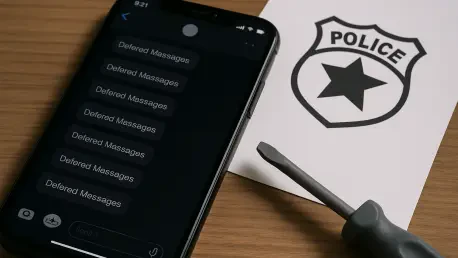
The primary liability arises because an operating system often prioritizes user experience and system stability over the granular privacy settings of a single third-party app. When a notification pops up, the OS frequently logs that content into a persistent database to manage history or syncing, and in recent cases, we’ve seen these records linger for up to 30 days. For a developer, the technical hurdle is that they often lack “root” or administrative access to clear these system-level caches once the notification is handed off to the OS. It creates a frustrating “ghost” effect where a message is deleted within the secure app environment, but a plain-text copy remains buried in a hidden system folder that the app cannot legally or technically reach.
When forensic tools successfully extract chat history from notification caches despite the use of disappearing message timers, what does this reveal about the gap between app-level encryption and OS-level storage, and how should high-risk users adjust their mobile security protocols?
This gap reveals a significant structural flaw: end-to-end encryption protects the data while it travels, but it doesn’t always protect the data once it is displayed on the screen and processed by the system’s notification server. Forensic tools used by agencies like the FBI exploit the fact that while Signal or WhatsApp might wipe the message, the OS notification database was “unexpectedly retaining” that data as a separate entry. High-risk users need to realize that software-level timers aren’t a magic wand; they should consider disabling notification previews entirely in their system settings. By preventing the message content from ever appearing in a banner or lock screen, they ensure the OS never has the chance to cache that sensitive text in its permanent logs.
Tech companies often backport security fixes to older operating systems to address specific vulnerabilities. What are the logistical challenges of patching older software versions, and how should platforms prioritize bugs that specifically allow for the bypass of privacy features like auto-delete timers?
The logistical nightmare of backporting lies in the sheer variety of hardware and the subtle differences in codebases between, for example, the current iOS 19 and older versions like iOS 18. Each patch must be rigorously tested to ensure it doesn’t break existing features or battery performance on older devices that have different processing constraints. Platforms must prioritize bugs that bypass auto-delete timers because these are “trust-breaking” vulnerabilities that directly contradict the primary marketing promise of secure apps. When a user sets a timer, they are making a specific risk-management decision, and if the OS silently undermines that by logging the data elsewhere, it compromises the safety of activists and whistleblowers who rely on those features for their physical security.
Independent app developers often have to lobby OS providers to change how system databases handle sensitive metadata. What does the collaboration process look like when a third-party app identifies a system-wide privacy flaw, and what steps can be taken to prevent future leaks?
The collaboration usually starts with a formal security disclosure, much like when the leadership at Signal flagged this issue to Apple after reports surfaced that deleted messages were still being recovered. It involves a high-stakes dialogue where app developers provide proof-of-concept evidence showing how forensic tools can bypass their encryption through system logs. To prevent future leaks, we need to move toward a “zero-persistence” architecture for notifications, where sensitive apps can flag a notification as “non-loggable.” This would force the operating system to treat the notification as transient data that exists only in the RAM and is never written to the disk’s long-term database.
What is your forecast for mobile forensic security?
I expect we will see a continuous “cat-and-mouse” game where OS providers tighten the permissions around system databases while forensic firms find increasingly obscure places where data is “leaked” during everyday use. As we’ve seen with the recent fix for iPhone and iPad users, the focus is shifting away from breaking the encryption itself and toward finding these small, unpatched bugs where data is “unexpectedly retained.” My forecast is that we will eventually see “Privacy-by-Design” mandates that require operating systems to automatically purge all notification metadata the moment a message is read or deleted by the parent app. Until then, the burden of security will unfortunately remain on the user to understand that their phone’s OS often remembers much more than the individual apps do.