
Privacy remains a central focus of the Alexa+ AI implementation, which includes a clear visual indicator whenever the system is actively analyzing on-screen content. This mandatory transparency serves as a cornerstone for Amazon’s most ambitious hardware release to date, marking a definitive departure from the budget-friendly constraints of the previous decade. For years, the market perceived Amazon tablets as secondary devices, primarily intended for media consumption and low-intensity tasks within a walled garden. The arrival of the Alexa Tablet 12 Pro in the current 2026 landscape fundamentally challenges this notion by introducing a high-performance, aesthetically refined alternative to the dominant iPad ecosystem. By prioritizing premium materials and an open software architecture, Amazon is no longer just competing on price; it is competing on merit, engineering, and the sophisticated integration of artificial intelligence into the daily workflow of modern professionals and creatives.
Premium Design and Build Quality
Aesthetics and Physical Construction
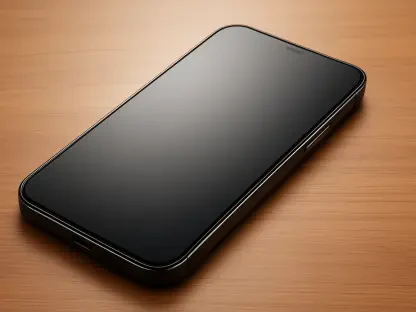
The physical transformation of Amazon’s flagship tablet is perhaps its most striking attribute, moving away from the utilitarian plastics of the past toward a sophisticated aluminum unibody construction. Measuring a mere 6.5mm in thickness, the Alexa Tablet 12 Pro feels remarkably rigid and dense, weighing in at approximately 550 grams. This weight distribution is carefully managed to provide a sense of durability without becoming cumbersome during prolonged use. The graphite colorway enhances the professional aesthetic, ensuring the device looks at home in a boardroom or a design studio. Unlike previous iterations, there is no audible creaking or visible flex when pressure is applied to the chassis, signaling a new era of manufacturing precision for the company.
Despite the shift toward a larger 12-inch form factor, the ergonomics remain a primary consideration for the design team. The flat-edge design language not only follows modern industry trends but also provides a more secure grip when the tablet is used without a case. While the substantial size of the 11.95-inch frame provides an expansive canvas for productivity, it does present minor challenges for those accustomed to smaller, one-handed devices. Nevertheless, the slim bezels ensure that the overall footprint remains manageable, maximizing the active screen area while maintaining enough of a margin to prevent accidental touch inputs. This balance of size and portability reflects a deep understanding of the professional user’s needs in 2026.
Functional Hardware Layout
The hardware layout of the Alexa Tablet 12 Pro is characterized by a logical and intuitive placement of essential components. A high-speed USB-C port is located on the bottom edge when the device is held in a vertical orientation, supporting both fast data transfer and external display output. The power button, which sits on the top edge, has been reimagined to include a highly responsive capacitive fingerprint sensor. This integration allows for near-instantaneous biometric authentication, bypassing the need for complex passwords while maintaining a high level of security. The volume rockers are conveniently positioned on the right side, offering tactile feedback that feels premium and deliberate, reinforcing the “Pro” branding of the device.
Beyond the standard controls, Amazon has incorporated a specialized magnetic recessed strip along the side of the tablet. This strip is specifically engineered to dock and wirelessly charge the Pro Pen, ensuring that the primary creative tool is always powered and within reach. This seamless integration of accessories is a hallmark of high-end tablet design, and its inclusion here demonstrates Amazon’s commitment to a cohesive hardware ecosystem. By aligning with industry-standard practices for accessory management, the tablet effectively removes the friction often associated with peripheral use. The internal speakers are also strategically placed to provide a wide stereo soundstage, which is particularly effective when the device is used in landscape mode for video conferencing or media consumption.
Advanced Display Technology
Resolution and Smooth Refresh Rates
At the heart of the user experience is an 11.95-inch IPS LCD panel that boasts a resolution of 2800 x 1840. This high pixel density ensures that text is rendered with extreme clarity, making it an ideal choice for intensive document editing and long-form reading. However, the most significant technical achievement in the display department is the implementation of a 120Hz adaptive refresh rate. This technology allows the screen to adjust its speed based on the content being displayed, providing buttery-smooth scrolling and a virtually lag-free experience when using the stylus. For users coming from older 60Hz displays, the difference is immediate and profound, as animations feel more fluid and the overall interface becomes significantly more responsive.
The choice of a 3:2 aspect ratio further emphasizes the tablet’s focus on productivity over pure entertainment. This format offers more vertical space compared to traditional widescreen displays, which is invaluable when working on spreadsheets, writing code, or browsing the web. While this means that widescreen movies will have slightly larger black bars, the trade-off is well worth it for users who view their tablet as a work machine. Although the IPS technology cannot match the absolute black levels of an OLED panel, the color accuracy and peak brightness of 500 nits are more than sufficient for professional photo editing and outdoor use. The calibration is neutral out of the box, avoiding the oversaturated look common in consumer-grade hardware.
Innovative Nanomatte Glass
One of the most talked-about features of the Alexa Tablet 12 Pro is the introduction of the optional Nanomatte glass. Unlike traditional matte screen protectors that can often degrade image sharpness and introduce a “grainy” texture, this glass is etched at a sub-pixel level through a specialized photolithography process. This creates a surface that scatters incoming light to virtually eliminate reflections and glare, even under direct overhead lighting. The result is a display that remains perfectly legible in environments where standard glossy screens would become mirror-like. This innovation is particularly beneficial for artists and students who frequently work in varied lighting conditions, from bright classrooms to sunlit cafes.
In addition to its anti-glare properties, the Nanomatte surface provides a distinct tactile sensation that mimics the friction of a pen on high-quality paper. When paired with the Pro Pen, the drawing and writing experience becomes significantly more natural, offering a level of control that is difficult to achieve on a standard glass surface. This tactile feedback reduces hand fatigue during long note-taking sessions and allows for greater precision in digital illustration. Despite the microscopic etching, the display retains its crispness and color integrity, proving that a matte finish does not have to come at the expense of visual quality. This premium feature, usually reserved for the most expensive professional monitors, sets the Alexa Tablet 12 Pro apart in a crowded marketplace.
Performance and Software Evolution
Processing Power and Internal Hardware
Under the hood, the Alexa Tablet 12 Pro is powered by the MediaTek Dimensity 8400, a 4nm octa-core processor that represents a massive leap forward in Amazon’s silicon strategy. This chipset was selected for its balance of high-performance output and thermal efficiency, allowing the tablet to maintain peak speeds without aggressive throttling. In practical applications, the device handles multitasking with ease, allowing users to run complex applications side-by-side without any noticeable drop in performance. The base configuration comes with 8GB of RAM, while a higher-tier 16GB version is available for those who engage in more demanding tasks like high-resolution video editing or large-scale data manipulation.
While the Dimensity 8400 is a formidable processor, it occupies a middle ground in the current 2026 performance hierarchy. It easily outperforms previous generations of budget tablets, yet it does not quite reach the raw computational heights of the latest desktop-class silicon found in the highest-end competitors. For the vast majority of users, this performance gap is academic, as the tablet remains snappy and responsive for 95% of daily tasks. The internal storage options of 128GB and 256GB provide ample space for apps and local files, though the focus on cloud integration through Amazon’s infrastructure remains a central theme. The efficiency of the 4nm process also contributes significantly to the device’s thermal management, keeping the chassis cool even during extended gaming or heavy processing sessions.
Transitioning to Full Android and Alexa+:
The shift from the restrictive Fire OS to a full implementation of Android 16 is arguably the most significant software development in Amazon’s history. By including the Google Play Store, Amazon has unlocked a vast ecosystem of professional applications, ranging from the full Microsoft Office suite to advanced creative tools like Adobe Lightroom. This move removes the primary barrier that prevented power users from adopting Amazon hardware in the past. The interface remains clean and modern, with a focus on ease of navigation. However, Amazon has not completely abandoned its identity; the OS features a subtle integration of the Amazon ecosystem through a dedicated “Ask Alexa” utility and a Dynamic Tab that offers intelligent content recommendations based on user habits.
Central to this new software experience is Alexa+, a generative AI service that acts as a sophisticated digital assistant capable of “On-Screen Intelligence.” This allows the AI to understand the context of what a user is viewing, such as summarizing a long article or identifying specific data points in a spreadsheet. As mentioned earlier, privacy is maintained through a clear visual indicator, and the feature is entirely opt-in. Despite the move to a more standard Android environment, some users may find the persistent promotional widgets for Prime Video or Kindle books to be a minor distraction on such a high-end device. Nevertheless, the ability to customize the home screen and install third-party launchers provides a level of freedom that was previously unthinkable on an Amazon-branded tablet.
Productivity, Battery, and Utility
Professional Accessories for Work
To solidify its position as a legitimate productivity tool, the Alexa Tablet 12 Pro is supported by a suite of high-quality accessories, most notably the Pro Keyboard and the Pro Pen. The keyboard case features a cantilevered design that allows for multiple viewing angles, and the keys themselves offer a generous 1.3mm of travel. This results in a typing experience that is remarkably close to that of a high-end laptop, enabling users to comfortably draft long reports or manage extensive email correspondence. The integrated trackpad is glass-covered and supports full multi-touch gestures, making navigation within Android 16 feel natural and precise. The build quality of these accessories mirrors that of the tablet itself, utilizing durable fabrics and rigid plastics.
The Pro Pen is equally impressive, offering 4,096 levels of pressure sensitivity and tilt recognition for a natural drawing experience. A unique software addition is the “Kindle Mode” for the pen, which allows users to make handwritten annotations directly onto eBooks. These notes are then synced across all Kindle-compatible devices, creating a seamless workflow for researchers and students. The low latency of the pen ensures that the digital ink appears to flow directly from the tip, which is crucial for maintaining the illusion of writing on paper. When combined, these accessories transform the Alexa Tablet 12 Pro from a media consumption device into a versatile workstation capable of handling a wide array of professional responsibilities with efficiency and style.
Endurance and Charging Efficiency
Battery life is a critical metric for any “Pro” labeled device, and the Alexa Tablet 12 Pro delivers reliable endurance for the modern mobile professional. Amazon has optimized the power consumption of the Dimensity 8400 and the 120Hz display to offer up to 16 hours of continuous video playback. In a more realistic mixed-use scenario—involving web browsing, document editing, and occasional video calls—the tablet comfortably lasts through a standard ten-hour workday with a remaining buffer. For those who use the device more sparingly, it is not uncommon to reach three days of standby time. The “Kindle Mode” further extends this endurance by optimizing the system for reading, silencing background processes and shifting the display to a more power-efficient state.
Charging the device is handled via a 27W USB-C connection, which provides a steady influx of power but does not lead the industry in terms of raw speed. A full charge from an empty state takes roughly two hours, which is adequate for overnight charging or a mid-day top-up but may feel slow compared to some smartphones that support 65W or higher. However, the stability of the battery performance over time is prioritized, with Amazon implementing intelligent charging cycles to preserve the longevity of the lithium-ion cells. This focus on long-term reliability ensures that the tablet remains a dependable companion for several years, resisting the significant capacity degradation that can plague cheaper hardware. For travelers, the efficiency of the power management system means one less thing to worry about during long flights or commutes.
Camera Systems and Market Competition
The camera hardware on the Alexa Tablet 12 Pro is designed with utility in mind rather than high-end photography. The 13-megapixel rear sensor is perfectly capable of capturing clear images of documents, whiteboards, or reference subjects in well-lit environments. It features a reliable autofocus system and the ability to record 4K video, which is useful for quick clips or basic content creation. However, the true standout is the 8-megapixel front-facing camera, which has been optimized for the era of remote work. The sensor provides a wide field of view and excellent skin-tone reproduction, ensuring that the user looks professional during video conferences. While it lacks some of the complex AI-driven framing features of its rivals, the clarity and low-light performance are superior to most standard laptop webcams.
In the broader market context of 2026, the Alexa Tablet 12 Pro finds itself in a unique position. It offers a premium high-refresh-rate display and innovative anti-glare technology at a price point that undercuts the top-tier iPad Pro and Samsung Galaxy Tab S models. While it may not win every benchmark battle against Apple’s custom silicon, the inclusion of full Android 16 and deep Alexa integration provides a compelling value proposition for users who are already invested in the Amazon ecosystem. For the “Amazon Power User,” this device represents the most capable and refined portal for their digital life, bridging the gap between a simple tablet and a full-fledged productivity machine. It successfully creates a third path for consumers who want premium hardware without the steep entry price of the most expensive competitors.
Strategic Evaluation of Amazon’s Hardware Ambitions
The Alexa Tablet 12 Pro was a clear indication that Amazon successfully pivoted its hardware strategy from a volume-based budget approach to a quality-driven premium model. By addressing long-standing criticisms regarding software limitations and build quality, the company created a device that earned its place in the professional market. The transition to a full Android implementation was the catalyst that allowed this hardware to shine, proving that the hardware was always capable of more than the previous software allowed. The integration of Alexa+ and the Nanomatte display provided the necessary unique selling points to distinguish the tablet from a sea of generic competitors, offering features that were genuinely useful for the target demographic of workers and students.
Looking forward, the success of this device established a foundation for a new tier of Amazon products that emphasize longevity and performance over immediate affordability. The Alexa Tablet 12 Pro demonstrated that consumers were willing to pay more for an Amazon product if the quality justified the investment. The professional community recognized the value in a device that seamlessly merged the convenience of the Alexa ecosystem with the power of a modern Android workstation. As the industry continues to evolve, the lessons learned from this release will likely influence the design and functionality of future hardware, ensuring that the company remains a serious contender in the high-end mobile computing space. For now, the 12 Pro stands as a testament to the fact that Amazon can indeed challenge the established leaders by focusing on innovation, transparency, and a commitment to the user experience.