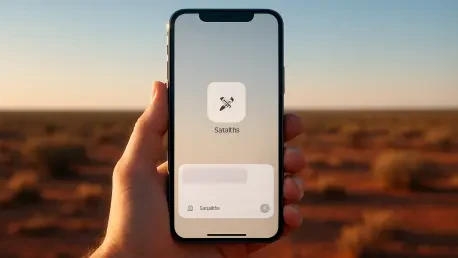

The vast, unforgiving expanse of the Australian Outback has long remained a final frontier for telecommunications, leaving millions of square kilometers without a single bar of cellular signal until now. This geographical reality has created a significant safety and connectivity gap for those traversing the remote interior or living in isolated communities where traditional cell tower infrastructure is financially and logistically impossible to deploy. Telstra has addressed this systemic issue by finalizing a landmark partnership with SpaceX, specifically utilizing the Starlink satellite constellation to provide direct-to-cell messaging capabilities. This collaboration effectively bridges the gap between urban centers and the most desolate regions of the continent, ensuring that a standard smartphone can maintain a basic level of communication regardless of ground-level coverage. By integrating low-earth orbit satellite technology with existing mobile networks, the partnership provides a vital digital safety net for travelers and rural residents who previously relied on expensive, specialized hardware to stay in touch with the world around them.
The Mechanics: Direct Satellite Communication Technology
This service is engineered as a text-based communication layer rather than a complete replacement for the terrestrial cellular networks that power metropolitan areas. Unlike the cumbersome and expensive satellite phones of the previous decade, this technology functions through the existing internal hardware of modern flagship smartphones, requiring no additional bulky antennas or specialized peripherals. It operates strictly as a text-only service at the current stage, allowing users to send and receive standard SMS messages when they are outside the range of traditional towers. This focused approach ensures that the limited bandwidth available from low-earth orbit satellites is reserved for essential communications rather than data-heavy applications. The implementation serves as a reliable just-in-case tool for hikers, farmers, and long-haul truck drivers who frequently venture into areas where the landscape is devoid of any cellular footprint. By focusing on text, the system maximizes the number of simultaneous users the satellite constellation can support at any given moment.
When a mobile device leaves the standard coverage zone, it automatically initiates a handshake with the Telstra SpaceX network, indicating that the handset is now communicating directly with orbiting satellites. This transition is designed to be as seamless as possible, though the user experience differs significantly from the instantaneous nature of ground-based texting. Because messages must travel hundreds of kilometers into space and back down to a ground station, transmission times can range from a few seconds to several minutes depending on the orbital position of the satellites. Furthermore, maintaining a connection requires a clear and unobstructed view of the open sky, as the high-frequency signals are easily blocked by dense tree canopies, mountain ridges, or structural materials like concrete and metal. Users are encouraged to move to an open clearing and hold their device steady to facilitate a successful link. This sensitivity to physical obstructions underscores the fact that satellite messaging is a supplementary tool intended for use in environments where traditional infrastructure cannot reach.
Subscriber Eligibility: Tier Availability and Hardware Requirements
Telstra has strategically positioned this satellite messaging capability as a premium value-add for its Upfront mobile plan subscribers, covering the Basic, Essential, and Premium tiers. By embedding this functionality as an integrated perk rather than an optional paid add-on, the company is actively seeking to differentiate its flagship services within an increasingly competitive telecommunications market. This decision specifically targets high-value customers who prioritize reliable connectivity during their travels across the diverse Australian landscape. However, this eligibility criteria excludes individuals using prepaid services or those on retail service providers that lease the Telstra wholesale network. This tiered approach suggests a focus on stabilizing the primary customer base before potentially expanding access to a broader audience in the future. The strategy emphasizes the significant investment required to maintain satellite partnerships and the desire to provide exclusive benefits to those on long-term, higher-tier contracts. Consequently, users must ensure their billing structure aligns with these specific requirements to utilize the orbiting network.
Accessing the Starlink constellation requires modern smartphone hardware equipped with specific radio frequency components and antenna configurations capable of reaching orbiting nodes. The service is currently compatible with recent flagship series, including the iPhone 13 and all subsequent models, Samsung’s Galaxy S24 and S25 lines, and the Google Pixel 9 and 10 devices. It is crucial for users to verify that their hardware is an Australian or global regional variant, as devices imported from specific international markets might lack the necessary radio protocols to establish a handshake with the Starlink system. Older devices or budget-oriented handsets often lack the sophisticated signal processing required to maintain a stable connection with a moving satellite at high altitudes. As manufacturers continue to refine internal antenna designs, the list of compatible devices is expected to grow, but for now, the service remains restricted to high-end hardware. This technical barrier highlights the sophisticated nature of direct-to-cell technology and the precision required to bridge the massive distance between a handheld device and a satellite traveling at orbital speeds.
Operational Boundaries: Geographical Constraints and Safety Protocols
The initial deployment of the satellite service prioritized geographical coverage across the vast majority of the Australian landmass, yet certain operational and regulatory exclusions remained necessary. One notable exception involved the Radio Quiet Zone in Western Australia, where authorities enforced strict limits on radio frequency emissions to protect the sensitive operations of the Square Kilometre Array project. Additionally, specific offshore territories and remote maritime regions fell outside the primary footprint of the current satellite constellation during the early implementation phases. Most importantly, telecommunications experts emphasized that the messaging service was not a functional replacement for official emergency response protocols. The technology did not support voice calls or text messages to Triple Zero (000), which remained a critical limitation for travelers in high-risk zones. The inherent latency observed in satellite communications made the system unsuitable for the immediate, real-time coordination required during critical life-threatening incidents.
The conclusion of the pilot programs demonstrated that while satellite messaging significantly improved general connectivity, it did not eliminate the need for dedicated survival equipment. Safety organizations recommended that individuals heading into the deep interior continued to carry specialized emergency beacons to ensure the highest level of protection. The strategy adopted by the partnership focused on providing a convenient communication layer for routine check-ins rather than a primary emergency lifeline. Future considerations for the network involved the gradual expansion of bandwidth to eventually support voice calls and high-speed data transmission as more advanced satellites entered orbit. Engineers worked toward integrating these space-based signals into the broader 5G ecosystem to create a truly ubiquitous network. This historical shift in mobile infrastructure marked the beginning of an era where dead zones became a relic of the past, encouraging users to upgrade their hardware to take advantage of upcoming global roaming standards. This evolutionary path ensured that the Australian telecommunications landscape remained at the forefront of global satellite integration efforts.