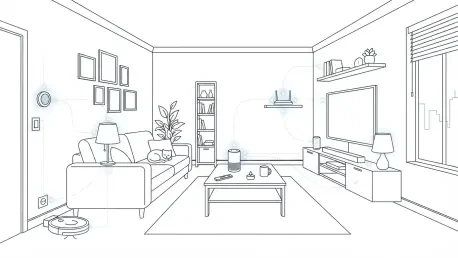

The $149 HomePod mini 2 utilizes the S8 chip from the Apple Watch to provide a more affordable entry point into the company’s expanding domestic environment. This strategic move marks a decisive shift from the luxury-only positioning that previously defined the hardware ecosystem, signaling a broader intent to capture the mass market. By late 2026, the technology giant has fundamentally realigned its product roadmap to address the historical friction points that allowed competitors like Amazon and Google to dominate the residential space. The transition is not merely about launching new gadgets but involves a structural overhaul of how devices interact within a cohesive, intelligent living environment. As households become increasingly crowded with disconnected sensors and appliances, the focus has shifted toward creating a unified command structure that prioritizes speed, reliability, and local intelligence. This new approach balances the premium experience associated with the brand while providing the necessary price flexibility to compete for a central role in every room of the modern household.
High-Performance Hardware and Silicon Synergy
The foundation of the current revitalization effort lies in a sophisticated hardware suite led by the HomeView smart display, which retails for $299 and effectively merges tablet functionality with premium audio engineering. Powering this flagship device is the A18 chip, the same silicon found in the iPhone 16, ensuring that the interface remains fluid and capable of handling complex computational tasks without relying on external servers. By embedding high-end mobile processors into stationary home devices, the company ensures that these units possess the technical headroom to evolve alongside software updates for several years. This prevents the rapid obsolescence that often plagues cheaper smart home alternatives, offering consumers a durable investment rather than a disposable accessory. The inclusion of the A18 and A19 chips across the entire lineup allows for advanced visual recognition and audio processing that occurs entirely on-device, maintaining the performance standards expected by a user base accustomed to the responsiveness of modern smartphones.
This silicon strategy serves a dual purpose by maximizing supply chain efficiency through a method often described as trickle-down research and development. By utilizing existing chip architectures across iPhones, iPads, and now home displays, the company significantly reduces the marginal cost of producing high-performance domestic hardware. The integration of the A19 chip into the latest Apple TV 4K illustrates this synergy, as the manufacturing scale of the upcoming iPhone 17 series drives down the costs of these powerful processors for the rest of the product catalog. This internal efficiency allows for the inclusion of advanced features like 8K video support and real-time gaming capabilities in a home hub without ballooning the final retail price. Moreover, this uniform architecture across devices simplifies the task for software developers, who can now design applications that run seamlessly on both a handheld mobile device and a central kitchen display with minimal modification or performance loss.
The Central Hub Philosophy and Reliability
Central to the revised domestic strategy is the concept of the hub device, a stable and permanent node that serves as the administrative brain of the household. Unlike smartphones or tablets that frequently move or lose battery power, smart speakers and fixed displays like the HomeView remain permanently connected to a power source and a specific room. This permanence allows them to act as a reliable gateway for wireless protocols such as Bluetooth Mesh, Thread, and Wi-Fi, ensuring that low-power sensors like light switches and door locks remain responsive at all times. This shift acknowledges that a smart home is only as effective as its most stable connection, and by centering the experience around always-on hardware, the company has eliminated the latency and connectivity drops that previously frustrated early adopters. The objective is to create a low-friction interface where the technical complexity of the network is entirely hidden behind a simple, high-fidelity user interaction.
This renewed focus on dedicated hubs is a direct response to the market lessons learned from the original HomePod launch several years ago. That initial product struggled to gain traction because its high entry price prevented it from becoming the default choice for the average household, leaving a vacuum that more affordable competitors quickly filled. In the current 2026 market, the tiered hardware approach provides multiple entry points, from the accessible HomePod mini 2 to the high-performance HomeView display, catering to different rooms and budget requirements. While a price premium remains compared to budget-focused rivals, the added value is found in the device’s ability to act as a robust local server for the home. By positioning these hubs as essential infrastructure rather than optional accessories, the company has transitioned from a niche provider of high-end speakers to a foundational architect of the modern, connected residential ecosystem.
Strategic Partnerships and System Integration
In a notable departure from its historically closed ecosystem, the company has entered into high-profile collaborations with industrial giants such as LG and Schneider Electric. Recognizing that it is logistically impossible to manufacture every category of home appliance, the strategy now involves positioning the software environment as the intelligent layer that sits atop third-party hardware. This model allows the company to dictate the user experience and design standards while leveraging the manufacturing expertise of established leaders in climate control, security, and power management. For example, Schneider’s latest smart thermostats and power mounts are built to integrate natively with the HomeView interface, providing a level of polish and reliability previously reserved for first-party products. This collaborative approach significantly expands the variety of compatible devices available to consumers, transforming the home application into a comprehensive dashboard for the entire residence.
Under this expanded partnership framework, the company defines the underlying security and interface requirements, effectively outsourcing the bulk and complexity of specialized hardware manufacturing. This shift allows for a more rapid expansion of the ecosystem, as consumers can now purchase LG-manufactured security cameras that function with the same privacy and ease of use as an iPhone. While the certified accessories often carry a higher price tag than generic alternatives—a phenomenon frequently called the Apple Tax—the trade-off is a seamless setup process and deep integration into the existing digital life of the user. By serving as the distribution and software hub for these partners, the company maintains control over the valuable user relationship and data privacy without the overhead of maintaining vast factories for appliances. This creates a curated marketplace where quality is guaranteed, addressing the fragmentation that has long hindered the broader adoption of automated home technologies.
Security Evolution and the Matter Standard
The evolution of the smart home strategy is deeply rooted in the transition away from the restrictive hardware requirements that once defined the HomeKit era. In previous years, manufacturers were required to include a physical authentication chip in every device to ensure compatibility, a demand that drove up costs and limited the variety of available products. Today, the company has fully embraced software-based authentication and the Matter universal standard, which allows for much broader interoperability between different brands and platforms. This move toward an open industry framework has lowered the barrier to entry for developers and made it possible for a single household to use a mix of various brands while still controlling everything through a central interface. By prioritizing compatibility without compromising on the core principles of data protection, the company has finally leveled the playing field against older, more permissive ecosystems.
This transition to the Matter standard marks a pivotal moment where the company acknowledged that a walled-garden approach was no longer sustainable in the diverse world of home appliances. Consumers are now able to build a customized environment using the best tools for their needs, whether that involves a specific brand of smart lighting or a particular model of kitchen appliance, all while retaining the security benefits of the primary operating system. The move from a hardware-locked system to a software-verified one has accelerated the growth of the compatible product list by nearly fourfold over the last two years. This shift has also reduced the friction for third-party manufacturers, who no longer need to produce separate hardware versions for different ecosystems. Consequently, the availability of high-quality, secure home devices has surged, allowing the company to capture market share through superior software integration rather than through restrictive hardware locks.
Artificial Intelligence and Privacy Advantage
The integration of advanced generative artificial intelligence has become the primary catalyst for the recent success of the home ecosystem. The development of a more context-aware version of Siri has transformed the way users interact with their living spaces, moving away from rigid, pre-programmed commands toward a more natural language interface. Users can now provide vague or highly contextual instructions, such as asking the system to prepare the room for a movie or inquiring about specific events detected by security cameras. Because the A-series chips provide immense local processing power, the majority of these AI computations happen on the device itself rather than in the cloud. This provides a significant speed advantage, as there is no round-trip delay to a distant server, and it ensures that sensitive audio and video data never leaves the home, addressing one of the biggest consumer concerns regarding domestic technology.
This privacy-first approach to artificial intelligence serves as a critical differentiator in a market saturated with data-mining alternatives. While competitors often rely on cloud-based processing to power their assistants, the current hardware suite leverages local silicon to maintain a secure environment where personal data is not used for advertising or profiling. This commitment to security is marketed as a luxury feature, appealing to a growing segment of the population that is wary of constant surveillance in private spaces. The system’s ability to pull information from a user’s calendar, messages, and location history allows for a deeply personalized experience that feels intuitive rather than invasive. By providing an assistant that actually understands the specific habits and needs of a family without compromising their privacy, the company has redefined the standard for what a truly intelligent home should look like.
Regional Obstacles and Saturated Market Realities
Despite the technological advancements, the company faces significant challenges in navigating a global market that has moved into a saturated phase. In many regions, the initial surge of interest in smart speakers and displays has plateaued, and most households that desire an automated environment have already invested in a specific ecosystem. Switching from an existing Amazon or Google setup is a complex and expensive undertaking, as it often requires the replacement of multiple interconnected devices that may not be fully compatible with a new primary hub. To overcome this inertia, the marketing focus has shifted toward the halo effect of the iPhone and Apple Watch, suggesting that the home experience is the final piece of a perfectly integrated digital life. The goal is to prove that the superior software polish and privacy features are worth the effort and cost associated with a total system migration.
In international markets, particularly in mainland China, the obstacles are even more pronounced due to the dominance of localized giants like Midea, Haier, and Xiaomi. These domestic companies offer deep integration with local services and a vast array of affordable appliances that the American company currently lacks. Furthermore, the localized versions of artificial intelligence assistants in these regions are often more capable of handling regional dialects and specific cultural nuances. To gain a foothold in these critical markets, the company has had to focus on localizing its AI services and seeking more aggressive partnerships with regional appliance brands. Success in these areas depends on the ability to bridge the gap between a global design philosophy and the specific functional requirements of diverse international consumers. Without these localized synergies, the premium hardware risk remaining a luxury curiosity rather than becoming a necessary component of the global household.
Strategic Realignment and Future Trajectory
The strategic pivot toward a more inclusive and high-performance smart home ecosystem represented a necessary evolution for the company’s long-term growth. Analysts observed that by adopting the Matter standard and diversifying the hardware lineup, the organization successfully addressed the primary complaints of high cost and limited compatibility. The introduction of the HomeView display and the updated HomePod mini 2 created a tiered entry system that catered to a wider demographic, while the reliance on powerful A-series chips ensured that the hardware remained relevant in a rapidly advancing technological landscape. This transition proved that the company was capable of maintaining its reputation for quality and security while simultaneously becoming more pragmatic about market interoperability. The focus on local AI processing established a new industry benchmark for privacy, providing a clear alternative to the cloud-heavy models favored by traditional competitors.
Moving forward, the primary objective involved deepening the integration between the domestic environment and the broader personal device ecosystem. The company prioritized the refinement of natural language processing to ensure that the home assistant functioned as a proactive member of the household rather than a reactive tool. To maintain this momentum, further expansion of third-party partnerships became essential, as did the continued localization of digital services for non-Western markets. Industry experts recommended that the next phase of development should focus on the energy management sector, using the hub devices to optimize household power consumption in real-time. By positioning the home ecosystem as both a comfort-enhancing luxury and a practical utility for sustainability, the company solidified its role as a central authority in the modern residence. This strategic realignment demonstrated that innovation in the smart home sector required a balance between premium hardware and an open, collaborative software philosophy.