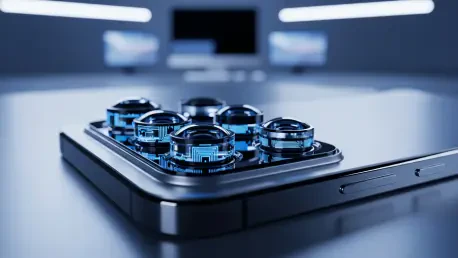

The traditional boundaries of mobile photography are dissolving as computational power begins to supersede the physical limitations of glass and metal components. Recent industry leaks regarding the upcoming HONOR Robot Phone suggest that the era of simple hardware-based imaging has officially ended, making way for a sophisticated AI-first paradigm. This shift represents a transition where the smartphone functions less like a camera and more like a high-performance imaging computer capable of synthesizing visual data in real time. Rather than competing solely on the size of the sensor or the number of megapixels, the focus has moved toward how artificial intelligence can interpret and recreate scenes with a level of precision that was once exclusive to high-end professional equipment. This evolution addresses a critical challenge in the industry: the plateau of physical lens technology, which has struggled to provide professional-grade depth and lighting within the thin chassis of a modern handheld mobile device.
Computational Synergy: The AI Image Quality Matrix and Cloud RAW
The centerpiece of this technological leap is the AI Image Quality Matrix, a system that fundamentally reengineers how light data is captured and processed. Unlike standard image signal processors that rely on fixed algorithms, this matrix utilizes an interconnected suite of five specialized engines to evaluate every pixel through a lens of computational intelligence. This approach allows the device to bypass the optical constraints typically associated with small-form-factor cameras by performing high-order detail reconstruction and color mapping dynamically. The goal is to produce results that mimic the aesthetic qualities of a digital single-lens reflex camera without requiring the bulky hardware that traditionally accompanies such performance. By prioritizing real-time algorithmic refinement, the system ensures that every frame captured is optimized for clarity, texture, and tonal accuracy, regardless of the environmental challenges present.
Beyond the local hardware capabilities, the leaked specifications point toward a robust Cloud RAW Imaging architecture that leverages remote processing power. This hybrid model allows the device to offload the most computationally intensive tasks, such as multi-frame noise reduction and complex texture reconstruction, to high-speed servers. This strategy ensures that the device can deliver ultra-clean images in near-dark conditions without generating the excessive heat or battery drain typical of on-device processing. By utilizing the cloud as an extension of the mobile processor, the system can apply deep-learning models that are too large to run locally, resulting in a level of image fidelity that was previously impossible. This integration represents a fundamental shift in how mobile manufacturers approach the balance between device portability and raw processing power, effectively turning every user into a connected node within a much larger imaging ecosystem.
Automated Artistry: Cinematic Filmmaking and Intelligent Agents
The leaks suggest that the device is designed to disrupt the filmmaking market through features like Masterful Camera Movement and One-Shot Walkthroughs, which automate professional techniques. Using AI to simulate complex trajectories, users can execute professional shots like the “Hitchcock Zoom” without the need for expensive gimbals or heavy sliders. Furthermore, the inclusion of World Models allows for seamless, continuous shots that maintain spatial consistency across changing environments. This technology makes it easier for creators to produce high-quality virtual tours or travel content with a single tap, effectively bridging the gap between amateur recording and professional cinematography. By predicting how light and objects should behave within a given scene, the system can synthesize transitions that would otherwise appear jarring or unpolished. This shift towards intelligent scene synthesis allows the storyteller to focus on narrative flow rather than technical execution.
Supporting this creative process is Image Agent 2.0, an intelligent creative partner that assists users throughout the entire production cycle, from initial setup to final post-capture editing. It provides live framing guidance and recommends specific camera settings based on real-time scene recognition, ensuring that every shot is optimized for the current lighting and composition. Beyond the initial capture, the agent offers sophisticated editing support through natural language commands, allowing for one-click color correction and complex object removal. By democratizing professional photography skills, this system ensures that high-level results are accessible to all users through intuitive, smart suggestions. This collaborative relationship between the device and the photographer transforms the smartphone from a simple tool into an active participant in the creative process. This evolution reflects a broader trend where automation is used to enhance human intuition rather than replace it.
Dynamic Performance: Stabilization and Strategic Future Applications
High-energy content creation requires a level of stability that traditional electronic stabilization often fails to provide, leading to the development of a more robust motion suite. The leaked information suggests that the device includes six distinct stabilization modes, including specialized settings like Pitch Lock and FPV Vertical Rotation. These modes are designed to handle the erratic movements associated with action sports and vlogging, ensuring that the horizon remains level and the footage stays smooth. By combining physical sensor-shift technology with predictive AI algorithms, the camera can anticipate movement and compensate for it before it affects the frame. This proactive approach to stabilization allows users to capture professional-quality action shots without the need for external gimbals or stabilizers. The result is a more streamlined setup that does not sacrifice the cinematic quality required for modern social media platforms and professional broadcasts alike.
The introduction of this advanced mobile imaging platform established a new benchmark for how computational power and cloud connectivity merged to solve historical hardware limitations. Industry experts observed how the integration of remote server processing and on-device intelligence successfully bridged the gap between amateur snapshots and professional visual media production. This transition encouraged creators to explore spatial environments and cinematic storytelling without the burden of heavy gear or complex post-production workflows. The adoption of these tools suggested that the next phase of mobile evolution prioritized the democratization of creative skills through automated assistance. Ultimately, the industry moved toward a future where technical barriers were minimized, allowing the narrative intent of the user to take precedence over the mechanical constraints of the tool itself. The shift toward AI-centric imaging provided a clear roadmap for future developments in the broader consumer electronics landscape.