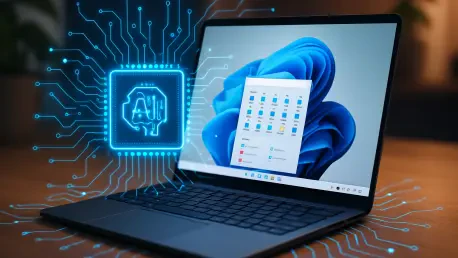

The rapid evolution of personal computing has shifted from general-purpose processing to a specialized architecture that prioritizes machine learning capabilities directly on the local machine. This transition marks a fundamental departure from the previous decade, where heavy lifting for artificial intelligence was almost exclusively relegated to massive, energy-hungry data centers located miles from the user. Windows 11 has become the primary laboratory for this transformation, as Microsoft collaborates with silicon vendors to integrate powerful Neural Processing Units into every standard consumer device. By moving generative models and semantic search capabilities from the cloud to the desktop, the operating system effectively reduces latency and eliminates the constant need for high-bandwidth connectivity. This shift is not merely an incremental update but a structural reimagining of how an operating system interacts with user data, ensuring that the computational demands of modern intelligence are met by the hardware.
The Integration of Dedicated Neural Silicon
The Strategic Shift Toward NPU Dominance
The introduction of the Copilot+ PC category established a hardware standard that mandates a minimum of 40 Tera Operations Per Second (TOPS) specifically for neural processing tasks. This requirement forced a significant change in the semiconductor industry, as manufacturers like Qualcomm, Intel, and AMD pivoted toward creating System-on-Chips that prioritize dedicated silicon for machine learning over traditional clock speeds. For the Windows 11 user, this hardware shift means that features like real-time translation and image generation no longer rely on the cloud, which significantly lowers the barrier for complex creative workflows. By offloading these intensive tasks to the NPU, the central processing unit and graphics card remain free to handle standard application logic and high-end rendering without thermal throttling. This specialized hardware allocation ensures that the operating system remains responsive even when performing multi-layered cognitive operations in the background of active windows.
Optimized Kernel Architectures for AI Task Scheduling
The Windows Copilot Runtime serves as the foundational software layer that bridges the gap between hardware capabilities and user-facing applications. This runtime includes a vast library of pre-installed Small Language Models and over 40 distinct on-device AI models that developers can access through standardized APIs. By embedding these models directly into the Windows 11 image, Microsoft has reduced the need for third-party developers to package their own heavy AI weights with every application. This architectural decision not only saves storage space but also ensures that every application on the platform benefits from the same level of optimization and security provided by the core operating system. Furthermore, the runtime manages the complex orchestration required to keep these models updated and secure, ensuring that the local intelligence layer remains resilient against emerging threats. This level of system integration allows for a seamless flow of data between the shell and the AI.
Local Intelligence and Data Sovereignty
Implementing Small Language Models for On-Device Tasks
The deployment of Phi-Silica, a powerful Small Language Model specifically tuned for the NPU, marks a turning point in how Windows 11 handles natural language processing tasks. Unlike the massive models that power web-based chatbots, these compact models are designed to fit within the memory constraints of modern hardware while maintaining impressive levels of reasoning and creativity. Because these models live locally on the solid-state drive, they provide near-instantaneous responses to user queries, such as drafting emails or summarizing long documents within File Explorer. This local execution model eliminates the latency associated with data traveling to a server and back, providing a snappiness that cloud services cannot replicate. Moreover, the integration of these models into the Windows Shell allows for a more cohesive experience where the AI understands the context of the user’s files. This local-first approach ensures that intelligence is deeply woven into the daily workflow.
Future-Proofing Through Enhanced Digital Security
The transition toward a localized artificial intelligence architecture within Windows 11 required a comprehensive overhaul of both hardware standards and software engineering practices. Stakeholders who prioritized the adoption of Copilot+ hardware early on gained a significant advantage in terms of performance and data security. Organizations and individual users found that investing in NPU-equipped silicon was the most effective way to future-proof their digital infrastructure against the increasing demands of generative workflows. Developers were encouraged to utilize the Windows Copilot Runtime to build applications that were inherently more responsive and privacy-conscious. The success of this initiative demonstrated that the path to a more intelligent operating system lay not in bigger data centers, but in smarter hardware. Those who embraced these localized capabilities maximized their productivity while maintaining full control over their digital lives through proactive and secure management.