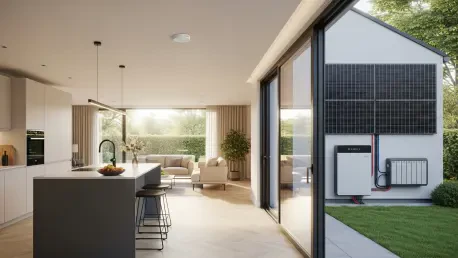

The transition from isolated smart gadgets to fully integrated energy ecosystems is redefining how modern residences function as proactive participants in global resource management. Instead of managing a disparate collection of smart plugs and voice assistants, households are now adopting centralized hubs that synthesize data from security sensors, climate controllers, and renewable energy sources. This transition is driven by the realization that individual smart devices offer limited value if they cannot communicate effectively to optimize the overall efficiency of the residence. By focusing on the holistic energy profile of the building, these ecosystems reduce the cognitive load on inhabitants while significantly lowering utility expenditures and carbon emissions. As the infrastructure of our homes becomes increasingly “self-aware,” the focus has shifted toward creating a seamless interface between the domestic environment and the broader world, ensuring that comfort and convenience are achieved without sacrificing long-term sustainability. This approach ensures that the residence acts as a unified organism rather than a box of separate tools.
Domestic Infrastructure: Redefining the Residence as an Energy Hub
Domestic Energy Profiles: Adapting to High-Load Consumer Demands
The diversification of domestic energy needs has been accelerated by the widespread adoption of heavy-duty electrical loads such as electric vehicle chargers and high-performance computing setups. Whereas a decade ago the primary energy concerns were limited to basic lighting and refrigeration, the modern home must now support a multi-kilowatt infrastructure that powers daily transportation and sophisticated remote professional environments. This surge in demand has made the manual management of appliances entirely impractical, as the sheer volume of electricity being moved requires constant, millisecond-by-millisecond monitoring to prevent circuit overloads or excessive peak-rate charges. Consequently, the role of the home has shifted from a place of passive consumption to a complex node in the energy network that must intelligently prioritize power distribution. By integrating sophisticated software layers, these residences can ensure that essential medical equipment or work-from-home servers remain powered even during peak periods, while non-essential systems are throttled to maintain a stable electrical balance throughout the entire building.
The Residential Prosumer: Balancing Solar Production and Local Storage
Beyond simply consuming power, a growing number of homeowners have transitioned into the role of “prosumers” by installing advanced photovoltaic arrays and local battery storage systems. The primary challenge for an intelligent energy ecosystem in this context is to dynamically balance the consumption of home-grown power with the varying rates of the utility grid. This requires the system to anticipate weather patterns to predict solar production while simultaneously tracking real-time market prices for electricity to determine the optimal times to buy or sell. By utilizing these predictive analytics, the home can autonomously decide whether to charge its internal batteries, power the washing machine, or export excess energy back to the grid for a financial credit. This bidirectional flow of energy and information transforms the residence into a micro-power plant, allowing it to contribute to the stability of the local neighborhood while providing the owner with unprecedented control over their energy bills and environmental impact. This integration turns a static house into an active energy asset.
Interoperability: Breaking Down Barriers with Universal Standards
Industry Fragmentation: Overcoming the Limitations of Walled Gardens
For many years, the primary obstacle preventing the true realization of an integrated domestic ecosystem was the prevalence of proprietary “walled gardens” created by various hardware manufacturers. Consumers were often forced to choose between incompatible ecosystems, leading to a fragmented user experience where a smart thermostat from one brand could not communicate with window sensors from another. This lack of interoperability meant that many energy-saving features remained untapped, as the devices were unable to share the critical data points necessary for holistic automation. This fragmentation not only frustrated users who had to toggle between multiple applications but also hindered the development of advanced energy management strategies that require a unified view of the entire home. Breaking down these silos was essential to move beyond the gimmickry of remote-controlled lights and toward a functional environment where every sensor contributes to the collective intelligence of the dwelling. Establishing a common language is the only way to ensure that disparate technologies can finally work toward the common goal of maximum efficiency.
Protocol Synergy: Establishing a Common Language for the Internet of Things
The emergence of universal communication protocols like Matter and the continued evolution of the KNX standard have provided the necessary framework for cross-brand device synchronization. Matter, built on proven technologies like Thread and Wi-Fi, creates a common language for the Internet of Things, allowing a wide variety of devices to work together regardless of their manufacturer. This standardization is the foundation upon which complex energy ecosystems are built, as it ensures that a smart inverter can communicate directly with an electric vehicle charger to optimize solar self-consumption. By providing a secure and reliable way for devices to interact locally, these protocols also reduce the dependence on external cloud servers, which enhances both the privacy of the occupants and the responsiveness of the system. This level of seamless connectivity is what allows the home to act as a single, cohesive unit, where the collective functionality of the integrated system far exceeds the sum of its individual parts. Standardized communication is no longer a technical preference but a requirement for a truly intelligent residence.
Cognitive Automation: The Intelligence Behind Self-Aware Environments
Environmental Responsiveness: Optimizing Consumption with Sensing Technology
A truly intelligent home operates on the principle of self-awareness, where the building itself understands its current state and the needs of its occupants without constant manual input. By leveraging an array of presence sensors and environmental monitors, the system can detect when a room is unoccupied and immediately adjust the lighting and climate settings to a conservation mode. This autonomous decision-making process ensures that energy is never wasted on heating or cooling empty spaces, which historically accounted for a significant portion of domestic energy inefficiency. Furthermore, the system can analyze historical usage patterns to “learn” the routines of the family, pre-cooling the house just before they arrive home or lowering the temperature during sleep cycles. This proactive management of the internal environment creates a living space that feels naturally comfortable while quietly working in the background to minimize its carbon footprint through precise and data-driven resource allocation. The home becomes a guardian of comfort and thrift, reacting to subtle changes in occupancy and climate.
Intelligent Scheduling: Load Shifting for Grid Stability and Cost Savings
Beyond immediate reactive adjustments, the modern energy ecosystem excels at intelligent scheduling, which shifts energy-intensive tasks to times when electricity is cheapest or most abundant. For example, the central management hub can postpone the operation of a dishwasher or the charging of a robotic lawnmower until after midnight, when grid demand is low and rates are at their minimum. This type of load-shifting is vital for reducing the strain on the national electrical infrastructure, as it helps to flatten the peaks and valleys of energy consumption across the entire network. In homes equipped with electric vehicles, this intelligence is even more critical, as the system can coordinate the vehicle’s charging cycle with the home’s overall power budget to ensure that the car is ready for use by morning without tripping a circuit breaker. By making these complex decisions autonomously, the intelligent ecosystem provides a level of financial and operational efficiency that would be impossible for a human to manage. This strategic timing ensures that the residence operates at the intersection of economic sense and technological foresight.
Microelectronics Development: The Semiconductor Revolution Powering the Future
Computational Efficiency: Enhancing Performance with Edge AI Microcontrollers
The sophisticated capabilities of modern energy ecosystems are made possible by radical advancements in semiconductor technology, particularly in the fields of microcontrollers and Edge AI. These specialized chips allow for high-speed data processing to occur directly on the device, eliminating the latency and privacy concerns associated with sending sensitive domestic information to the cloud. By performing complex calculations at the “edge” of the network, smart sensors can recognize specific sound patterns, such as a leaking pipe or a broken window, and trigger an immediate response. These processors also enable more refined control over heating and cooling systems by using machine learning to interpret data from dozens of points simultaneously, including humidity levels, external temperatures, and air quality. This hardware-level intelligence is the actual “brain” of the self-aware home, providing the raw computing power necessary to translate millions of data points into actionable energy-saving maneuvers. Without these high-performance microchips, the vision of an autonomous, responsive residence would remain a theoretical concept.
Power Electronics: Silicon Carbide and the Precision of Bidirectional Flow
To manage the high voltages and currents involved in modern home power systems, engineers are increasingly turning to Silicon Carbide (SiC) semiconductors and specialized power management integrated circuits. These advanced materials are much more efficient at converting and moving electricity than traditional silicon-based components, which significantly reduces the amount of energy lost as heat during the conversion process. This efficiency is especially critical for bidirectional power systems, which allow electricity to flow seamlessly between the home’s battery storage, the electric vehicle, and the utility grid. By minimizing these losses, SiC technology ensures that every watt generated by a rooftop solar array is used as effectively as possible, whether it is being stored for later use or diverted to power a high-drain appliance. As these components become more cost-effective and widely available, they are enabling the creation of compact, high-efficiency inverters and chargers that serve as the critical hardware backbone for the next generation of intelligent residences. The physical movement of energy is now as smart as the data that controls it.
Strategic Implementation: Practical Pathways to Domestic Energy Independence
To successfully transition toward these intelligent energy ecosystems, homeowners began by prioritizing the selection of devices that adhered to open standards and robust security protocols. They recognized that the true value of a smart home lay not in its individual components, but in the ability of those components to collaborate under a unified management strategy. By investing in scalable hardware like Silicon Carbide-based inverters and Matter-compliant hubs, residents established a future-proof foundation that could grow alongside their changing energy needs. The move toward local data processing and Edge AI further ensured that privacy remained a top priority even as the home became more interconnected with the outside world. As these systems matured, the emphasis shifted from simple automation to the active optimization of every kilowatt-hour consumed or generated on-site. Ultimately, the adoption of these technologies empowered individuals to take direct responsibility for their environmental impact while enjoying a level of domestic comfort and security that was previously unattainable. The focus remained on choosing high-quality, interoperable hardware that supported long-term autonomy.