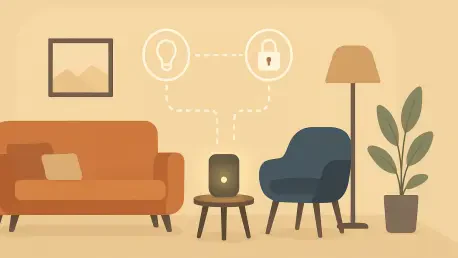

By integrating a dedicated Neural Processing Unit capable of 26 teraops, the HomeAgent HA100 manages complex automation routines without transmitting personal information over the internet. This shift marks a pivotal moment for a market that has long been dominated by cloud-centric architectures that prioritize corporate data collection over individual security. As households increasingly adopt smart lighting, security sensors, and voice-activated assistants, the sheer volume of personal data flowing into remote servers has created a significant privacy deficit. UGREEN addresses this vulnerability by moving the heavy computational lifting back into the residence, ensuring that every voice command and activity log remains strictly within the physical boundaries of the home. This transition to decentralized intelligence provides a robust safeguard against server breaches and external data mining. By localizing the brain of the smart home, users gain a level of autonomy that was previously unattainable in the age of subscription-based cloud AI.
Technical Foundation: High-Performance Hardware and Connectivity
The engineering behind the HA100 focuses on bridging the performance gap between compact consumer hubs and enterprise-grade servers. With 16 gigabytes of high-speed RAM and a specialized neural processor, the device is capable of running the Uliya Large Language Model entirely on-site. This allows for sophisticated natural language understanding that does not rely on the latency-prone communication cycles characteristic of traditional assistants. Instead of merely matching keywords to simple triggers, the system can interpret complex, multi-step instructions and learn specific household patterns without external assistance. This localized processing power ensures that even the most intricate automation sequences are executed with near-instantaneous response times. Consequently, the user experience becomes more fluid and reliable, as the system eliminates the typical delays associated with uploading audio data to a remote server and waiting for a processed command to return to the device over the internet.
In order to maintain its status as a universal command center, the HomeAgent incorporates comprehensive support for the Matter and Thread communication protocols. This cross-compatibility is essential in the current smart home landscape, where fragmented ecosystems from various manufacturers often create digital silos that frustrate consumers. By acting as a unified bridge, the device allows high-end sensors from Aqara, lighting systems from Philips Hue, and decorative elements from Nanoleaf to operate under a single, cohesive management layer. This interoperability extends beyond simple connectivity; it allows the local AI to orchestrate routines that involve multiple brands simultaneously without requiring separate cloud accounts for each manufacturer. Furthermore, the inclusion of standard Wi-Fi and Bluetooth ensures that older legacy devices can still be integrated into the modernized environment. This architectural inclusivity ensures that homeowners can choose the best hardware available on the market without worrying about software lock-in.
Data Sovereignty: Privacy, Economics, and Storage Integration
The core philosophy of Edge AI serves as a direct response to the ethical dilemmas posed by third-party data exploitation. In a traditional smart home setup, metadata concerning a user’s presence, sleep cycles, and domestic habits is often leveraged to train vast commercial models or sold to advertisers under the guise of service improvement. The HomeAgent disrupts this cycle by ensuring that all training and inference for the Uliya model occur within the encrypted local storage of the hub itself. This creates a secure sandbox where sensitive information, such as high-definition security camera feeds and private conversations, is never exposed to the public web. While this localized approach provides an ironclad layer of protection against mass surveillance, it does require a more proactive stance from the homeowner regarding internal network security. Maintaining strong passwords and ensuring that the hub’s firmware is updated through the local interface becomes the primary defense against potential intruders.
The integration of the UGOS Pro operating system further expanded the utility of the hardware by transforming it into a high-capacity private cloud and media server. With three SATA 3.0 bays and an M.2 NVMe slot, users managed massive file libraries and device backups without recurring storage fees. This architectural synthesis allowed homeowners to maintain a unified brain for both automation and personal data. As the technology matured, the most successful strategy for users involved auditing their existing devices for Matter compatibility and optimizing their local network bandwidth to support intensive AI tasks. Experts noted that moving away from global data networks toward self-sufficient domestic ecosystems significantly reduced security risks. Ultimately, the transition to such localized systems proved that households could achieve sophisticated automation without sacrificing privacy. This approach established a new standard where personal digital sovereignty became the cornerstone of the modern smart home experience.