
The global market for wearable technology is currently witnessing a tectonic shift as heavy, cumbersome augmented reality headsets lose ground to sleek, everyday eyewear that integrates seamlessly into a user’s personal wardrobe. This transition represents a fundamental change in how manufacturers approach the intersection of digital utility and physical presence. For years, the industry struggled with the “glasshole” stigma and the physical strain of wearing front-heavy devices for extended periods. However, the current landscape of 2026 suggests that the solution was never about packing more pixels into a display, but rather about refining the form factor to a point where the technology becomes invisible. As consumers increasingly prioritize comfort and aesthetic appeal over raw processing power, tech giants are recalibrating their hardware roadmaps to favor “Lite AR” configurations. These devices rely heavily on audio-visual artificial intelligence rather than power-hungry holographic projectors. This strategic pivot aims to capture the hundreds of millions of people who already wear prescription glasses or sunglasses, transforming a medical necessity into a high-tech gateway. By focusing on the philosophy of fashion-first engineering, companies are finally addressing the social and ergonomic barriers that previously relegated smart glasses to the niche world of enterprise pilots and early-adopter experimentation.
Aesthetic Integration: The Pivot Toward Traditional Frame Designs
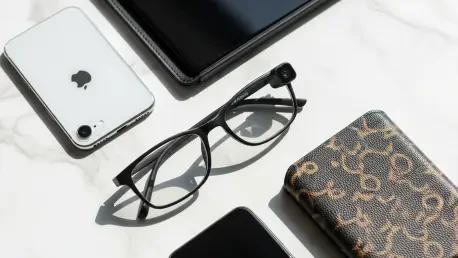
Apple has moved beyond the experimental phase of its wearable strategy by actively testing four distinct frame designs that mirror the most popular styles in the traditional eyewear industry. These designs range from bold, large rectangles to understated, small ovals, ensuring that there is a profile to suit various face shapes and fashion preferences. The most striking aspect of this current development cycle is the potential omission of integrated displays in the initial consumer rollout. By removing the weight and complexity of waveguides and light engines, the hardware can maintain the slim profile of standard Ray-Bans or Warby Parker frames. This approach prioritizes high-quality cameras, sophisticated spatial audio, and an enhanced Siri interface that leverages generative AI to provide context-aware assistance. For a user walking down a busy street, the glasses act as an intelligent observer, identifying landmarks or reading signs through the earpieces without ever obstructing their natural field of view. This design philosophy acknowledges that for a wearable to be truly successful, it must first be a product that people genuinely want to wear for its look and feel, with the technological benefits serving as a secondary, silent companion.
Building on this foundation of style, the engineering focus has shifted toward the miniaturization of sensors and the optimization of battery life within the temple arms of the glasses. To achieve a weight that is indistinguishable from standard acetate frames, manufacturers are utilizing advanced composite materials and high-density flexible circuits. This allows for the inclusion of multi-mic arrays and high-resolution imaging sensors without the bulk that characterized earlier iterations of smart eyewear. The current trend in 2026 emphasizes “ambient computing,” where the device does not demand the user’s constant attention but remains ready to assist through voice or subtle haptic feedback. This shift is a direct response to the fatigue associated with immersive mixed reality, which often proved too intense for casual daily use. By sticking to a “Lite AR” framework, Apple and its competitors are betting that a stylish, camera-forward device with a twelve-hour battery life will be far more disruptive than a bulky headset with a two-hour limit. The success of this wave depends on the ability to convince the public that smart glasses are not just a tool for tech enthusiasts, but a natural evolution of the most common accessory in human history.
Strategic Restructuring: Fiscal Discipline and Tactical Retreats
The broader industry is currently undergoing a period of intense corporate restructuring as companies move away from the “move fast and break things” mentality of previous years. Snap has taken the significant step of reorganizing its augmented reality division into an independent unit, a move designed to provide greater transparency and operational efficiency. Along with this structural change, the company implemented a 16% reduction in its workforce to streamline development and focus specifically on the high-stakes launch of its latest “Specs” line. This fiscal discipline is a clear signal to investors that the era of unlimited spending on speculative research is over. Instead, the focus has shifted toward creating a sustainable business model where hardware sales and software ecosystems can eventually reach parity with traditional smartphone revenues. By narrowing their focus to a specific consumer segment, Snap aims to dominate the social and creative aspects of AR, positioning its glasses as the ultimate tool for content creators who want to capture and share their world hands-free without sacrificing their personal style or financial stability.
Meta is following a remarkably similar path of caution, with recent layoffs in its Reality Labs division indicating a tactical retreat from aggressive, fully immersive mixed reality projects. While the company still envisions a future defined by the metaverse, the current priority has shifted toward incremental AR features that can be deployed in more immediate, practical hardware. This consensus among tech giants suggests that the path to profitability lies in refining the user experience of simple smart glasses rather than trying to force-feed the public complex digital environments. The recent shifts at Meta emphasize the development of AI-driven features that can operate on lower-power chips, reducing the thermal load and allowing for thinner frames. This move toward “Lite AR” is not a sign of diminished ambition, but rather a realization that the market is more receptive to helpful, discreet technology than to world-altering visual overlays. As these companies tighten their belts and focus their engineering talent on specific, achievable goals, the competition is becoming less about who has the most advanced laboratory prototypes and more about who can ship a reliable, attractive product to millions of users globally.
The Role of Artificial Intelligence: Accelerating Development Cycles
A transformative factor in the current evolution of wearable technology is the deep integration of Artificial Intelligence into the software development process itself. Reports indicate that AI now generates approximately 65% of new code at leading tech firms, allowing smaller, more agile teams to iterate on features and fix bugs at an unprecedented pace. This surge in automated coding has significantly shortened the product roadmap for smart glasses, enabling rapid prototyping of new gesture controls and voice-command architectures. However, this shift also places a newfound emphasis on quality control and the role of human developers as high-level architects rather than just writers of code. The efficiency gained through AI-assisted programming is being funneled directly into the refinement of on-device machine learning models. These models are responsible for real-time image recognition and environmental mapping, ensuring that the glasses can understand the user’s context without needing to send massive amounts of data to the cloud. This local processing is crucial for maintaining privacy and reducing latency, two factors that are paramount for consumer trust in camera-equipped eyewear.
The rapid deployment of AI-generated features allows for a more personalized user experience, where the glasses can adapt to individual habits and preferences over time. For instance, the software can learn which notifications are important enough to be read aloud and which should be silenced based on the user’s location and activity. This level of sophistication is made possible by the massive datasets that AI models can process during the development phase, leading to more robust and intuitive interfaces. Moreover, the integration of generative AI into the glasses’ operating systems means that “Siri” or “Meta AI” can engage in more natural, fluid conversations, acting as a true digital concierge. As the code becomes more efficient and the AI models become more compact, the hardware requirements stay within the limits of stylish, lightweight frames. This synergy between software automation and hardware miniaturization is the engine driving the 2026 wave of smart glasses. It proves that the most significant breakthroughs are often the ones that happen behind the scenes, enabling a seamless blend of the digital and physical worlds that feels completely natural to the end user.
Future Considerations: Moving Toward Practical Daily Utility
The successful adoption of smart glasses will ultimately hinge on a transition from novelty to a perceived daily necessity, driven by actionable utility. Moving forward, the industry must focus on establishing clear privacy standards and “social etiquette” for camera-equipped wearables to mitigate public discomfort. One practical step for manufacturers is the implementation of unmistakable physical indicators, such as bright LEDs or mechanical shutters, that signal when a device is recording. Beyond hardware, developers should prioritize “killer apps” that solve real-world problems, such as real-time language translation for travelers or heads-up navigation for cyclists. These specific use cases provide a much stronger value proposition than the generic “connectivity” marketed in previous years. Furthermore, integrating prescription lens fulfillment directly into the purchasing process will be essential for reaching the widest possible audience. If the process of buying smart glasses becomes as simple as visiting a local optometrist, the barrier to entry will drop significantly, allowing the technology to permeate the mainstream market through existing retail infrastructure.
In the coming years, the focus will likely shift from what the glasses can show the user to what the glasses can do for the user’s overall digital well-being. This involves creating “distraction-free” modes that use AI to filter out the noise of the digital world, allowing users to stay present in their physical environment while remaining reachable for emergencies. The transition to a post-smartphone era will not happen overnight, but the current momentum behind stylish, AI-assisted eyewear suggests that the foundation is being laid. Stakeholders in the tech industry should look toward partnerships with established fashion houses to ensure that future iterations of these devices continue to evolve in line with global style trends. By treating the glasses as a fashion statement first and a computer second, companies can bypass the “uncanny valley” of wearable tech. The move toward discreet, functional, and aesthetically pleasing frames was a necessary evolution. As the industry moves past the experimental phase of bulky headsets, the focus remains on making the technology so useful and attractive that leaving the house without your smart glasses feels as strange as leaving without your phone.