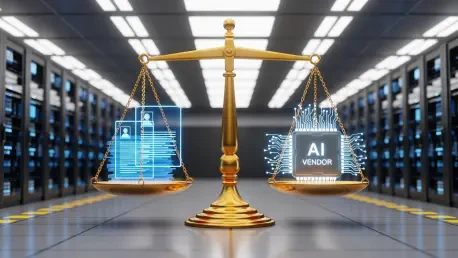

When a qualified candidate is rejected by a machine before a human recruiter even sees their name, the silicon curtain hiding the algorithmic decision-making process finally begins to pull back, exposing a new legal frontier. For the modern job seeker, the path to employment no longer begins with a firm handshake or a well-crafted cover letter read by a hiring manager. Instead, it starts with an invisible gatekeeper: an artificial intelligence system designed to parse, filter, and rank thousands of resumes in milliseconds. While this technology promised to revolutionize human capital management by removing human error and speeding up the recruitment cycle, it has instead created a complex web of liability that threatens to ensnare the very companies that built these “neutral” tools.
The intersection of artificial intelligence and employment law is currently facing a transformative moment that challenges long-held assumptions about corporate responsibility. The core of this debate centers on whether the vendors of these recruitment platforms can be held directly accountable for discriminatory outcomes, or if the burden of proof remains solely with the employers who purchase the software. This transition from passive digital infrastructure to active decision-making agency marks a significant shift in judicial interpretation. As federal courts begin to weigh in, the industry is witnessing the birth of “algorithmic accountability,” a concept that moves the focus from the intent of the programmer to the tangible impact of the software on protected classes of workers.
The End of the “Neutral Tool” Defense
For years, software vendors operated under a convenient legal shield, positioning themselves as mere providers of digital infrastructure rather than participants in the hiring process. This stance allowed tech companies to distance themselves from the consequences of their algorithms, arguing that they simply provided the “piping” for an employer’s recruitment strategy. However, that era of immunity is rapidly closing as federal courts begin to redefine the relationship between artificial intelligence and employment law. When an algorithm rejects a candidate based on patterns it has learned from biased historical data, the software is no longer just a tool; it functions as a primary gatekeeper, making executive decisions that were once the sole province of human resources.
The “neutral tool” defense is failing to stand up against the reality of how these systems operate in the field. Lawyers and regulators are increasingly arguing that if a piece of software is designed to screen out 90% of applicants before a human even interacts with the database, that software has materially participated in the hiring decision. This evolution in legal thought suggests that vendors cannot hide behind the complexity of their “black box” systems. The opacity of a machine-learning model is no longer viewed as a natural byproduct of innovation, but rather as a potential liability that vendors must mitigate through rigorous transparency and constant outcome monitoring.
The High Stakes of Algorithmic Recruitment
The shift toward automated human capital management has promised efficiency, but it has also introduced systemic risks that traditional legal frameworks are struggling to contain. As enterprises increasingly rely on AI to parse thousands of applications, the potential for bias to scale at an unprecedented rate has become a primary concern for regulators and job seekers alike. Unlike a single biased manager, whose influence is limited to their specific department, a biased algorithm can systematically exclude thousands of qualified individuals across an entire global enterprise in a single afternoon. This issue involves fundamental protections under the Civil Rights Act, the Americans with Disabilities Act, and the Age Discrimination in Employment Act, all of which are being tested by the speed and scale of automated exclusion.
With the emergence of algorithmic accountability, the focus has shifted from the intent of the employer to the impact of the software on the workforce. Regulators are no longer satisfied with the explanation that an algorithm was not “intended” to be biased. Instead, they are looking at the disparate impact—the actual results that show whether certain groups are being disproportionately screened out by the technology. This creates a new landscape of liability where the burden is on the technology provider to prove that their variables do not serve as proxies for protected characteristics. The high stakes of this shift mean that any failure in algorithmic design can lead to massive class-action litigation that targets both the user of the tool and the company that manufactured it.
Unpacking Mobley v. Workday: Landmark Litigation
The federal lawsuit filed by Derek Mobley serves as the primary catalyst for this shift in legal interpretation, centering on allegations that screening tools systematically exclude candidates based on race, age, and disability. Mobley, a Black applicant with a disability, documented a pattern of continuous rejections across more than 100 job applications submitted through a specific platform, despite meeting the necessary qualifications for the roles. A pivotal ruling by Judge Rita Lin suggested that AI vendors can be considered “agents” of the employer, making them directly liable for discriminatory outcomes under statutes like the California Fair Employment and Housing Act. This “Agency Theory” is a massive blow to the vendor’s defense, as it implies that the vendor is acting as a proxy for the employer’s hiring department.
The case highlights how algorithms use seemingly neutral data points—such as graduation dates, employment gaps, or even linguistic patterns—as proxies for protected characteristics. When an AI filters for “recent graduates,” it may be effectively filtering for age; when it filters for “continuous employment,” it may be inadvertently filtering out individuals with chronic health conditions or those who have taken leave for caregiving. Furthermore, the court’s refusal to dismiss state-level claims based on the vendor’s physical location signals that technology providers can be held accountable across state lines. If their software materially influences a rejection in a specific jurisdiction, the vendor must comply with the local anti-discrimination laws of that region, regardless of where their servers are housed.
Industry Perspectives: The Myth of Human Oversight
The debate over liability often hinges on the level of human involvement in the final hiring decision, a point of contention between tech vendors and industry analysts. Vendors often emphasize a “Responsible AI” framework that prioritizes human-in-the-loop design and rigorous testing against international standards like NIST and ISO. They argue that because a human recruiter ultimately signs off on the final hire, the AI is merely a recommender. However, many legal experts and analysts argue that human oversight is often a myth in practice. If an algorithm “weeds out” the vast majority of candidates at the top of the funnel, the human recruiter is only choosing from a pre-filtered, potentially biased pool, rendering their “final say” secondary to the initial automated exclusion.
This “automation bias” suggests that human recruiters tend to trust the rankings provided by the machine, rarely questioning why certain candidates were omitted from the shortlist. If the software presents the “top five” candidates, the recruiter is unlikely to dig into the thousands of rejected profiles to check for errors. This psychological reality undermines the defense that humans are the ultimate decision-makers. Consequently, the industry is seeing a push for more meaningful oversight where humans are required to justify the exclusion of candidates or where the “black box” is forced to explain its reasoning in plain language. Without this, the human-in-the-loop remains a symbolic gesture rather than a legitimate safeguard against algorithmic prejudice.
Strategic Shift: Navigating the New Era of AI Compliance
As the legal standard for AI moves from passive assistance to active agency, enterprises and vendors must adopt a more aggressive framework for risk management. Moving beyond one-time procurement checks toward continuous bias auditing became the standard for organizations seeking to avoid litigation. These audits ensured that the algorithm did not develop “drift” toward discriminatory patterns as it learned from new data. Additionally, companies began evaluating how models interpreted different phrasing and institutional affiliations, as language use often served as a subtle form of racial or cultural exclusion. By testing for linguistic sensitivity, firms identified and corrected hidden biases that favored specific socioeconomic backgrounds over others.
Redefining the vendor-employer contract proved to be another essential step in this new era of compliance. Legal teams updated service agreements to clearly define the responsibilities for algorithmic outcomes, acknowledging the potential agency relationship recognized by the courts. They established specific protocols for where and how human experts had to intervene in the automated process to ensure oversight was meaningful rather than symbolic. Organizations also demanded greater clarity on the variables and historical data sets used to train recruitment models. By identifying and eliminating potential proxies for protected classes at the training stage, the industry successfully transitioned toward a more transparent and legally defensible model of automated recruitment. These actions collectively signaled a departure from the “move fast and break things” mentality, replacing it with a structured, ethical approach to digital human resources.