
The scarcity of human attention in an era of information overload has made the threshold of the digital experience more valuable than any mid-feed placement. As the digital advertising landscape navigates the complexities of 2026, the transition from commoditized programmatic supply to high-value architectural placements is nearly complete. For years, mobile and connected TV inventory were treated as a sheer numbers game, where advertisers sought the lowest possible prices across fragmented exchanges. However, a strategic pivot has occurred as publishers and manufacturers realize that the “front door” of an app or device is not just a utility but a distinct, high-yield asset. This realization has led to the reclassification of the home screen as the most elite real estate in the digital world. By positioning brand messages at the very start of a user’s journey, companies are effectively bypassing the clutter that has historically diluted the effectiveness of digital campaigns. This shift represents a move toward quality and structural scarcity, allowing for a more deliberate interaction between consumers and brands before the noise of the open internet takes hold.
Understanding the Drivers of Market Value
Why Does Human Attention Command a Premium?
The psychological mechanism behind the home screen’s effectiveness is rooted in the concept of high-intent selection. When a user engages with a device, they transition from a state of physical reality into a digital environment, making the first surface they encounter a critical anchor for their subsequent session. Unlike mid-stream advertisements that often feel like interruptions to an already established flow, home-screen placements are integrated into the discovery phase. This is where the user is actively deciding how to spend their time and cognitive energy. Because the brain is in a state of active searching, it is more receptive to high-quality visual cues that offer a clear value proposition or path forward. This cognitive openness allows brands to establish a baseline of familiarity that carries through the rest of the user’s journey, effectively seeding the brand’s message in a way that feels organic rather than intrusive. In 2026, advertisers have learned that capturing this initial burst of attention is more efficient than chasing a fragmented audience across a dozen different lower-tier sites.
Furthermore, the premium nature of this attention is bolstered by the lack of competitive noise at the point of entry. In a traditional social media feed or news article, a single advertisement must compete with adjacent content, other ads, and the user’s desire to keep scrolling. The home screen, by contrast, often features a singular, dominant brand message or a highly curated set of options. This reduction in cognitive load means that the viewer is not just seeing the ad but actually processing the brand identity. The “moment of intent” occurs exactly when the user is most focused, whether looking for a specific utility or seeking entertainment. By occupying this space, a brand becomes a part of the user’s decision-making architecture. This is why entry-point inventory commands such high pricing; it is not just about reach, but about the quality of the interaction and the high probability of the message being retained long after the device is put away.
How Does Digital Scarcity Impact Pricing?
A primary driver of premium pricing in the current market is the physical and digital scarcity of the home screen compared to the infinite-scroll feeds found elsewhere. While a social media application can theoretically offer an endless supply of ad units by simply extending the length of a feed, a device or an operating system has only one home screen. This inherent limitation creates a natural ceiling on supply, which in turn drives up value through increased auction competition. Platforms have recognized that maintaining a low ad-to-content ratio on these primary surfaces is essential for preserving the user experience and, consequently, the premium status of the inventory. By refusing to clutter the home screen, they maintain a high-quality environment where each individual ad carries significantly more weight and authority. This controlled volume allows for higher price floors and ensures that only the most relevant, high-budget campaigns can secure these coveted spots.
Additionally, the shift toward first-party data environments has made these surfaces more attractive than ever in the post-ATT landscape. Since home-screen inventory is usually tied directly to the platform’s own operating system or a primary application interface, it relies on high-fidelity, first-party signals rather than fragmented third-party identifiers that have become increasingly unreliable. Advertisers are willing to pay a premium for this transparency and the relative ease of measurement it provides. When an ad is served on a smart TV home screen or a mobile lock screen, the platform owner has a direct, authenticated relationship with the user, providing a level of brand safety and targeting accuracy that is difficult to replicate on the open programmatic web. This combination of structural scarcity and data reliability has created a robust economic model where the “front door” is consistently priced as a top-tier asset in any sophisticated media plan.
Innovation in Mobile and Television Surfaces
What Are Glanceable Surfaces in Mobile?
On mobile devices, the most innovative manifestation of this trend is the emergence of “glanceable” surfaces, which integrate news, weather, and utility widgets directly onto the lock screen. These interfaces have fundamentally changed the way users interact with their phones by providing immediate value before the device is even unlocked. By weaving brand stories into these curated content feeds, platforms have created a high-frequency touchpoint that feels like a natural part of the device’s utility rather than a separate advertising layer. Market data from 2026 suggests that users interact with their lock screens dozens or even hundreds of times each day, often just to check the time or notifications. Each of these “glances” represents an opportunity for a brand to maintain top-of-mind awareness through non-intrusive, visually appealing placements. The success of this model depends on the ad’s ability to provide some form of utility or entertainment that matches the surrounding content widgets.
The commercial challenge for these platforms involves a delicate balance between monetization and the preservation of a premium aesthetic. If these glanceable surfaces are flooded with generic display ads or low-quality creative, they risk losing their status as elite real estate and may even lead to user frustration. Consequently, the industry has seen a move toward high-definition, native creative that utilizes the full resolution and interactive capabilities of modern mobile displays. The most successful implementations on these surfaces are those that offer a seamless transition from the lock screen to a deeper experience, such as a one-tap app install or a personalized product recommendation. This approach ensures that the advertising does not feel like a barrier to the user’s objective but rather a shortcut to relevant content. As mobile manufacturers continue to refine these surfaces, the lock screen is evolving into a personalized discovery engine where the brand is a welcome participant.
How Is Connected TV Reclaiming the Living Room?
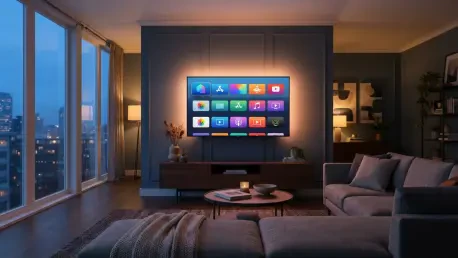
The logic of home-screen premiumization is perhaps most evident in the world of Connected TV, where the smart TV interface now acts as the primary gateway to all streaming content. In the current media environment, the TV home screen is essentially a digital billboard in the center of the living room, offering a high-attention, non-skippable surface that rivals the prestige of traditional linear TV prime-time spots. Because the viewer must navigate this screen to find their favorite shows or movies, the visibility of these placements is guaranteed. This has led to the development of sophisticated programmatic solutions that allow advertisers to purchase these “upstream” spots with the same level of automation and data-driven precision as standard web banners. By partnering with major manufacturers, technology providers are creating a standardized ecosystem where a single campaign can span multiple TV brands, reaching millions of households at the moment they sit down to watch.
This shift toward a standardized, programmatic home-screen market in the CTV space has significant implications for how brand stories are told. Unlike standard 30-second spots that can be skipped or ignored during commercial breaks, a home-screen placement is a persistent part of the navigation experience. It provides a unique opportunity for “hero” creative that captures the viewer’s imagination before they commit to a specific app or service. Manufacturers have begun to offer interactive formats on these screens, such as QR codes for immediate commerce or direct deep-linking into specific streaming titles. This turns the TV interface into a full-funnel marketing tool, moving the viewer from broad awareness to a specific action within seconds. As more households move away from traditional cable and rely entirely on smart TV operating systems, the home screen has become the most powerful anchor for brand presence in the domestic environment, commanding significant investment from both global brands and local advertisers.
Strategic Execution and Potential Risks
How Should Advertisers Implement Home-Screen Strategies?
To effectively leverage the power of home-screen inventory, brand advertisers must view these placements as a launchpad for their wider messaging rather than just another line item in a performance sheet. The goal should be to establish a dominant presence at the very beginning of the consumer journey, using high-impact visuals and seasonal messaging to set the tone for the rest of the campaign. For example, a major film studio might use a smart TV home screen to showcase a trailer while simultaneously deploying lock-screen widgets on mobile to provide local showtimes. This multi-surface approach ensures that the brand is the first thing the consumer sees across all their major devices. By securing these spots through Private Marketplaces or Programmatic Guaranteed deals, buyers can ensure they are getting the best possible creative rendering and environmental control, which is essential for maintaining the “premium” feel that users expect from these personal spaces.
Performance-oriented advertisers, on the other hand, should focus on the interactive capabilities of these surfaces to drive specific actions. Since the home screen is a high-intent environment, the inclusion of direct-response elements like app-install buttons or personalized product carousels can lead to significantly higher conversion rates than standard in-feed ads. The key is to ensure that the creative is contextually relevant to the user’s current state. For instance, a food delivery service might target the mobile lock screen during dinner hours with a one-tap ordering widget. Strategic implementation also requires a rigorous audit of creative assets to ensure they meet the specific technical requirements of each platform. Publishers and manufacturers are increasingly protective of their home-screen aesthetics, so advertisers must be prepared to deliver high-quality, native content that enhances rather than detracts from the user interface to avoid being filtered out of these elite auctions.
What Are the Risks to Premium Valuation?
The most pressing risk to the continued growth of this emerging market is the potential for the “premium” label to be applied too broadly to inventory that does not truly warrant the designation. If a placement is visually prominent but aesthetically cluttered or contextually irrelevant, it will quickly fail to deliver the high-level attention that justifies its elevated cost. There is a danger that as the demand for home-screen inventory grows, some platforms may be tempted to increase ad density, which would inevitably lead to “banner blindness” even at the point of entry. To prevent this devaluation, the industry must develop and adhere to stricter metrics that move beyond simple impressions to measure true engagement, viewability, and user sentiment. True premium value is derived from exclusivity and quality; if the home screen begins to look like a cluttered classifieds page, the justification for high CPMs will vanish, leading to a rapid correction in market pricing.
Furthermore, because home screens are highly personal and often utility-focused spaces, intrusive or excessive advertising carries a significant risk of user backlash. Unlike a social media feed where ads are an expected part of the experience, a lock screen or a TV menu is seen as part of the hardware the user owns. Any perception that the manufacturer is over-monetizing this private space can lead to a decrease in brand loyalty for both the platform and the advertiser. Platforms must, therefore, navigate a very fine line between leveraging data for relevance and respecting user privacy. In 2026, the implementation of AI-driven buying agents also poses a risk, as automated systems might prioritize reach over the qualitative aspects of a placement, potentially placing high-end brands in contexts that do not match their identity. Maintaining the integrity of the home screen requires a commitment to curation and a long-term view of user satisfaction over short-term revenue gains.
The Path Forward: Sustaining Value in the Gateway Economy
The emergence of in-app home-screen inventory as a premium surface marked a significant maturation of the digital advertising market, shifting the focus from quantity to the strategic importance of the entry point. By identifying and isolating the most valuable “front door” placements, publishers managed their yield more effectively, while advertisers secured high-impact attention in an increasingly fragmented world. The long-term success of this trend relied heavily on rigorous curation, ensuring that these surfaces remained useful and respectful environments for the consumer. As platforms refined the infrastructure for these placements, the industry witnessed a permanent bifurcation of inventory into a high-volume programmatic layer for broad reach and a curated, premium home-screen layer for maximum brand impact.
Stakeholders moved toward a model where the beginning of the user journey was prioritized as its most valuable component, leading to a more disciplined approach to creative quality and data application. Advertisers who recognized the psychological power of the “moment of intent” successfully transitioned their budgets away from low-quality open exchanges and into these high-trust, high-visibility environments. This shift proved that in a digital economy defined by distraction, the ability to be the first brand a user sees was the ultimate competitive advantage. As these technologies continue to evolve, the focus must remain on providing genuine value to the user at the threshold of their experience, ensuring that the home screen remains the most respected real estate in the digital ecosystem.