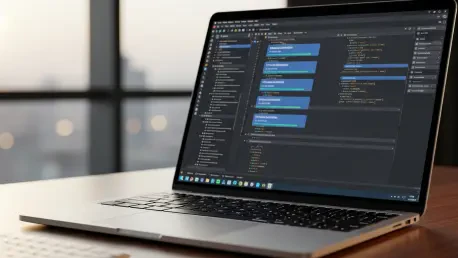

The persistent architectural disconnect between local macOS development environments and Linux-based production servers has long served as a fundamental source of friction for software engineers seeking seamless deployment cycles. Apple addressed this long-standing challenge by introducing container machines, a native virtualization solution designed to bridge the gap between these operating systems without the high resource overhead typically associated with full-scale virtual machine managers. This framework allowed developers to execute Linux-specific workloads directly on Apple silicon with near-native performance, offering a first-party alternative to third-party tools that previously dominated the enterprise landscape. By integrating this capability into the macOS core, the company provided a more streamlined experience for those who preferred the polished hardware interface of a Mac but required specific Linux binaries for their production code. This strategic move signaled a shift toward deeper developer tool integration, focusing on hardware-accelerated virtualization to improve the efficiency of local testing and deployment workflows across the platform.
Bridging the Gap: Native Virtualization and Persistent Contexts
The technical foundation of this initiative rested on the Container project, which reached its 1.0 milestone and was developed entirely in the Swift programming language to leverage the full efficiency of modern silicon hardware. These machines utilized Open Container Initiative images but executed them within a highly optimized, lightweight virtual machine managed by the native virtualization framework. Unlike standard Docker containers, which were often viewed as disposable or ephemeral units of execution, container machines were designed to function as persistent and stateful environments. This architectural choice meant that developers could maintain their specific Linux contexts, including installed system dependencies and customized shell configurations, over long periods without losing progress between individual work sessions. By combining the ease of container-based image management with the stability of a persistent virtual machine, the system offered a unique hybrid approach that appealed to engineers who needed a stable and permanent sandbox for their complex development environments.
The resulting developer experience centered around a unified command-line interface that allowed for the execution of Linux tasks without ever leaving the familiar macOS terminal environment. By utilizing specific commands to run processes within the guest machine, users maintained a seamless split-brain workflow where source code was managed in macOS while compilation and execution occurred in a native Linux backend. This approach ensured that the development environment closely mirrored the production target, significantly reducing the risk of architecture-specific bugs that frequently surfaced during the final stages of software deployment. The tight integration between the host and guest systems meant that files could be shared and accessed with minimal latency, providing a level of responsiveness that was difficult to achieve with older virtualization layers. Furthermore, the use of native frameworks allowed for superior power management and CPU scheduling, which was critical for developers who required consistent performance while working on portable hardware throughout the day.
Technical Reality: Implementation Hurdles and Practical Solutions
Despite the high level of performance, real-world implementation revealed that several technical hurdles remained for those transitioning to the native container machine ecosystem. For instance, successfully booting these environments required images to contain a full initialization system, such as sbin init, which added a layer of complexity compared to the minimal images used in standard microservice workflows. While integration with popular development tools like Visual Studio Code was possible through remote extensions, early versions of the software exhibited inconsistent debugging behavior across different programming languages. Specifically, issues with triggering breakpoints and managing remote symbols suggested that the communication protocols between the host and the virtualized guest were still maturing toward a more stable state. Additionally, the system allocated significant amounts of memory on demand but lacked an automated way to reclaim that RAM for the host system without performing a full restart of the guest environment, creating potential resource constraints.
Security professionals and lead developers eventually established clear protocols to manage the risks associated with the default filesystem sharing settings. Organizations realized that while the automatic mounting of home directories provided convenience, it also necessitated the use of explicit isolation flags to protect sensitive data from untrusted Linux packages. While competitors like Docker Desktop, OrbStack, and Colima remained popular for their broad feature sets, the native Apple tool gained traction among those prioritizing first-party stability. Engineering teams moved toward creating specialized, hardened base images that provided the necessary initialization systems while maintaining a minimal security footprint for enterprise use. They also successfully integrated these native tools into their continuous integration pipelines to ensure that local testing environments were identical to the deployment targets. By addressing memory management limitations through scripts, the community found a reliable balance between performance and stability. These steps allowed the industry to transition toward an integrated development lifecycle on the Mac.