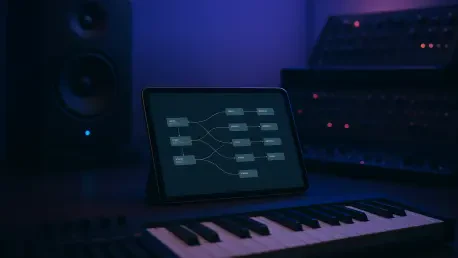

Producers can now bridge their mobile devices with professional studio setups using the app’s comprehensive MIDI routing and processing capabilities. This release represents a significant shift for mobile musicians who require a high degree of control over their data streams. The platform functions as a virtual rack, allowing users to load and chain various modules together to create complex MIDI environments that were previously reserved for desktop workstations or expensive hardware units. By focusing on a modular architecture, the developer has provided a flexible canvas where every connection is customizable, ensuring that unique creative workflows are not hindered by software limitations. Musicians can seamlessly integrate external controllers, synthesizers, and other digital audio workstations with their iPad, making the device a central hub for musical performance. The app arrives at a time when mobile hardware has reached a performance threshold capable of handling real-time processing.
Versatility Through Modular Design: Breaking Workflow Barriers
Central to this application is the modular rack system which provides a visual and functional environment for organizing MIDI processors. Users can populate this space with a variety of built-in modules including arpeggiators, sequencers, and note filters, each designed to modify data in real-time. This approach allows for the construction of intricate generative music systems where one module’s output serves as another module’s input. The drag-and-drop interface simplifies the process of reconfiguring the signal chain, enabling rapid experimentation during live performances or studio sessions. Unlike static MIDI utilities, this environment encourages a trial-and-error methodology, where producers can discover new melodic patterns by simply swapping the order of their processing chain. The visual feedback provided by each module ensures that users remain informed about the state of their data, making it easier to troubleshoot complex routings or adjust parameters on the fly.
Beyond its internal capabilities, the software offers robust support for the AUv3 standard, allowing it to host third-party MIDI effects within its own environment. This compatibility transforms the iPad into a highly expandable MIDI workstation where specialized tools from various developers can coexist in a single, unified interface. By acting as a host, the app eliminates the need for messy multi-app routing configurations that often lead to instability or synchronization errors. Connectivity is further enhanced by support for Bluetooth MIDI, network MIDI, and traditional wired connections via USB interfaces. This ensures that the rack can communicate with vintage hardware synths just as easily as it interacts with modern software instruments. The inclusion of advanced mapping features allows users to assign physical knobs on their external gear to virtually any parameter within the modular rack. This deep level of integration removes physical barriers between mobile software and tangible studio hardware.
Optimized Performance: Bridging Mobile and Professional Standards
Efficiency remains a cornerstone of the development philosophy, as the application is optimized to leverage the latest mobile processing architectures for near-zero latency performance. In the demanding environment of live music, even a few milliseconds of delay can disrupt a performance, making high-speed data processing a non-negotiable requirement. The engine behind the rack is designed to handle hundreds of simultaneous MIDI events across multiple channels without taxing the system’s resources excessively. This optimization ensures that producers can run complex setups alongside resource-intensive audio apps without fear of crashes or stuttering. Furthermore, the user interface has been refined to offer a tactile experience that responds immediately to touch, providing a level of physical engagement that often surpasses traditional mouse-based editing. The ability to save and recall complex rack states instantly allows for seamless transitions between different segments of a live set.
The arrival of this modular platform marked a turning point for mobile-based MIDI orchestration by providing the precision and depth required for professional-grade composition. It addressed the long-standing challenge of managing disparate MIDI data sources and destinations within a single interface. Looking ahead, professionals prioritized auditing their current MIDI routing hardware to identify where software-based modularity simplified their physical cabling. Adopting a modular mindset became a standard requirement for those seeking to maximize the creative potential of their mobile setups throughout the remainder of 2026 and into 2027. Future developments in this space focused on enhanced artificial intelligence integration for generative pattern creation, suggesting that users benefited from familiarizing themselves with these modular workflows early. By mastering these digital environments, musicians positioned themselves to take full advantage of emerging technologies that further blurred the lines.