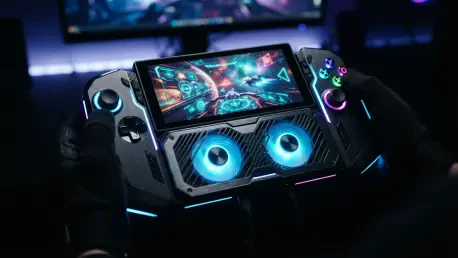

Windows 11 functions as the fail-safe option for gamers who need maximum software compatibility across a diverse library of multiplayer titles. Despite the rapid evolution of handheld-specific operating systems, the broader gaming industry continues to lean heavily on the Windows architecture for its most popular live-service experiences. For many users, the choice of an operating system is no longer just about which interface looks the sleekest on a seven-inch screen, but rather which environment allows them to actually launch their favorite games without encountering digital roadblocks. This ongoing competition between the efficiency of specialized Linux distributions and the sheer versatility of the Microsoft ecosystem has created a market where players must carefully weigh their priorities. While some prioritize the streamlined, console-like simplicity that defined the initial handheld boom, others find that the freedom to use any application or peripheral outweighs the occasional friction of a traditional desktop interface. As hardware continues to push the boundaries of portable power, the software layer remains the most critical bridge between the silicon and the user.
Evaluating the Major Operating Systems
The Performance of Linux-Based Distributions
SteamOS 3.9.5 has reached a level of maturity that effectively sets the standard for how a dedicated gaming operating system should function in the modern era. By integrating the Linux 7.2 kernel alongside the KDE Plasma 6.7.3 desktop environment, Valve has successfully bridged the gap between a high-performance gaming shell and a functional computing platform. This version introduced critical support for the latest Intel Panther Lake architectures, ensuring that even as the hardware landscape shifts toward more efficient mobile chips, the operating system remains optimized for the lowest possible latency. The technical focus remains on the “Gamescope” compositor, which allows the system to manage power profiles and refresh rates on a per-game basis, providing a level of granular control that remains unmatched by traditional desktop environments. This integration ensures that the hardware is always running at its peak efficiency during intense sessions, balancing battery life with peak performance across a wide variety of indie and triple-A titles.
Bazzite has emerged as a premier choice for achieving a SteamOS-like experience on non-Valve hardware, such as the Lenovo Legion Go 2 or the Acer Predator Atlas 8. This distribution leverages the power of Fedora to provide a cutting-edge environment that supports a vast array of GPUs from AMD, Intel, and Nvidia. One of its most significant advantages is the robust recovery system, which is specifically designed to handle the unpredictable nature of portable gaming hardware. The system keeps a history of system images, allowing users to roll back any update from the previous 90 days if a new patch introduces instability. Furthermore, Bazzite includes an automated safety feature that triggers a rollback after three failed boot attempts, virtually eliminating the risk of a “bricked” device due to a bad configuration. This focus on reliability makes it an attractive option for enthusiasts who want the benefits of a Linux-based gaming environment without being tied to a single manufacturer’s hardware ecosystem or support cycle.
The Versatility of the Windows 11 Environment
The primary motivation for many users to stick with Windows 11 remains its unrivaled compatibility with the vast landscape of modern anti-cheat technologies. Many of the most popular competitive shooters and massive multiplayer online games rely on kernel-level security measures like Ricochet or Vanguard, which are designed to function deep within the Windows operating system. Because these systems are often fundamentally incompatible with the Proton translation layer used by Linux, players who frequent these titles find that a Windows-based handheld is their only viable option for portable play. Additionally, the integration of services like Xbox Game Pass provides a massive library of titles that can be downloaded and played natively without the performance overhead or compatibility quirks sometimes found in emulation layers. This native support extends to various game launchers that may not have optimized Linux clients, ensuring that the user experience remains consistent across all digital storefronts.
Streaming and content creation present a unique set of challenges that often favor the established infrastructure of Windows 11. Reports indicate that while Linux environments excel at individual game performance, they can struggle with complex display configurations involving external capture cards and high-refresh-rate monitors. Windows’ native handling of display projection and its mature integration with software like OBS Studio provide a more predictable workflow for those looking to record or broadcast their gameplay. Specifically, managing Variable Refresh Rate across multiple outputs remains a more consistent experience on Windows, where driver support for these features is frequently more advanced. The multitasking capabilities of Windows 11 also play a significant role in its appeal to users who do more than just play games. The ability to snap multiple windows and access a wide array of browser-based tools makes it a more flexible choice for those who do not want to carry a separate laptop for work or school tasks.
Selecting the Optimal System
Selecting the appropriate operating system for a handheld PC involved a careful assessment of individual priorities and hardware constraints. For those who valued a seamless, console-like experience, SteamOS proved to be the most refined choice for the Valve ecosystem. Meanwhile, enthusiasts who sought to break away from manufacturer lock-in found that Bazzite offered a powerful and resilient alternative for third-party devices. Those who required absolute software compatibility and professional-grade media tools leaned toward Windows 11 as their primary platform. Moving forward, the focus should shift toward testing specific hardware configurations to ensure optimal driver stability before committing to a full system migration. Users ought to investigate the anti-cheat status of their most-played titles and verify external peripheral support to avoid unnecessary downtime. As the industry progressed, the convergence of these platforms suggested that the future of handheld computing would likely involve more hybrid solutions that combined the best of all available systems.