
The transformation of the Macintosh from a creative professional’s niche tool to a cornerstone of the global corporate infrastructure has fundamentally rewritten the rules of IT asset management. While the sleek aluminum chassis remains a status symbol, the underlying economics of the Mac ecosystem have forced organizations to rethink how they deploy, maintain, and eventually retire their fleets. As businesses shift away from disposable hardware models toward sustainable, high-value cycles, the necessity for industrial-grade management solutions has become a strategic priority. This review examines how integrated ecosystems are solving the historical bottlenecks of Apple deployment.
The Evolution of Apple Hardware in the Corporate Ecosystem
Apple’s ascent in the enterprise was once a “bring your own device” accident, but it has transitioned into a deliberate, top-down strategy driven by employee preference and total cost of ownership. Unlike the fragmented PC market, the Apple ecosystem offers a homogenized hardware and software stack that simplifies security and support. This transition is not merely about aesthetics; it is about the realization that hardware with a five-year lifespan and high resale value is more fiscally responsible than a cheaper alternative that expires in three.
The broader technological landscape now prioritizes the developer experience and cloud-native workflows, where macOS often serves as the native environment for modern software engineering. Consequently, IT departments have moved from resisting Apple products to demanding specialized tools that can handle their unique security protocols. This shift has birthed a new category of enterprise technology focused specifically on the lifecycle of high-performance Unix-based systems.
Key Components of Industrial-Grade Mac Management
High-Volume Data Erasure and Compliance
Modern data privacy regulations such as GDPR and CCPA have made the “delete” key obsolete in a professional context. Industrial solutions like Blancco Eraser for Apple Devices have become essential because they provide more than just a clean drive; they offer a verifiable audit trail. This software bypasses the limitations of standard disk utility tools by performing deep-level erasures that meet global security standards, ensuring that sensitive corporate data is unrecoverable before a device changes hands.
The integration of these tools into the lifecycle workflow allows for a seamless transition from “active” to “retired” status. In high-security sectors like finance and healthcare, the ability to generate an automated, digitally signed certificate of erasure for every unit is the difference between a successful hardware refresh and a catastrophic compliance failure. This level of rigor is what separates enterprise-grade management from consumer-level maintenance.
Hardware-Accelerated Provisioning Hubs
Processing a single laptop is a simple task, but managing the simultaneous retirement of five hundred units requires specialized hardware. The emergence of hubs like the Cambrionix ThunderSync5-C16 illustrates a shift toward industrial throughput. These systems allow IT teams to connect 16 Macs at once, providing the massive data bandwidth and power delivery required to wipe and reinstall operating systems in parallel.
Real-world performance metrics show that these hubs can reduce processing time by over 400 percent compared to traditional daisy-chaining methods. By treating Mac hardware as a high-volume commodity rather than individual boutique items, organizations can process approximately 48 units per hour. This hardware-accelerated approach removes the logistical “logjam” that often occurs at the end of a three-year lease cycle, turning a weeks-long manual project into a few days of automated work.
Unified Silicon Architecture
The transition to Apple Silicon (M-series chips) has provided a technical synergy that was previously impossible. Because Macs now share the same ARM-based architecture as the iPhone and iPad, the management protocols have converged. This unified architecture enables “mobile-scale automation,” where the same MDM commands used to wipe a lost smartphone can now be applied to a fleet of high-powered workstations.
This shared architecture simplifies the internal logic of IT departments. Developers no longer need to maintain separate scripts for Intel-based Macs and mobile devices. Instead, a single, streamlined workflow handles everything from initial provisioning to final asset recovery. This technical harmony reduces the margin for error and allows for a “zero-touch” deployment strategy that scales effortlessly across global offices.
Emerging Trends in Device Longevity and Asset Recovery
A significant trend currently reshaping the industry is the rise of in-house IT Asset Disposal (ITAD). Instead of shipping retired units to third-party recyclers for a fraction of their value, enterprises are using specialized erasure and provisioning tools to refurbish their own fleets. By keeping the refurbishment process internal, companies can capture the high residual value of Apple products, often using the proceeds to fund the next generation of hardware upgrades.
Moreover, the “cloud-first” workplace has lessened the burden on local hardware, ironically making older Macs more viable for longer periods. As more processing power moves to the server side, a four-year-old MacBook Pro remains a powerhouse for the average knowledge worker. This trend toward longevity is supported by Apple’s consistent software updates, which keep older hardware secure and functional far longer than the industry average.
Real-World Applications and Sector Implementations
In the government and defense sectors, where data sanitization is a matter of national security, the ability to securely erase Mac hardware at scale has opened the door for wider adoption. Previously, these sectors were hesitant to adopt Apple due to the lack of industrial-grade wiping tools. Now, with certified solutions available, these organizations are leveraging macOS for its superior sandboxing and encryption features without compromising on end-of-life security protocols.
The secondary market has also seen a surge in activity within the educational sector. Small schools and non-profits are utilizing high-performance refurbished Macs, processed through automated hubs, to provide students with premium technology at a budget-friendly price point. This circular economy is fueled by the fact that a refurbished Mac often outperforms a brand-new, low-end PC, creating a sustainable loop that benefits both the primary and secondary owners.
Challenges in Large-Scale Deployment and Circularity
Despite the advancements, managing a fleet that spans multiple hardware generations remains a technical hurdle. The shift from Intel to Apple Silicon created a temporary divergence in management workflows, requiring IT teams to maintain legacy scripts while adopting new ARM-based protocols. Additionally, the physical logistics of moving thousands of units through a central processing hub can create significant overhead for organizations without dedicated facility space.
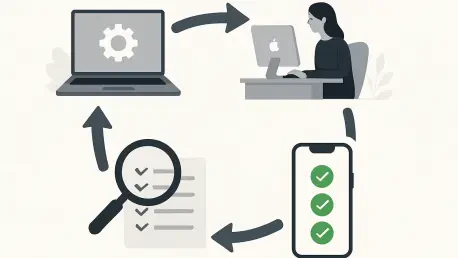
Efforts to mitigate these challenges are focused on further automation of the “Hand-off” between management software and physical hardware. The goal is to reach a state where a technician only needs to plug in the cable, and the system automatically detects the model, wipes the data, verifies compliance, and installs the latest supported OS. Reducing this manual labor is critical for maintaining the cost-effectiveness of the Mac ecosystem as fleet sizes continue to grow.
Future Outlook: The Scaling of the Mac Secondary Market
The trajectory of the Apple enterprise ecosystem points toward an even deeper integration of mobile and desktop management workflows. As the distinction between an iPad Pro and a MacBook continues to blur at the hardware level, we can expect a future where hardware management is entirely platform-agnostic. The expansion of the secondary market will likely be driven by global sustainability mandates, forcing companies to prove that their hardware is being reused rather than shredded.
Sustainable hardware cycles will become a key performance indicator for corporate social responsibility. The global ITAD industry is already shifting its focus from simple recycling to “value recovery,” where the primary goal is to keep the device in circulation for as long as possible. The long-term impact of Apple’s silicon transition is a more durable, more valuable, and more easily managed global fleet of devices that resist obsolescence.
Summary and Final Assessment of Apple Lifecycle Solutions
The evolution of Apple enterprise lifecycle management has reached a critical mass, proving that the Macintosh is no longer a luxury outlier but a highly efficient corporate asset. Organizations that have invested in industrial-grade management tools have realized that the higher initial cost of Apple hardware is offset by lower support requirements and significantly higher recovery value. The integration of high-speed data erasure and automated provisioning has addressed the final major hurdle to large-scale Mac adoption.
The transition to unified silicon and the subsequent boom in the secondary market were pivotal in redefining the total cost of ownership. Companies that took the initiative to internalize their asset disposal and refurbishment processes were able to maximize their financial returns while meeting strict environmental and security standards. This shift toward a circular, automated lifecycle was not just a technical improvement but a necessary evolution for the modern, sustainable enterprise. These organizations successfully turned their IT departments from cost centers into value-recovery engines.