
From a Notification Hub to a Proactive Digital Companion
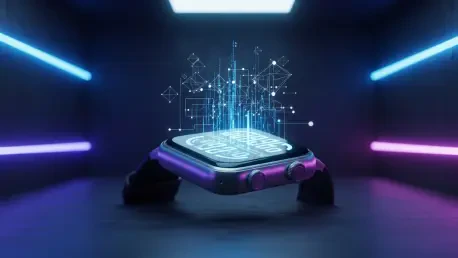
When the glowing icon of a modern Siri interface illuminates a user’s wrist today, it signals much more than a simple voice command; it represents the birth of a truly proactive digital partner. The debut of watchOS 27 represents a fundamental shift in how people interact with portable technology, moving beyond the era of simple alerts and fitness tracking. By embedding a unified Siri AI architecture directly into the wrist-worn experience, the platform is transforming its most personal device into a context-aware powerhouse.
This evolution is significant because it establishes the smartwatch as the world’s most accessible wearable AI platform, effectively bridging the gap between passive hardware and an active assistant. Technical evaluations suggest that this update redefines the user experience by leveraging the processing power of the connected ecosystem. It serves as a strategic blueprint for the future of ambient computing, where the device on the wrist acts as the primary orchestrator of a person’s digital existence.
Dismantling the Technical and Functional Shift Toward Ambient Intelligence
The transition toward ambient intelligence is characterized by a departure from the traditional search-and-find model. Industry analysts observe that the latest software iteration focuses on reducing the steps required to access information, making the interface feel nearly invisible. This shift is not merely cosmetic; it involves a deep integration of machine learning models that prioritize speed and relevance over generic data retrieval.
Furthermore, the intelligence model is designed to anticipate user needs based on location, time of day, and historical patterns. By moving the focus from reactive notifications to proactive suggestions, the technology attempts to solve logistical problems before the user even identifies them. This structural change positions the wearable not just as a screen for the phone, but as a sovereign entry point for artificial intelligence.
The Symbiotic Brain: Leveraging iPhone Silicon for On-Wrist Sophistication
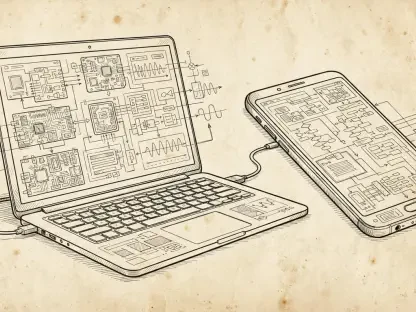
The intelligence of watchOS 27 relies on a sophisticated tethered architecture, where the watch acts as the intuitive interface while a paired iPhone handles the heavy computational lifting. This relationship is critical because it allows the watch to execute complex linguistic processing that would otherwise drain a small battery or exceed a wearable’s thermal limits. While this dependency creates a hardware barrier—requiring a modern, AI-enabled iPhone—the result is a seamless workflow.
The user perceives the intelligence as living entirely on their wrist, despite the heavy processing occurring elsewhere. This unified entity approach ensures that a conversation started on a Mac or iPad can be continued mid-stride on the watch without a loss of context or capability. Technical reviews highlight that this synchronization is managed privately through iCloud, maintaining a fluid dialogue across the entire hardware spectrum.
Mining Personal Context to Solve Everyday Friction
The true breakthrough of this wearable revolution lies in personal context, a feature that allows the AI to navigate a user’s private digital life to provide specific, actionable answers. Unlike traditional assistants that provide generic web results, the current system can retrieve door codes from old emails, locate specific photos from past vacations, or identify a song sent via a message weeks ago. It uses the deep history of the user’s digital interactions to create a personalized knowledge base.
A standout application of this is the Call Context tool, which proactively surfaces relevant data during phone calls. This utility can present flight confirmation numbers or business notes the moment a user connects with a service provider. By eliminating the need to manually dig through apps while multitasking, the system effectively removes the logistical friction that defines modern digital life, turning a small screen into a powerful information portal.
The Rise of Passive Productivity and Third-Party Automation
Beyond native features, watchOS 27 is sparking a new wave of third-party innovation focused on passive productivity. Developers are creating tools like Granola that can record and summarize in-person meetings with a simple tap on the wrist, turning the watch into a sophisticated administrative assistant. This capability allows users to remain engaged in social or professional interactions while the device handles the heavy lifting of note-taking and summarization.
Furthermore, the integration with the Shortcuts ecosystem allows users to trigger complex, multi-stage automations through voice commands, bypassing the need to interact with a screen at all. However, this shift brings new challenges, particularly regarding data privacy and the transparency of third-party AI tools. There is an ongoing discussion among security experts regarding how much personal data should be accessible to non-Apple applications and what standards should be enforced for data retention.
A Proving Ground for the Future of Spatial Computing and Smart Glasses
The design choices made in watchOS 27 are not merely for the watch; they are foundational experiments for an eventual transition into smart glasses. By perfecting glanceable AI on the wrist—where information is delivered in short, relevant bursts—the ecosystem is training its user base for a world of head-mounted displays. This section of the digital landscape serves as a laboratory for testing how users interact with an assistant that anticipates needs rather than waiting for queries.
Challenging the assumption that the smartphone will always be the center of the digital universe, this strategic roadmap suggests a future where the interface becomes invisible. The logic being tested today on the wrist will eventually power the visual overlays and audio cues of augmented reality. Consequently, the watch is no longer just a peripheral; it is the primary testing ground for the user interfaces of the next decade.
Navigating the Early Days of a Seamless AI Ecosystem
As the market transitions into this new era, the major takeaway is that the wearable has evolved from a luxury accessory into an essential productivity hub. To make the most of these advancements, users should focus on optimizing their personal shortcuts for voice activation and utilizing the new pinned conversations feature to maintain continuity across devices. Managing these workflows effectively allows for a more streamlined interaction with the broader digital ecosystem.
While the current version may present initial stability issues and hardware requirements are strict, the strategic advantage of having a proactive assistant on the wrist is significant. Embracing these tools now will allow early adopters to master the App Intent workflows that are expected to dominate the wearable market. Industry insiders suggest that the learning curve for these systems is best navigated by integrating them into small, daily habits rather than complex, one-off tasks.
The Dawn of the Predictive Personal Assistant
The arrival of watchOS 27 marked a point of no return for wearable technology, signaling the end of the search-and-find era and the beginning of the anticipate-and-act age. By prioritizing personal context and ecosystem consistency, the platform successfully repositioned the watch as a vital node in an AI-driven life. This transformation underscored the ongoing importance of the wearable as the ultimate interface for human-centric computing.
As these technologies matured, the line between the user and their digital assistant continued to blur, making the watch a primary lens through which people interacted with their digital and physical realities. Moving forward, the focus shifted toward refining App Intent protocols and expanding on-device processing capabilities. The most successful users were those who treated the device not as a clock, but as a strategic partner capable of managing the increasing complexity of modern information streams. In retrospect, the software update served as the definitive bridge to a world where technology finally learned to stay ahead of human needs.