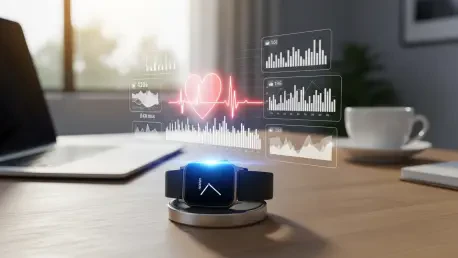

A person might wake up feeling entirely refreshed and ready for the day, only to find their wrist-worn device suggesting that their body is actually fighting an invisible infection. This scenario, once relegated to the realm of science fiction, has become a standard feature of modern life as consumer technology shifts from basic step counting to sophisticated biological surveillance. Industry leaders such as Apple, Whoop, and Oura have integrated advanced sensors into their hardware, allowing for the continuous tracking of complex metrics like respiratory rates, blood oxygen levels, and skin temperature. This transformation represents a significant merging of the consumer electronics sector and the professional healthcare industry, sparking a widespread debate regarding the accuracy of these tools. As artificial intelligence algorithms become more integrated into these wearable devices, the promise of detecting an illness before physical symptoms even manifest has moved to the forefront of preventative medicine.
Navigating Marketing Hype and Clinical Reality
The Gap Between Promises and Diagnostics
The marketing narratives crafted by major technology companies often create a sense of absolute certainty that may not always align with the clinical realities of medical diagnostics. While advertisements frequently showcase dramatic instances where irregular heart rate alerts have saved lives, medical professionals emphasize that regulatory clearance for a specific feature does not transform a consumer gadget into a medical-grade diagnostic instrument. This distinction remains vital for users to recognize, as mistaking a high-tech accessory for a definitive medical tool can lead to unnecessary anxiety or a false sense of security. The Food and Drug Administration (FDA) provides clearances for specific algorithms, but these are often limited in scope compared to the rigorous testing required for hospital equipment. Consequently, the utility of these devices is currently viewed by many in the medical field as a supplementary layer of information rather than a primary diagnostic source.
Identifying Trends Through Longitudinal Observation
Clinicians often suggest that the most significant value of modern wearable technology lies in its ability to detect subtle deviations from a user’s established physiological baseline over long periods. Rather than acting as the fictional medical “Tricorders” that provide instant and comprehensive diagnoses, these devices are best utilized as sophisticated observation tools for personal health. They offer a longitudinal perspective that helps a person identify exactly when something feels “off” within their body, even if the device cannot name the specific ailment involved. By focusing on trends such as changes in resting heart rate or sleep efficiency, users can gain insights into how their lifestyle choices or early-stage illnesses impact their internal systems. This shift toward trend analysis represents a more realistic application of the technology, moving away from the idea of instant medical answers and toward a more nuanced understanding of individual health variations.
The Science of Reliable Health Metrics
Separating High-Confidence Data from Proprietary Scores
It is important to recognize that not all metrics provided by modern smartwatches carry the same level of clinical weight or reliability across different use cases. Features such as Atrial Fibrillation (AFib) detection have demonstrated remarkably high success rates in recent years, with irregular pulse notifications frequently being confirmed by subsequent professional medical testing. In contrast, other features like blood pressure estimations, caloric expenditure counts, and specific sleep-stage tracking are often viewed with skepticism by researchers. These particular metrics often lack the precision found in medical-grade equipment, largely because they rely on indirect measurements and proprietary algorithms that have not undergone the same level of public peer review as traditional medical techniques. While these scores can offer a general overview of wellness trends, they should not be treated with the same level of confidence as direct physiological measurements taken in a clinic.
Detecting Pre-Symptomatic Illness with Biometric Alerts
One of the most promising and researched applications of current wearable technology is its proven ability to identify pre-symptomatic illnesses such as the flu or respiratory infections. By meticulously analyzing shifts in a user’s resting heart rate and subtle changes in their respiratory patterns, these devices can often flag an impending infection hours or even days before physical symptoms manifest. Research suggests that using these early warning systems to encourage self-isolation or more frequent testing could significantly reduce the transmission of infectious diseases within public and professional environments. This capability transforms the smartwatch from a passive fitness tracker into a proactive public health tool that helps mitigate the spread of viruses before the wearer even realizes they are contagious. This proactive approach to health management highlights the potential for wearable devices to play a crucial role in modern epidemiology and personal illness prevention.
The Impact of AI on Future Healthcare
Transforming Data into Actionable Insights
Artificial intelligence currently serves as the sophisticated brain of the modern wearable device, synthesizing vast amounts of raw sensor data into a cohesive and understandable health narrative. Tools such as Google’s Gemini or Apple’s Vitals are designed to look for subtle, long-term patterns that a human user would likely miss if they were simply looking at daily charts. These AI models can identify correlations between minor physiological changes and external factors like sleep deprivation or increased physical exertion. However, this heavy reliance on artificial intelligence also introduces certain risks, particularly the potential for users to bypass professional medical advice in favor of automated insights. While AI is excellent at pattern recognition, it lacks the contextual understanding of a trained physician, which is why developers emphasize that these insights should be used to facilitate, not replace, conversations with healthcare professionals regarding one’s health status.
Defining the Role of Pattern-Watching Assistants
The rapid evolution of the wearable industry is moving steadily toward a “pattern-watching assistant” model, where the device acts as a constant companion rather than a replacement for doctors. These gadgets now function as a nudge system, alerting users to physiological outliers that warrant a more formal conversation with a qualified healthcare provider. While they are undoubtedly powerful tools for maintaining a proactive stance toward personal health, their primary role remains a critical supplement to professional clinical care and regular medical checkups. The future of healthcare will likely see a closer integration between these consumer-led data streams and formal medical records, allowing doctors to review months of biometric data in seconds. This synergy could lead to faster diagnoses and more personalized treatment plans, provided that both the patients and the medical community maintain a clear understanding of the strengths and the limitations of these digital tools.
Strategic Steps for Personal Wellness Management
The evolution of wearable technology demonstrated that the line between consumer electronics and medical diagnostics blurred significantly as AI became the primary interpreter of human biology. Users who effectively navigated this landscape realized that the greatest benefit came from viewing their devices as longitudinal trackers of wellness rather than definitive diagnostic machines. To maximize the utility of these tools, individuals prioritized consistency in wearing their devices and focused on long-term trends rather than reacting to single-day fluctuations. Healthcare providers were increasingly tasked with interpreting this influx of patient-generated data, necessitating a new set of standards for clinical integration. Moving forward, the most successful strategy involved using these biometric insights to initiate early dialogues with doctors, ensuring that technology served as a bridge to professional care. By maintaining a critical perspective on marketing claims and a focus on data privacy, the public secured a future where early detection became a foundational element of daily health.