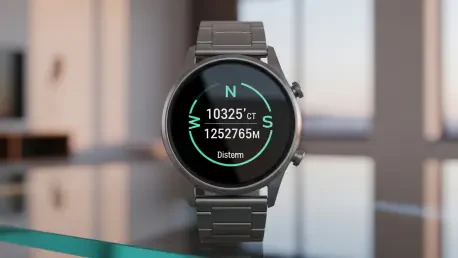

The wearable technology landscape has shifted dramatically over the past few years, evolving from simple step counters into sophisticated hubs that manage our digital identities and physical surroundings with remarkable efficiency. Google has consistently pushed the boundaries of what a smartwatch can achieve, but the latest iteration of its flagship wearable marks a significant turning point in both technical capability and market positioning for the global brand. As consumers demand more seamless interactions between their devices and the smart environments they inhabit, the introduction of a dedicated Ultra-Wideband chip within the newest hardware architecture represents a major leap forward. This technological advancement allows for spatial awareness that was previously impossible, enabling the watch to pinpoint its exact location relative to other devices with centimeter-level accuracy. However, such cutting-edge innovation often comes with a financial trade-off that reflects the complexities of modern manufacturing and the premium nature of the components involved in this new design.
The Advancements in Spatial Awareness: Why UWB Matters
Precision Tracking: The Power of Ultra-Wideband
The inclusion of an Ultra-Wideband chip, commonly referred to as UWB, transforms the smartwatch from a passive receiver of notifications into an active participant in the user’s immediate physical environment. Unlike traditional Bluetooth or Wi-Fi connectivity, which rely on signal strength to estimate distance, UWB utilizes short-pulse radio waves to calculate the time it takes for a signal to travel between devices. This method provides a level of precision that allows the watch to function as a highly secure digital key for modern vehicles and smart home locks, ensuring that doors only unlock when the wearer is standing directly in front of them. Furthermore, this technology significantly enhances the Find My Device network capabilities, allowing users to locate misplaced items within their own homes by following directional cues on the watch face. This shift toward spatial intelligence suggests that Google is prioritizing utility and security as core pillars of the user experience.
System Performance: Beyond the Connectivity Chip
While the UWB chip is the standout feature of this release, the internal architecture has undergone a comprehensive redesign to support more demanding computational tasks and artificial intelligence processing. The latest Tensor-based wearable processor is manufactured on an advanced three-nanometer process, which provides a substantial boost in power efficiency while simultaneously increasing the clock speed for smoother transitions and faster app launches. This hardware upgrade is particularly noticeable when using advanced health monitoring features, such as real-time heart rate variability analysis and continuous oxygen saturation tracking, which now operate with higher frequency and greater accuracy. The improved thermal management system ensures that the device maintains peak performance during intensive workouts or while utilizing GPS-heavy navigation for extended periods. This balance of power and efficiency is crucial for maintaining the always-on display functionality that is now standard.
The Economic Reality: Costs and Value Propositions
Market Dynamics: Analyzing the Price Increase
The decision to raise the retail price of the latest flagship wearable has sparked a broader conversation about the rising costs of research and development in the consumer electronics sector. Sophisticated components such as the UWB chip, advanced micro-LED displays, and custom silicon require significant capital investment, which is inevitably reflected in the final MSRP of the product. Additionally, global supply chain fluctuations and the increased cost of specialized raw materials have placed upward pressure on manufacturing margins across the entire industry. When comparing this model to its predecessors, it becomes clear that the hardware is no longer targeting the entry-level market segments but is instead competing directly with high-end professional fitness trackers. This shift in pricing strategy suggests that the brand is confident in the value provided by its unique software ecosystem and deep integration with Android services, justifying the higher cost through enhanced utility.
Strategic Considerations: Planning for Future Ownership
The introduction of these advanced features required a forward-thinking approach to device maintenance and software optimization to ensure the longevity of the initial investment. Users who prioritized long-term value began to focus on maximizing the security benefits of the UWB chip while staying informed about new software integrations that expanded the watch’s utility over time. Looking ahead, the emphasis shifted toward a more holistic view of the wearable as a central node in a personal technology network, where the watch acted as the primary authentication factor for a variety of digital services and physical access points. Industry experts recommended that consumers keep their devices updated to the latest firmware to take advantage of ongoing performance tweaks and new safety protocols that emerged in subsequent updates. This proactive management ensured that the hardware continued to perform at peak efficiency, justifying the initial financial outlay through years of reliable service and high value.