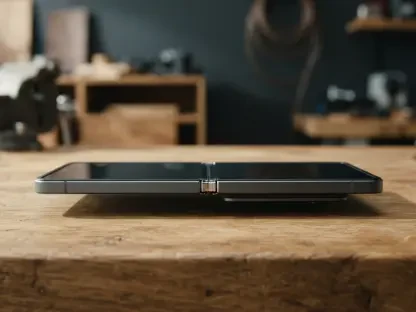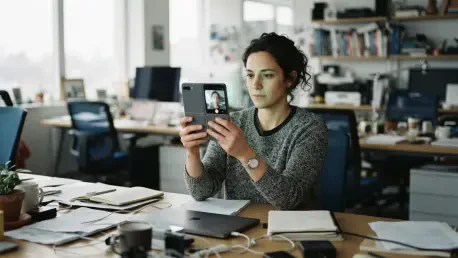

Face enrollment for the iPhone Duo mirrors the setup process of premium models but fails to function if the surrounding environment provides insufficient light. The release of this foldable device originally promised a seamless transition into a new era of mobile productivity, yet the initial experience was frequently hampered by a fingerprint sensor that many early adopters found frustratingly inconsistent. To mitigate these concerns, Apple recently deployed the iOS 27.3 Beta 2 developer firmware, which introduces a sophisticated, though distinct, facial recognition layer designed specifically for this unique hardware profile. This software update enables the device to recognize a registered user even when the primary casing is folded shut, while also introducing a reactive system lock that activates the moment the two screens are brought together. Unlike the comprehensive TrueDepth systems found on traditional flagship devices, this implementation serves as a functional bridge to improve accessibility without requiring the bulky sensor arrays typical of previous high-end biometric security models.
1. Setting Up the New Facial Authentication System
To initialize this new layer of convenience, the user must first ensure the device is running the latest iOS 27.3 Beta 2 firmware, as previous versions lack the necessary camera-processing algorithms. The feature remains strictly opt-in and is deactivated by default to ensure that users are fully aware of the hardware limitations regarding its security tier. Once the update is verified, the setup requires navigating to the “Settings” menu and selecting the “Touch ID & Passcode” section, where a new toggle labeled “Unlock with Front Camera” has been added for this specific release. Selecting this option triggers an enrollment wizard that asks the user to position their face within the view of the standard front-facing sensor. Because this process relies on standard light capture, the system will provide immediate feedback if the ambient brightness is too low to create a clear profile, ensuring that the initial data point is as accurate as possible for daily use in standard lighting.
After the initial light check, the enrollment continues by asking the user to perform dynamic movements, such as rotating the head in a circular motion to allow the software to capture a variety of angles and features. This dynamic data recording is intended to create a more resilient model than a static two-dimensional image would provide, even though the hardware does not support infrared depth mapping. Once the camera has gathered enough visual information, the system requires a final verification step where the user must enter their established passcode or use the side-mounted Touch ID sensor to bind the new facial profile to the device’s Secure Enclave. Apple includes a specific disclaimer during this phase, noting that while the system offers a significant boost to daily convenience, it does not reach the rigorous security standards of infrared-based Face ID. Consequently, this method is intended for fast unlocking of the lock screen rather than for authorizing high-stakes financial transactions or accessing encrypted storage.
2. Performance Metrics and Environmental Adaptation
In practical application, the facial recognition on the iPhone Duo operates with surprising efficiency, often matching the speed of more expensive biometric solutions when used under optimal lighting conditions. Upon waking the screen or lifting the device from a surface, the front camera immediately begins scanning for the registered user’s features. Rather than a large central animation, the visual confirmation is relegated to the Dynamic Island located at the top right of the display, where a small lock icon smoothly transitions to an unlocked state to signify success. Under bright sunlight or standard indoor lighting, the entire process takes less than half a second, allowing for an immediate swipe-up gesture to enter the home screen. This update also brings welcome optimizations to the underlying system, as the previously sluggish Touch ID sensor has been refined to eliminate the “progress bar” lag that once frustrated users, resulting in a cohesive and much faster authentication experience.
Low-light performance presents a different challenge due to the absence of active infrared illumination, yet the software compensates by using the device’s own display as a light source. If a user attempts to unlock the phone in a very dark room, the system can still succeed by relying on the light emitted from a bright wallpaper or high-contrast lock screen elements to illuminate the user’s face. While this method is slightly slower than daylight recognition—often taking a full second to verify—it remains a viable alternative to fumbling for the fingerprint sensor in the dark. It is important to observe that the system does not use distracting multi-colored flashes for liveness detection, as Apple has prioritized a subtle and professional user interface over more aggressive verification methods. This design choice ensures that the unlocking process remains unobtrusive, maintaining a premium feel even when the hardware is operating at its theoretical limits in difficult environmental conditions.
3. Usage Limitations and Security Boundaries
While the introduction of facial recognition is a significant quality-of-life improvement, it is strictly categorized as a convenience feature with defined operational boundaries. It is currently limited to unlocking the device when the outer lid is closed, serving primarily as a way to quickly check notifications or access basic applications without needing to interact with the physical fingerprint scanner. For any action requiring a higher level of security, the operating system defaults to more robust authentication methods. This means that Apple Pay, third-party banking apps, and the internal password vault still require a Touch ID scan or a manual passcode entry. By maintaining this separation, the system prevents the less secure camera-based unlock from being exploited in scenarios where financial or sensitive personal data is at risk, ensuring that the device remains compliant with global digital security standards for 2026.
Beyond application-specific restrictions, the firmware includes a security buffer that mandates re-authentication after periods of inactivity. If the iPhone Duo remains unused for 45 minutes, the facial recognition feature is temporarily suspended, requiring the user to verify their identity via Touch ID or passcode before the camera-based unlock can be used again. Apple is actively monitoring developer feedback during this beta period to determine if this 45-minute window is the ideal balance between protection and ease of use. This logic aligns with long-standing security protocols in the mobile ecosystem, where “convenient” unlock methods are paused after certain triggers, such as a device restart or prolonged idle time. This tiered approach ensures that even if someone manages to bypass the camera system, they would only have a very limited window of access before the device locks down and demands a much more secure and difficult-to-replicate biometric or numeric signature.
4. Hardware Evolution and Architectural Integrity
The fundamental distinction between the iPhone Duo’s unlock feature and traditional Face ID lies in the hardware components used to capture data. Traditional Face ID relies on a TrueDepth camera system that projects thirty thousand invisible infrared dots to create a precise three-dimensional mathematical model of a user’s face. In contrast, the iPhone Duo uses a high-resolution but standard optical sensor that interprets light passively. This hardware difference means the Duo cannot “see” depth in the same way, making it theoretically more susceptible to sophisticated two-dimensional spoofs, such as high-resolution photographs or life-sized video displays. However, Apple has integrated advanced neural processing within the A20 Pro chip to detect subtle cues that distinguish a living person from a flat image, providing a level of protection that far exceeds the basic facial recognition found in entry-level mobile devices from earlier years.
Despite the lack of a TrueDepth array, the underlying security architecture is not compromised. The facial data captured during the enrollment process is immediately converted into an encrypted mathematical representation and stored within the Secure Enclave of the A20 Pro processor. This hardware-level isolation ensures that the raw image of the user’s face never leaves the device and is never accessible to the core operating system, third-party applications, or even Apple’s own servers. This is the same high-security environment used for credit card data and fingerprint templates, providing a robust defense against digital intrusion. The system’s design philosophy prioritizes user privacy, ensuring that even a convenience-focused feature is built upon a foundation of military-grade encryption. This careful balance allows the device to offer modern features without exposing the user to the vulnerabilities often associated with software-only biometric solutions.
5. Frequently Asked Questions Regarding Facial Security
A common concern among new users is whether this camera-based facial recognition is as secure as the side-mounted Touch ID sensor. The official answer provided by the software documentation is no; Touch ID remains the superior biometric for security on this specific model because it relies on physical ridge patterns that are much harder to spoof than a two-dimensional visual profile. Consequently, users who handle highly sensitive information or require the highest level of device protection are encouraged to keep facial recognition as a secondary option or disable it entirely if they frequently find themselves in high-risk environments. The system is designed to provide a choice, allowing each individual to decide if the trade-off between a half-second speed gain and a slight reduction in biometric certainty is appropriate for their specific daily needs and personal risk tolerance.
Another frequent inquiry involves whether the system can be tricked by masks or professional makeup. While the iPhone Duo lacks the 3D depth-sensing capabilities of flagship models, its software draws from the same technological lineage as the HomeView smart home hub, which has proven remarkably resilient against makeup-based disguises and dynamic video playback in various testing scenarios. The A20 Pro chip’s neural engine looks for micro-expressions and skin texture details that are difficult to replicate on a screen or a printed surface. Furthermore, the requirement for periodic passcode entry ensures that even the most successful spoof would only grant temporary access. For those worried about performance in the dark, the screen-based illumination proves sufficient for most indoor settings, though users should remember that the reliability of the scan will always be highest when there is a clear, natural light source present to define facial features accurately.
6. Strategic Implementation of Future Security Protocols
The introduction of this facial recognition feature marked a significant shift in how specialized hardware manages user accessibility and digital safety. By integrating the Secure Enclave of the A20 Pro chip with a standard optical sensor, the system provided a functional compromise that addressed user complaints about sluggish physical sensors. It demonstrated that modern neural processing could bolster the security of basic hardware, making the iPhone Duo a much more versatile tool for daily tasks. Users found that while the system was not intended for high-stakes financial authorization, it vastly improved the speed of simple interactions, such as checking messages or navigating while on the go. This tiered authentication model proved that convenience and security do not have to be mutually exclusive, provided the boundaries between them are clearly defined and enforced by the device’s core operating system and encrypted hardware.
Moving forward, owners of the iPhone Duo should view this facial recognition as a helpful assistant rather than a complete replacement for a strong numeric passcode or the integrated fingerprint sensor. For the best experience, it was recommended to enroll facial data in a well-lit room and to periodically update the profile if significant changes in appearance, such as new eyewear or facial hair, occurred. Maintaining a secondary, complex passcode remained the most effective way to ensure long-term device integrity, especially when the 45-minute inactivity timer triggered a mandatory reset. As mobile technology continues to evolve beyond 2026, the lessons learned from this hybrid biometric approach will likely influence how future foldable and specialized devices balance the physical constraints of their form factors with the ever-increasing demand for rapid, secure, and intuitive user authentication methods in a professional environment.