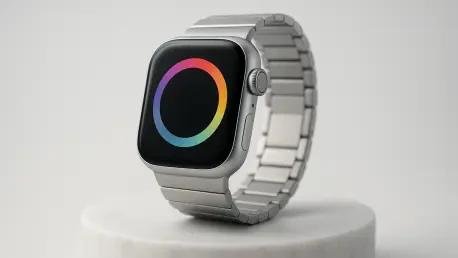

The Google Pixel Watch 5 distinguishes itself by integrating the Gemini AI framework directly into the hardware to process voice commands without an internet connection. This milestone reflects a broader industry shift toward edge computing, where privacy and latency are prioritized over traditional cloud-based server interactions. By utilizing a custom-designed Tensor W5 chipset, the device handles complex linguistic structures and contextual queries right on the wrist, effectively eliminating the frustrating delays often associated with spotty LTE or Wi-Fi signals. This architectural evolution means that users can now manage their digital lives in remote environments where connectivity was previously a barrier to smart functionality. Beyond simple task execution, this integration allows for a more personalized user experience that learns from habits without uploading sensitive personal data to external servers, setting a high standard for security in the wearable market today as consumers demand control.
Silicon
Central to this achievement is the proprietary Tensor W5 silicon, which features a dedicated Neural Processing Unit specifically optimized for the Gemini Nano model. Unlike previous iterations that relied on the smartphone or distant data centers for natural language understanding, this new hardware executes millions of operations per second with minimal thermal output. Engineers focused on a tiered memory architecture that allows the AI to remain in a low-power state, ready to respond instantly without draining the battery excessively. This balance between performance and efficiency ensures that the watch maintains its sleek profile while housing the computational power of a modern laptop. Furthermore, the inclusion of a high-bandwidth localized bus allows the AI to interface directly with the biological sensors, enabling real-time analysis of heart rate variability. This synergy provides immediate feedback on physical performance during intense exercise sessions without needing any phone nearby.
In addition to the processing core, the physical design has been overhauled to accommodate the increased thermal demands of on-device machine learning without compromising on aesthetics. A specialized ceramic backing acts as a heat sink, dissipating energy efficiently during heavy AI workloads such as real-time translation or complex scheduling tasks. This hardware refinement is complemented by an updated storage controller that facilitates rapid access to the local Gemini database, ensuring that responses feel fluid and conversational. By moving away from a reliance on the cloud, the device also significantly reduces data usage, which is a critical advantage for users on limited plans or those frequently traveling internationally. The result is a wearable that feels less like a secondary screen for a smartphone and more like a standalone intelligent companion. This shift in design philosophy marks a departure from the connected device era toward a new paradigm of independent tech.
Agency
The practical implications of offline intelligence are most visible in the way the interface handles complex, multi-layered requests. Users can now ask for a summary of their morning emails, set location-based reminders, and adjust smart home settings with a single, continuous voice command that requires no external verification. This seamlessness extends to safety features, as the watch can detect falls or medical emergencies and use its local AI to determine the severity of the situation before initiating contact with emergency services through local radio bands. Moreover, the integration with third-party applications has been simplified through a new API that allows developers to leverage the local Gemini engine for their own specialized tasks, such as navigation or fitness coaching. This openness fosters an ecosystem where the watch becomes the primary hub for a user’s digital identity, managing everything from secure payments to biometric authentication with speed and reliability.
Looking back at the launch event, it was clear that the emphasis remained on empowering individuals through accessible and private technology. The developers successfully demonstrated that high-level reasoning no longer required a constant tether to massive server farms, effectively solving the latency issues that plagued earlier versions. To maximize the benefits of this new hardware, early adopters should focus on customizing the local AI profiles to align with their specific productivity workflows and health goals. It was established that the most effective way to utilize the device involved regular interaction to refine its understanding of personal context and linguistic nuances. Future considerations will likely involve deeper integration with augmented reality glasses, where the watch serves as the localized brain for visual data. By prioritizing localized intelligence, the groundwork was laid for a more secure and responsive digital future where the user remains at the center of the experience.