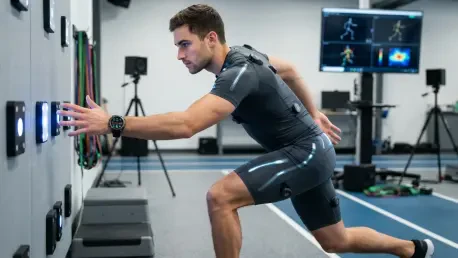

Wearable IoT modules equipped with nine-axis inertial measurement units provide the orientation data necessary to compensate for signal blockages caused by the human body. As we move deeper into 2026, the clinical application of these technologies is addressing long-standing gaps in neurodevelopmental rehabilitation, specifically for individuals with coordination disorders. Systems like OmniTrack, a collaborative project between the National Research Council and the University of Bologna, are leading this change by integrating high-precision indoor positioning with immediate sensory feedback. These devices facilitate a dynamic learning environment where physical distance is translated into intuitive cues, effectively automating the logic of exploratory games to guide movement. This shift toward automated, data-driven therapy allows for more consistent practice without the need for constant one-on-one supervision. By providing a reliable platform for motor training, these IoT wearables are paving the way for more accessible and standardized pediatric interventions.
Bridging Technology and Motor Development
The intersection of wearable technology and motor development is grounded in the need for more responsive and scalable rehabilitation tools. Traditional methods often struggle to provide the continuous, granular feedback required for significant neuroplastic change in patients with Developmental Coordination Disorder. IoT solutions fill this void by offering a bridge between the precision of digital sensors and the variability of human movement. By capturing a user’s spatial coordinates in real-time, these systems create a closed-loop environment where every action results in a specific sensory reaction. This interaction is crucial for helping the brain map physical movements to spatial outcomes, which is the core challenge for those with atypical motor development. As these wearables become more sophisticated, they are moving beyond simple data collection and becoming active participants in the therapeutic process, providing a level of interactivity that was previously impossible in a clinical setting.
Graded Feedback and Therapeutic Theory
The fundamental principle of modern motor training wearables is the use of graded feedback to support exploratory learning. Unlike binary systems that only signal when a mistake has been made, these advanced devices offer a spectrum of sensory intensities that guide the user toward a goal. This approach allows for a more natural learning curve, as the wearer can interpret the increasing or decreasing strength of a light, sound, or vibration to adjust their path. By providing this continuous flow of information, the system mimics the natural feedback loops the body uses for spatial navigation. This is particularly beneficial for children, as it turns a repetitive therapeutic exercise into a rewarding, game-like experience. The focus is on iterative improvement, where the learner is encouraged to experiment with different movements and observe the immediate sensory consequences. This methodology fosters a sense of agency and curiosity, which are essential components of effective long-term neurodevelopmental therapy.
Helping individuals develop a more refined internal model of spatial awareness is the ultimate goal of these therapeutic interventions. For those with motor impairments, the brain often struggles to integrate various sensory inputs into a coherent plan of action. Graded feedback addresses this by simplifying the cognitive load required to navigate a physical space. Instead of processing a complex set of visual and vestibular signals, the user can rely on a consistent, simplified sensory cue that indicates their proximity to a target. Over time, this consistent reinforcement helps the nervous system build more accurate internal representations of the body’s position in space. This process is similar to how a person might learn to navigate a dark room by feeling the walls; the wearable acts as a digital guide that provides constant spatial landmarks. By reinforcing these pathways through high-repetition, sensory-rich training, the technology supports the development of the foundational skills needed for more complex daily physical activities.
Architecture of a Wearable Tracking System
Building a system capable of such granular tracking requires a hardware architecture designed specifically for the challenges of indoor positioning. Ultra-wideband (UWB) technology, such as the Qorvo DW3000-series, serves as the cornerstone of these modern wearable modules. UWB is uniquely suited for this application because it uses time-of-flight ranging, which measures the time a signal takes to travel between a mobile tag and several fixed anchors. This method is significantly more accurate than signal-strength-based approaches like Bluetooth, which are often prone to interference and inaccuracy in indoor settings. The high temporal resolution of UWB allows the system to achieve centimeter-level precision, which is necessary for detecting the subtle movement corrections made during motor training. These modules are integrated into small, lightweight tags that can be easily worn on the wrist or torso without restricting movement. This ensures that the tracked data is an accurate reflection of the user’s natural physical capabilities.
Behind the UWB ranging lies a powerful processing unit, typically an ESP32-S3 microcontroller, which manages the data flow from the onboard sensors. The inclusion of a nine-axis inertial measurement unit, like the BNO055, allows the system to track not just location but also the orientation and acceleration of the wearer. All this data is streamed to a software pipeline powered by the Robot Operating System 2 (ROS 2), which calculates the user’s position using complex multilateration algorithms. By applying the Levenberg-Marquardt method to solve these spatial equations, the system can provide a stable and accurate coordinate even when environmental conditions are not ideal. This architectural synergy between high-speed hardware and sophisticated software ensures that the feedback control system can respond to user movements in real-time. This robust pipeline is essential for maintaining the high update rates required for a smooth and responsive user experience, making the digital guidance feel like an extension of the wearer’s own senses.
Overcoming Technical Hurdles and Assessing Performance
Deploying IoT wearables in real-world clinical environments presents a unique set of technical hurdles that must be addressed to ensure therapeutic efficacy. Indoor spaces are often filled with obstacles that can reflect or block radio signals, leading to significant measurement errors. These environmental factors can cause a “drifting” effect where the reported position of the user does not match their actual location. To mitigate this, developers must implement advanced signal processing techniques that can filter out noise and correct for systematic biases. This is not just a technical requirement but a clinical one, as inaccurate feedback could lead to incorrect motor learning or patient frustration. Addressing these issues requires a deep understanding of how signals propagate in complex spaces and how the human body itself interacts with those signals. By creating more resilient tracking systems, engineers are ensuring that these tools can be used reliably in a wide variety of settings, from specialized rehabilitation centers to the home environment.
Calibration and Signal Refinement
Rigorous calibration is the primary method used to eliminate the inherent distance-dependent bias found in most indoor positioning systems. Research has shown that raw UWB data often requires correction using polynomial models to align digital measurements with physical reality. A third-degree polynomial is frequently employed because it provides a high level of accuracy across the entire tracking range without falling into the trap of overfitting the data to a specific set of conditions. This process involves comparing the raw sensor data against known physical distances and generating a mathematical correction factor. Once applied, this calibration significantly reduces the mean absolute error, transforming a raw signal into a precise measurement tool. This level of refinement is critical for motor training applications where the system must distinguish between very small changes in distance. Without these mathematical corrections, the “hot-and-cold” logic would fail to provide the smooth, graded transitions necessary for effective guidance.
Beyond global calibration, the most advanced systems utilize a per-anchor strategy to account for the unique characteristics of each fixed point in the room. Every anchor may have a slightly different ranging behavior due to its specific height, its proximity to a wall, or the presence of nearby metallic objects. By calibrating each anchor individually, the system can provide a much more uniform level of accuracy throughout the entire monitored area. To further stabilize the output, first-order exponential smoothing filters are often applied to the data stream. These filters help to dampen short-term fluctuations caused by signal noise, ensuring that the feedback provided to the user—whether visual, auditory, or haptic—remains steady and fluid. This attention to signal integrity ensures that the user can trust the cues they receive, allowing them to focus entirely on their physical movements. These refinements are essential for creating a professional-grade medical device that can provide repeatable and scientifically valid data.
Performance Metrics and Future Expansion
Measuring the performance of these systems involves balancing the trade-offs between spatial accuracy and processing latency. For motor rehabilitation, a sensing-to-actuation window of roughly 200 milliseconds is generally considered acceptable, as it allows the user to perceive the feedback as a direct consequence of their movement. However, as the focus moves toward tracking more complex or rapid actions, further optimizations are being developed to reduce this delay even further. At the same time, engineers are working to minimize “edge effects” that occur when a user moves toward the boundaries of the anchor setup. These challenges are being met with more advanced antenna designs and smarter algorithms that can adjust for poor signal geometry. The future of this technology lies in expanding these capabilities to include full three-dimensional tracking and orientation-awareness. By integrating more detailed movement data, these systems will be able to support a wider range of exercises, providing a more comprehensive tool for therapists.
The initial implementation of the OmniTrack platform successfully demonstrated the viability of using high-precision UWB and multimodal feedback for motor training. Researchers confirmed that the integration of UWB technology with sophisticated calibration models provided the accuracy necessary for clinical use in indoor environments. To advance this field, clinicians recommended the development of more user-friendly interfaces that would allow therapists to easily set up and customize training zones. Actionable steps were also taken to reduce system latency, ensuring that the feedback remained synchronized with even the fastest movements. Furthermore, the exploration of 3D tracking capabilities was identified as a priority for capturing a more complete picture of patient progress. By establishing these technical and clinical foundations, the project demonstrated how interdisciplinary collaboration could create tools that actively support the neuroplastic process. These advancements paved the way for the integration of smart wearables into standard rehabilitation protocols.