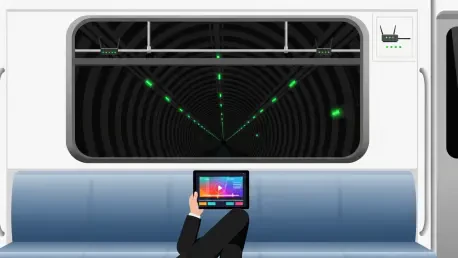

Navigating the deep-level tunnels of the London Underground used to mean surrendering all digital contact with the outside world for the duration of a commute, yet today this subterranean landscape is undergoing a radical technological shift. This massive digital overhaul is fundamentally changing how people move through the city, effectively ending the era when the Tube’s iron-lined tunnels were notorious dead zones for cellular signals. Through a strategic partnership between Transport for London and Boldyn Networks, the network is rapidly becoming a fully connected digital hub, with approximately 60 percent of the system already providing high-speed 4G and 5G mobile coverage to passengers. This initiative serves as a critical upgrade to the city’s aging infrastructure, aiming to provide a seamless transition between the street and the platform. By the end of recent expansion phases, the project achieved comprehensive connectivity, ensuring that commuters stay productive.
Infrastructure Milestones and Engineering Logistics
Bridging the Gap: From Platforms to Tunnels
One of the most significant achievements in this modernization project involves the extension of high-speed signals into the actual tunnels of major transit routes like the Bakerloo, Metropolitan, and Circle lines. In the past, passengers might have caught a fleeting signal at a station platform, only to have their connection drop the moment the train moved into the dark tunnels. Now, uninterrupted data usage is becoming the standard expectation on stretches between major transportation hubs, such as the segment between Queen’s Park and Edgware Road. This progress is particularly noticeable for those traveling between Euston Square and King’s Cross St Pancras, where the transition from station to tunnel is now digitally invisible. The rollout ensures that data-intensive tasks, like streaming video or participating in work meetings, continue without the frustrating buffering that once defined subterranean travel. This shift represents a major victory for urban engineering.
This phased rollout also targeted some of the busiest and most complex interchanges in the global transit network, including Victoria and Paddington stations. Because these locations are architectural labyrinths featuring multiple levels and varying depths, engineers adopted a strategic approach that involved covering ticket halls and interchanges before moving to the deepest platforms. This tiered strategy was designed to create a continuous digital experience where a passenger can join a high-definition video call at the station entrance and remain connected throughout their entire journey until they exit at their final destination. Providing reliable coverage in these high-traffic areas required a delicate balance of installing modern hardware without disrupting the historical integrity of the stations. As the work progressed, the focus remained on eliminating the final few white spots in the network to ensure that every passenger enjoyed the same level of service regardless of depth.
Overcoming Constraints: The Track-Off Window
Upgrading a century-old subway system while it remains operational for millions of daily passengers is an engineering challenge of staggering proportions. The project relies on a 20-year concession with Boldyn Networks, which utilizes a neutral host model to streamline the installation process. This collaborative approach allows all four of the major mobile carriers in the United Kingdom to share the same hardware, including EE, Three, Vodafone, and Virgin Media O2. The physical labor required for this transformation takes place almost entirely at night, during a period known as the track-off window. This narrow timeframe occurs when the power is cut and the tracks are safe for human presence, providing a fleeting opportunity for technical teams to enter the tunnels. More than 600 specialized engineers work in these conditions every night, installing miles of cabling and hardware within the cramped and dusty environments of the deep-level tunnels.
The difficulty of working in the London Underground cannot be overstated, as the heat and dust within the deep-level tunnels create a harsh environment for both workers and sensitive electronics. Despite these hurdles, the technical teams have successfully equipped large portions of the Northern, Bakerloo, and Metropolitan lines with the necessary equipment to support full tunnel coverage. Every piece of hardware must be rigorously tested to ensure it can withstand the vibrations and environmental stressors of a busy subway line. By coordinating these efforts during the late-night hours, the project avoids disrupting the daily commutes of millions of Londoners, though it requires meticulous planning and logistics to move equipment in and out of the tunnels before the first morning trains begin their runs. This ongoing effort highlights the commitment to bringing world-class digital infrastructure to one of the oldest transit systems in existence, paving the way for a more connected urban future.
Public Safety and Future Urban Connectivity
Vital Infrastructure: Emergency Services and Safety
The motivation for this massive investment goes far beyond providing passengers with social media access; it is deeply rooted in the fundamental need for enhanced public safety. The new 5G infrastructure is designed to host the Emergency Services Network, which provides police, fire, and ambulance crews with immediate access to life-saving data while they are working underground. Historically, communication for first responders in the deep-level tunnels was limited to radio signals that could be inconsistent or lack the bandwidth for modern data needs. With high-speed 5G connectivity, emergency personnel can now transmit real-time imagery and access high-resolution maps of the station layouts during a crisis. This level of situational awareness is crucial for coordinating rescue operations in the city’s deepest and most inaccessible locations. The ability to maintain a clear data link with surface command centers ensures that help can be directed accurately.
From an economic perspective, the 5G rollout is a significant boon for London’s status as a premier global business center. By enabling commuters to work, answer emails, and plan their professional days while in transit, the city is reclaiming thousands of hours of potential productivity that were previously lost to the digital void. In a fast-paced global economy, the ability to stay connected during a forty-minute commute can make a substantial difference in the efficiency of the workforce. This connectivity also supports the growing trend of flexible and remote work, as employees can transition between different work environments without losing access to their cloud-based tools and communication platforms. The underground network has essentially become an extension of the modern office, allowing for a fluid and integrated professional life. This improvement in the commuting experience makes London a more attractive destination for international talent and corporate investment.
Extending the Network: Managing Social Etiquette
The digital transformation does not stop at the primary Tube lines; it is also expanding to the Docklands Light Railway and parts of the London Overground, such as the Windrush line. This expansion ensures that the benefits of high-speed connectivity are felt across the entire breadth of the city’s transport network, from the financial districts to the residential suburbs. Above ground, the project is leveraging small-cell technology installed on streetlights and other urban assets to boost network capacity in high-traffic areas like London Bridge and the Shard. This strategy creates a more robust digital environment for both residents and businesses by creating a fiber backbone that bridges the gap between mobile and landline infrastructure. The integration of these various transit modes into a single, cohesive digital network is a major step toward creating a truly smart city. This holistic approach ensures that no part of the public transport system is left behind.
As the Underground becomes a high-speed digital zone, Transport for London is also actively addressing the potential social impacts of these technological changes. To prevent the commute from devolving into a cacophony of speakerphone calls and loud videos, the Travel Kind campaign has been significantly reinforced across the network. Passengers are encouraged to use headphones and remain mindful of their fellow travelers to maintain a respectful and quiet environment. This focus on etiquette is essential for ensuring that while the Tube becomes more technologically advanced, it remains a comfortable and pleasant space for everyone. The campaign uses clear signage and announcements to remind people that the digital world should not intrude on the physical comfort of others. By setting these expectations early in the rollout process, the transit authority is helping to shape social norms that balance the benefits of connectivity with the need for a peaceful commute.
Future Developments: Building on Digital Foundations
The successful implementation of the 5G network across the London Underground provided a definitive blueprint for how historical urban infrastructure was effectively digitized for the modern era. This project proved that the technical barriers of deep-level tunneling and neutral-host sharing were surmountable with sufficient coordination between public and private sectors. Looking forward, the next logical step involved the integration of real-time passenger flow data and augmented reality navigation to further enhance the commuter experience. These advancements suggested that the network would soon transition from a simple transit system into a reactive, data-driven urban assistant. City planners also recognized the need to maintain a cycle of hardware refreshes from 2026 to 2028 to keep pace with evolving telecommunications standards. By prioritizing long-term digital resilience, the city ensured its transport infrastructure remained a competitive asset on the global stage.