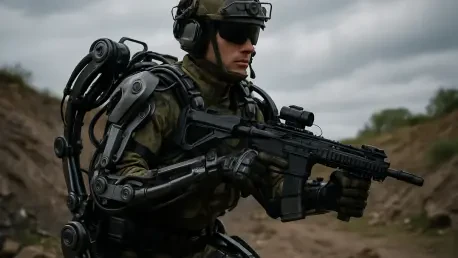

The physical limits of the human skeleton are being systematically pushed to their breaking point as modern infantry and artillery operations demand unprecedented levels of endurance and strength during high-intensity conflict scenarios. To address this mounting physiological challenge, military researchers have accelerated the deployment of lower-body wearable robots designed specifically for the grueling realities of the field. These systems target artillery crews who frequently handle shells weighing upwards of 50 kilograms, a task that historically led to rapid exhaustion and a sharp decline in firing accuracy. By redistributing this immense physical strain from the muscles and joints to a dedicated mechanical frame, the technology seeks to preserve the health of the operator while maintaining operational tempo. These initial prototypes arrived as remarkably lightweight devices, weighing only about two kilograms, and were engineered to be folded into a compact form for easy transport. This design philosophy prioritized mobility over bulk, ensuring that the equipment did not become a burden during rapid relocation or tactical maneuvers.
Mechanical Assistance: The Engineering of Human Augmentation
Building on these hardware advancements, the sophisticated integration of hip-mounted actuators allowed these assisted joints to provide a consistent 30 percent reduction in leg strain during repetitive lifting and movement. This mechanical advantage proved essential for maintaining high speeds, as the systems supported locomotion at rates of up to 20 kilometers per hour without requiring excessive metabolic output from the soldier. Central to this performance was an onboard software suite that utilized real-time data sensors to monitor every nuance of the user’s stride and the shifting weight of the load being carried. Rather than providing a static level of power, the system intelligently adjusted its mechanical assistance to match the specific motions of the operator, whether they were climbing steep inclines or stabilizing themselves while handling heavy munitions. This adaptive capability ensured that the robot functioned as a seamless extension of the human body, preventing the jerky or delayed responses that plagued earlier iterations of exoskeleton technology. The result was a more natural gait and a significant decrease in the risk of acute musculoskeletal injuries during prolonged engagement cycles.
Operational Integration: Toward a Resilient Combat Workflow
The strategic shift toward human augmentation successfully moved beyond the experimental phase as units began integrating these systems into active logistics and combat support roles. Initial field observations confirmed that by easing the burden of lifting over a ton of ammunition during intensive operations, the exoskeletons allowed personnel to maintain a higher work pace for extended periods. This progress highlighted the necessity of focusing on long-term durability and the seamless integration of wearable robotics with standard-issue gear and protective equipment. Technical experts recognized that for these systems to remain viable from 2026 to 2030, the focus had to remain on power density and environmental hardening against dust and moisture. The deployment of this technology redefined the role of the individual soldier by maximizing human efficiency in high-stress environments through precise mechanical intervention. Future initiatives prioritized the development of modular components that could be repaired in the field, ensuring that the mechanical advantage remained available throughout the duration of a mission. By treating the exoskeleton as a fundamental part of the modern kit, the military established a new standard for operational longevity and personnel safety.