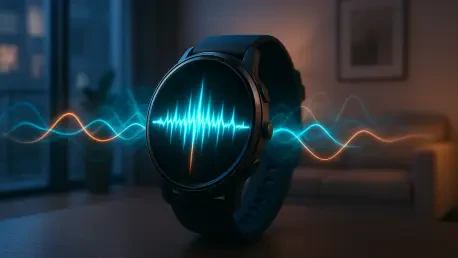

Law enforcement agencies could potentially seek access to the AI-generated archives stored on Apple’s servers to reconstruct private movements and verbal interactions. This unsettling prospect has emerged alongside the release of the Apple Watch Series 12 and Apple Watch Ultra 4, which now feature a powerful capability known as Siri Recap. While Apple has long championed its wearable as a premier health and fitness companion, this latest iteration signals a profound transition toward pervasive environmental monitoring. By utilizing advanced artificial intelligence to listen, transcribe, and summarize every conversation within a specific radius, the device has blurred the line between a productivity tool and a surveillance apparatus. The core of the current debate lies in the delicate balance between personal convenience and the collective right to privacy. As this technology becomes widespread, it forces society to confront the reality that a common wrist accessory is now capable of documenting the nuances of daily existence without any explicit consent. This shift marks a pivotal moment for wearable technology.
The Mechanics of Ambient Summarization
Hardware Capability: The Evolution of Processing
The technical execution of Siri Recap relies on the advanced S12 System in Package, which was designed to handle the significant computational load of real-time environmental processing. Unlike the previous Series 11 or the standard Ultra 3, these newest iterations feature optimized microphone arrays and improved Neural Engine throughput to isolate human speech from complex background noise. This level of hardware exclusivity ensures that the transcription process is both accurate and responsive, yet it also confirms that older devices lack the specialized components required for such deep linguistic analysis. The watch serves as the primary sensor, capturing audio data with high fidelity before it is relayed to a paired iPhone for preliminary structuring. This seamless coordination between devices highlights the progress of mobile hardware, though it raises questions about the sheer amount of data being captured. The reliance on specific modern chipsets suggests that high-end AI features are now a permanent fixture in the premium wearable market.
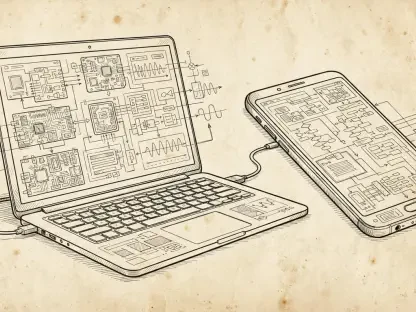
Following the initial audio capture, the workflow involves a multi-stage process where the paired iPhone transforms the raw sound into a coherent transcript. This stage is critical because it prepares the data for advanced summarization while keeping the most resource-intensive tasks off the watch itself to preserve battery life. The transition from sound to text is nearly instantaneous, reflecting the efficiency of current machine learning algorithms. However, this process also involves the generation of a temporary digital record that exists before the final summary is created. Critics note that while the audio may be transient, the creation of a full transcript on the phone represents a significant collection of personal data that could be vulnerable if the device is compromised. The complexity of this data pipeline demonstrates how Apple has integrated different parts of its ecosystem to support the feature. It also emphasizes the shift toward devices that are constantly processing the surrounding environment to serve the specific needs of the individual user.
Cloud Infrastructure: Balancing Power and Security
After the transcript is generated on the iPhone, it is securely uploaded to Apple’s Private Cloud Compute servers to be processed by large language models. These models are tasked with distilling hours of conversation into brief, actionable summaries that provide the wearer with key takeaways and relevant highlights. Apple has gone to great lengths to describe this cloud environment as a fortress of privacy, where data is processed in a way that is supposedly inaccessible even to the company’s own engineers. This architecture is a direct response to the limitations of on-device processing, as summarizing complex human interactions requires the kind of scale only found in modern server farms. By moving this task to the cloud, Apple can provide a level of analytical sophistication that was previously impossible. Nevertheless, the act of sending summarized conversations to a remote server introduces a new layer of concern for those who value absolute data sovereignty. This infrastructure is the backbone of the Siri Recap experience.
Despite the advanced encryption and the private designation of the cloud servers, privacy advocates remain wary of the implications of remote data processing. The transition from local storage to cloud-based analysis represents a fundamental change in how personal wearable data is handled. Even if the raw audio is never stored, the summarized text still contains the essence of private conversations, which could potentially be intercepted or accessed through legal or technical means. This trade-off between the high-level power of AI and the safety of on-device isolation is a recurring theme in modern technology. Users are essentially asked to trust the corporate infrastructure to protect their most intimate interactions. As AI models become more integrated into daily life, the pressure to move data to the cloud only increases, making true data isolation harder to maintain. The current setup for Siri Recap is a testament to this trend, prioritizing the utility of the summary over the traditional security of keeping all data strictly on the physical device.
Societal Impacts and the Future of Communication
Professional Tension: Trust in the Workplace
The integration of Siri Recap into a mainstream device like the Apple Watch has the potential to introduce significant tension into professional environments. In fields such as medicine, law, and corporate finance, the expectation of confidentiality is a cornerstone of the professional relationship. The presence of a device that is constantly summarizing conversations could lead to a complete breakdown of trust between colleagues and clients. For example, a patient may be less willing to share sensitive health information if they suspect a doctor’s watch is generating a digital summary for later use. Similarly, lawyers and their clients may find it impossible to have candid discussions if the threat of an automated record is always present. This could result in a massive cultural shift where high-stakes professional settings become no-watch zones, mirroring the bans on smartphones and cameras in sensitive areas. The mere possibility of a recording can be enough to stifle the open communication necessary for these professions to function.
Employers are also likely to face new challenges as they navigate the presence of always-on recording devices in the office. To protect intellectual property and maintain a secure environment, many companies may feel compelled to implement strict policies regarding wearable technology. This creates a difficult situation for employees who rely on their watches for legitimate health and productivity reasons. The conflict between the benefits of personal technology and the needs of organizational security will likely lead to a new wave of workplace litigation and policy development. Furthermore, the use of Siri Recap could lead to a transparency arms race, where individuals feel the need to record their own versions of meetings to counter the summaries generated by others. This would create a highly adversarial atmosphere where every interaction is documented from multiple perspectives. Instead of fostering collaboration, the technology could lead to a fragmented and paranoid workplace culture. The long-term impact on professional dynamics remains a concern.
Strategic Recommendations: Restoring Technical Accountability
To address the growing concerns surrounding Siri Recap, several strategic improvements were proposed to restore public trust and protect bystander privacy. One of the most significant recommendations involved the removal of the always-on mode, ensuring that every recording session was the result of a conscious and visible action by the user. By mandating that the feature only worked on-demand, the risk of accidental or covert recording was substantially reduced. Additionally, the introduction of a dedicated physical indicator, such as a tally light on the watch face, was identified as a necessary step to alert those in the vicinity that the microphone was active. This simple visual cue provided a level of transparency that was previously missing from the device’s design. These changes aimed to shift the power back toward the community, ensuring that recording was a collaborative rather than a secret act. By prioritizing these safeguards, the technology could have functioned as a helpful assistant without becoming an instrument of suspicion.
Furthermore, the development of a digital alert system provided a much-needed layer of protection for smartphone users in the proximity of a Series 12 device. This system utilized Bluetooth technology to send a notification to nearby phones whenever a Siri Recap session was initiated, similar to the alerts used for unknown AirTags. This proactive approach allowed bystanders to be informed of the recording in real-time, giving them the chance to opt out or move away. These measures moved the industry toward a standard of privacy by design, where the rights of non-users were given equal consideration to the convenience of the customer. The implementation of these tools suggested a future where AI could be integrated into daily life without sacrificing the fundamental right to private discourse. Ultimately, the goal was to create a technological environment where innovation was balanced with accountability. These actionable steps offered a way forward that respected the boundaries of human interaction while still embracing the benefits of artificial intelligence.