
The evolution of human-computer interaction has reached a pivotal juncture where the physical limitations of keyboards and voice interfaces are being bypassed by sophisticated neural sensing technology. This paradigm shift centers on the human wrist, a biological bottleneck where virtually every motor command intended for the hands must pass in the form of electrical impulses. By tapping into these signals, developers have effectively created a new “intent layer” that allows artificial intelligence to perceive a user’s objectives before a physical motion is even completed. This transition marks a departure from traditional “input” methods, which require a finished action like a click or a spoken word, and moves toward a model of “intent,” where the system aligns itself with the user’s nervous system in real time. As these devices become more ubiquitous, the relationship between humans and machines is transforming from a sequence of discrete commands into a continuous, fluid partnership that prioritizes cognitive flow over manual execution.
The Intent Gap: Bridging Human Thought and Machine Action
The primary friction point in current artificial intelligence workflows remains the “intent gap,” a phenomenon where the time and effort required to translate a thought into a digital command lead to a loss of productivity and creative momentum. Even the most advanced generative models currently require users to articulate complex prompts or navigate menus, often resulting in an iterative cycle of trial and error as the AI attempts to guess the user’s ultimate goal. Wrist-worn neural sensing addresses this by capturing the motor intent directly from the radial, ulnar, and median nerves, allowing the AI to observe the precursor to action. This creates a high-bandwidth communication channel that enables a proactive response from the system. Instead of waiting for a user to finish typing a command, the AI can begin preparing the environment or suggesting the next logical step based on the subtle neuromuscular signatures it detects, effectively shrinking the gap between human desire and digital execution to nearly zero.
To facilitate this level of precision, the industry has turned to the Large MUAP Model, or LMM, which serves as the foundational data framework for translating Motor Unit Action Potentials into machine-readable “neural tokens.” These models function similarly to large language models but operate on the electrical language of the body rather than text. By analyzing thousands of hours of neuromuscular data, the LMM can distinguish between a deliberate gesture and a random twitch, or even detect the specific amount of force a user intends to apply to a virtual object. As these models ingest more data from a specific user, they become highly personalized, learning the unique electrical patterns of an individual’s nervous system. This personalization ensures that the interface is not only fast but incredibly accurate, allowing for a level of control that feels like an extension of the user’s own body rather than an external peripheral device.
Security and Dexterity: Real-World Neural Applications
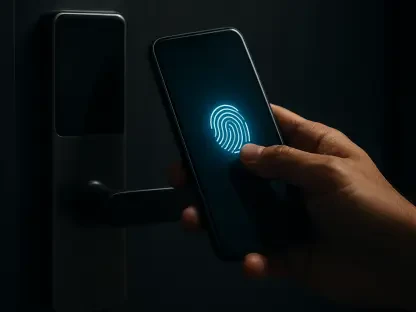
A significant breakthrough afforded by this neural layer is the concept of “passive identity,” a security framework that replaces active biometric scans with continuous, invisible authentication. Every human possesses a unique neuromuscular signature—a “neural gait”—that is nearly impossible to replicate or spoof. Wrist-worn sensors can monitor these signatures in the background, ensuring that a device or workstation remains unlocked only while the verified user is wearing the sensor and exhibiting their specific neural patterns. This eliminates the need for repeated logins, facial recognition interruptions, or physical keys, creating a frictionless security environment for high-stakes enterprise settings. If the device is removed or if the neural signature changes, the system can instantly revoke access, providing a level of security that is both more robust and less intrusive than anything currently available in the consumer or professional markets.
Beyond security, the field of robotics is seeing a revolution in manual dexterity through the integration of wrist-based intent data. Training robotic hands to perform delicate tasks, such as handling glassware or performing remote surgery, has historically been limited by the lack of tactile feedback and the latency of visual processing. By using neural sensing, human operators can “teach” robots not just the path of a movement, but the intentionality of the force and grip behind it. The sensors capture the anticipatory muscle tension that occurs before a human touches an object, providing the robot with the necessary context to adjust its grip dynamically. This allows humanoid robots to operate with a level of sensitivity that mimics human touch, making them far more capable in laboratory, manufacturing, and domestic environments where precision is non-negotiable and the cost of error is high.
Contextual Intelligence: Physiological Data and Feedback Loops
The wrist-worn interface is not limited to capturing movement; it also serves as a critical gateway for gathering physiological data that informs the “emotional intelligence” of AI agents. Sensors integrated into these devices can monitor heart rate variability, skin conductance, and micro-tensions in the wrist muscles to gauge a user’s stress levels, focus, or cognitive load. For an AI assistant, this information is vital for determining how and when to interact with the user. If the system detects that a professional is in a state of high focus or “flow,” it can automatically silence non-urgent notifications or provide simplified, less distracting responses. Conversely, if the physiological data suggests frustration or confusion, the AI can offer proactive help or adjust its task complexity to better suit the user’s current state, creating a more empathetic and context-aware digital environment.
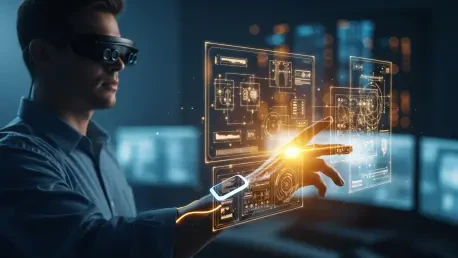
This physiological input reaches its full potential when integrated with Augmented Reality, creating a closed-loop system where intent and feedback are perfectly synchronized. While the wrist sensor captures the “input” of intent, AR glasses provide the “output” or visual confirmation of that intent. For example, in a complex engineering simulation, a user might intend to rotate a specific component; the neural sensor detects the preparatory signals for that movement, and the AR display highlights the component before the hand even moves. This immediate visual feedback allows the user to make micro-adjustments in real time, ensuring that the interaction is accurate and intuitive. By combining the nervous system’s output with high-fidelity visual feedback, the interface becomes a seamless loop, effectively merging the digital workspace with the user’s natural physical movements and cognitive expectations.
Strategic Implementation: Hardware Stratification and Strategic Integration
The deployment of this technology has necessitated a clear division in hardware engineering to satisfy both the consumer and industrial sectors. Consumer-grade wristbands are designed for comfort and longevity, utilizing a streamlined sensor array that focuses on gesture recognition, health tracking, and smart home control. These devices are meant to be worn all day, acting as the primary controller for the personal digital ecosystem. In contrast, enterprise-grade hardware features high-density sensor grids and specialized shielding to provide the extreme spatial resolution required for precision robotics and high-security authentication. This stratification ensures that while the underlying “intent layer” is a universal concept, the specific hardware can be tailored to the demands of the environment, whether it is a living room or a high-tech manufacturing floor.
The transition toward wrist-based neural interfaces represented a fundamental change in how digital infrastructure was designed and implemented across the global tech sector. Organizations prioritized the integration of neural tokens into their existing AI frameworks, recognizing that the ability to capture human intent at the source was the key to true automation. Developers focused on building software that could interpret these low-level electrical signals, which allowed for a more natural interaction model that did not require specialized training for the end user. This shift also prompted a reevaluation of data privacy, as the collection of neuromuscular and physiological data necessitated the creation of “on-device” processing standards to ensure that sensitive biological information remained under the user’s control. Ultimately, the industry moved away from the concept of devices as external tools and toward a philosophy where technology functioned as a direct extension of the human nervous system.