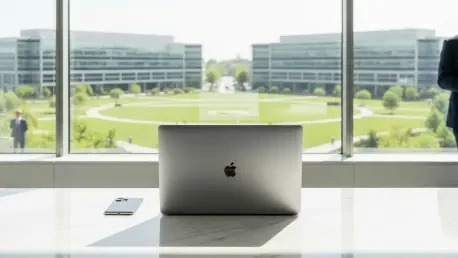

When the most valuable company on the planet signals a change in its core leadership, the tremors are felt far beyond the glass walls of its Cupertino headquarters. Apple Inc. recently unveiled a definitive plan for its executive hierarchy, marking the conclusion of an era characterized by unprecedented financial growth and the dawn of a hardware-centric future. Tim Cook, the man who steered the ship through the post-Jobs landscape, will officially step down on September 1, handing the reins to John Ternus. This transition represents a deliberate and strategic pivot, ensuring that the company maintains its cultural integrity while placing a seasoned technical visionary at the steering wheel.
From the Shadow of Jobs to the Cook Legacy
To appreciate the magnitude of this shift, one must consider the conditions under which Tim Cook assumed control fifteen years ago. Since 2011, he transitioned the organization from a high-growth hardware boutique into a global titan of services, wearables, and refined supply chain management. His tenure redefined what it meant to be a tech leader, moving away from pure aesthetic flair toward a broader focus on environmental sustainability and consistent shareholder returns. This historical context is vital for understanding the current climate, as the new succession mirrors the meticulous handoff that once preserved stability during the transition from the founder to the operator.
Navigating the Mechanics of a Seamless Transition
The Rise of John Ternus and the Engineering-First Approach
By elevating a hardware specialist to the top office, the company is reaffirming its commitment to product excellence as the primary driver of growth. John Ternus brings over two decades of institutional knowledge, having touched nearly every major product category from the iPhone to the revolutionary implementation of Apple Silicon. This background suggests that the coming years will focus on deep technical integration, where the physical device and its internal capabilities become the ultimate differentiator in a saturated market. His promotion signifies a shift back toward an engineering-first philosophy that resonates with the company’s historical roots.
Ensuring Stability Through Executive Chairman Continuity
A fundamental part of this organizational resilience is the decision for Tim Cook to remain involved as the Executive Chairman of the Board of Directors. This move provides a bridge between the previous era and the incoming administration, allowing Ternus to focus on innovation while Cook manages high-level regulatory and partner relationships. For the investment community, this continuity acts as a vital insurance policy against the volatility that often accompanies leadership changes at high-profile firms. By keeping a veteran presence in the boardroom, the company mitigates risks associated with sudden shifts in corporate strategy.
Broadening the Board and Strengthening the Silicon Strategy
The restructuring further solidifies the importance of custom silicon through the appointment of Johny Srouji as Chief Hardware Officer. As the architect behind the proprietary chips that now power the entire ecosystem, Srouji’s new role ensures that hardware development remains tightly coupled with semiconductor innovation. Simultaneously, the transition of Arthur Levinson to lead independent director maintains a layer of seasoned oversight. These changes highlight a strategy of “total stack control,” where the firm seeks to insulate itself from third-party dependencies by owning every critical technological layer of its products.
The Road Ahead for Apple in the Post-Cook Era
Looking toward the horizon, the leadership must now navigate a landscape increasingly defined by generative artificial intelligence and spatial computing platforms. The maturation of technologies like the Vision Pro and the integration of AI into every hardware facet represent the next frontier for the brand. Analysts suggest that while the previous decade was about scaling and services, the upcoming era will be defined by how effectively these complex technologies are woven into the user experience. Succeeding in this environment requires a leader who understands the physical constraints of hardware and the boundless potential of software equally.
Lessons in Succession and Organizational Resilience
For the broader business world, this transition serves as a blueprint for long-term organizational health and the value of internal talent cultivation. Promoting from within allows a company to bypass the cultural friction that frequently occurs when bringing in an outside executive who might not grasp the underlying philosophy. Furthermore, the phased exit strategy demonstrates how to handle a high-profile departure without triggering market panic. These practices underscore the necessity of preparing for leadership changes years in advance, rather than reacting to them as unforeseen crises.
A Legacy of Innovation Continues
The strategic reorganization at Apple provided a clear roadmap for how a multi-trillion-dollar entity maintained its momentum during a period of significant change. The decision to appoint a technical veteran like John Ternus reflected a desire to return to the core engineering values that initially established the company’s dominance. Stakeholders recognized that the combination of Cook’s continued guidance and a new hardware-focused chief offered the best path toward long-term stability. Ultimately, this transition demonstrated that the most effective way to secure a future was to rely on the strengths of an established internal culture. Leaders across the globe observed this process as a successful exercise in corporate longevity and proactive management.