
The domestic landscape across Australia and New Zealand is currently undergoing a radical technological shift as homeowners move away from piecemeal gadgets in favor of fully integrated robotic networks. The upcoming product lineup addresses the ‘impossible triangle’ of consumer electronics by attempting to merge premium design with cutting-edge engineering and manufacturing. This massive expansion into the ANZ market involves more than twenty specialized devices, each designed to dismantle the daily friction of manual chores. From the intricate patterns of a living room rug to the chemical balance of a backyard pool, the objective is to replace active human management with a silent, invisible layer of automation. By launching this comprehensive suite in Sydney, the company signifies a departure from the industry’s reliance on simple, single-purpose appliances, opting instead for a holistic environment where the house maintains its own cleanliness and functionality. This pivot reflects a deeper understanding of modern living, where time has become the most valuable commodity and the promise of a self-sustaining home is no longer a niche luxury but a standard expectation for the contemporary consumer. The transition toward a comprehensive ecosystem indicates that the era of managing a dozen different disconnected apps and devices is finally coming to an end.
Engineering the Penrose Triangle: Achieving Balance in Product Design
To navigate the complexities of modern consumer needs, the development team focused on solving what is colloquially known as the “Penrose triangle” of product development. This theoretical model describes the historical difficulty of maintaining high-end aesthetic appeal, deep technical innovation, and exceptional build quality simultaneously. In most market sectors, consumers are typically forced to compromise on at least one of these pillars, often settling for powerful machines that are visually unappealing or stylish devices that lack functional depth. MOVA has challenged this status quo by asserting that these three elements are not mutually exclusive but are instead dependencies that must be managed through rigorous oversight. This philosophy ensures that every vacuum, mower, and purifier released in the current cycle meets a strict set of criteria that prevents the dilution of the user experience. By refusing to sacrifice form for function, the company has managed to produce a lineup that integrates into the modern home as a piece of decor while performing heavy-duty industrial tasks.
This high level of cohesion is primarily achieved through a strategy of total vertical integration, encapsulated by the operational mantra “We build the engine.” Rather than sourcing generic components from third-party suppliers, the company maintains absolute control over its entire manufacturing and engineering pipeline. This approach is supported by a massive research and development department that has secured thousands of proprietary patents in the current production cycle alone. This self-reliance is particularly evident in the creation of high-speed digital motors, which are tailored specifically to address unique household challenges like pet hair entanglement and difficult corners. Because the hardware and software are developed under one roof, the engineering team can optimize every watt of power and every line of code to work in perfect harmony. This level of specialization allows for the creation of machines that are more efficient and durable than those built from off-the-shelf parts. Consequently, the reliance on internal innovation serves as a safeguard against the supply chain fluctuations and quality control issues that often plague the broader electronics industry.
Advanced Interior Floor and Air Solutions: Beyond Basic Cleaning
The centerpiece of the interior maintenance range is the V70 Ultra Complete, a robotic vacuum designed to eliminate the common “dead zone” problem where traditional robots fail to reach. This machine utilizes MaxiReachX technology, which features mechanical arms and specialized brushes that physically extend beyond the device’s chassis to clean deep under low-profile furniture and along the edges of cabinetry. Unlike previous generations of robots that required users to rearrange their living spaces to accommodate the machine’s limitations, this unit adapts to the existing layout of the home. By using high-precision spatial mapping, the robot identifies areas that are typically neglected by standard circular designs and deploys its extending components to ensure a truly wall-to-wall clean. This shift from passive navigation to active mechanical adaptation represents a significant leap in how autonomous floor care is executed. It moves the technology away from being a mere supplement to manual cleaning and positions it as a complete replacement for human labor in the floor maintenance category.
In tandem with advanced dry cleaning, the Z70 Ultra Roller introduces a sophisticated wet-floor maintenance system that focuses on constant roller sanitation. Most traditional robotic mops simply drag a damp cloth or a recirculated water roller across the floor, which can lead to the spreading of dirty water and cross-contamination between rooms. The Z70 avoids this through a dual-tank mechanism that continuously refreshes the roller with clean water while simultaneously extracting dirty residue into a separate waste container in a single pass. This ensures that the surface being cleaned is always in contact with fresh water, providing a level of hygiene that mirrors professional-grade equipment. For households with pets, the ecosystem is further bolstered by the P10 pet air purifier, which utilizes dual purification zones to capture airborne dander and odors. Standard filters often struggle with the specific weight and size of animal-related particulates, but the P10 is engineered to draw air through a specialized filtration sequence that neutralizes biological smells and traps microscopic allergens. Together, these systems create a sanitized indoor environment that requires zero intervention from the occupants.
Automated Maintenance: Precision for Vertical and Personal Spaces
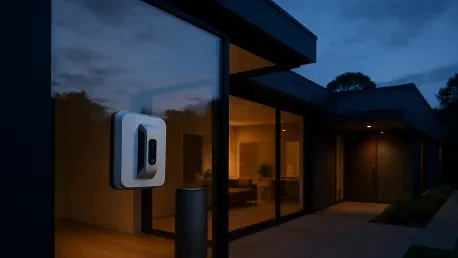
The automation of the home environment extends upward to surfaces that have traditionally been neglected by robotic technology, specifically vertical glass. The T1 Station Window Cleaner addresses this through a combination of high-intensity suction grips and intelligent route planning that allows it to navigate large panes of glass without risk of falling. This device is particularly useful for modern architectural designs in the ANZ region that feature floor-to-ceiling windows or hard-to-reach exterior glass. Users can monitor the cleaning progress through a dedicated interface and even intervene manually to target specific problematic spots, such as pet smudges or environmental buildup. By blending autonomous operation with the option for manual precision, the T1 provides a level of versatility that was previously unavailable in the window care segment. This specialized focus on vertical surfaces completes the cleaning cycle for the building’s envelope, ensuring that the interior light and exterior views are never compromised by the accumulation of dust or salt spray in coastal environments.
Beyond the structure of the house itself, the ecosystem introduces sophisticated technology into personal hygiene with the Fresh 20 Vision Toothbrush. This device moves away from the traditional model of timed brushing and instead utilizes AI-assisted plaque visualization to guide the user. By analyzing the surface of the teeth in real-time, the brush identifies exactly which areas have been missed or under-cleaned and displays this information on a synced screen. This shift focuses the user’s attention on the actual results of the cleaning process rather than the duration of the session, promoting a more effective routine. It reflects the overarching theme of the entire product lineup: using high-tech sensors and data processing to provide tangible improvements to everyday life. Rather than relying on marketing claims about motor speed or vibration frequency, the toothbrush provides visual proof of cleanliness. This integration of personal care into the broader smart home network demonstrates how the company views every aspect of daily life as an opportunity for technological optimization and data-driven improvement.
Conquering Regional Topography: Intelligent Outdoor Management Systems
The Australian and New Zealand backyard poses a unique set of challenges for autonomous machinery, ranging from dense, fibrous grasses to uneven terrain and significant tree canopy coverage. Standard robotic mowers often struggle in these conditions because they rely heavily on satellite positioning, which can be easily disrupted by high walls or thick foliage. To circumvent these limitations, the LiDAX Ultra 2000 AWD Mower rejects traditional GPS-only navigation in favor of a 3D LiDAR and AI-vision hybrid system. This allows the mower to perceive its surroundings with millimeter precision, identifying obstacles such as exposed roots or garden furniture in real-time. By creating a local map of the environment rather than relying on external signals, the mower maintains its accuracy even in the most secluded parts of a property. This technological pivot ensures that the lawn is maintained consistently without the need for the perimeter wires or signal boosters that were required by earlier iterations of outdoor robotics.
The mechanical design of the mower is equally as robust as its software, featuring an all-wheel-drive system that allows it to conquer steep slopes and damp soil conditions that would immobilize lesser machines. Complementing this mobility is specialized edge-trimming technology that ensures the grass is cut right up to the boundary of fences and garden beds. This feature is critical for fulfilling the promise of a work-free yard, as it eliminates the need for secondary manual trimming with a line trimmer. The mower is specifically calibrated for the harsh conditions of the ANZ region, with a chassis designed to withstand high UV exposure and varied temperature swings. By treating the backyard as a complex, three-dimensional space rather than a flat plane, the system provides a level of care that rivals professional landscaping services. This move into the outdoor sector demonstrates the company’s commitment to automating the entire property, ensuring that the transition from the indoor living space to the exterior environment is seamless and labor-free.
Subsurface Robotics: The Evolution of Pool Sanitation and Maintenance
Pool maintenance is a notoriously labor-intensive task that requires constant attention to both physical debris and chemical balance, a challenge that MOVA has addressed through two distinct robotic philosophies. The Rover X10 serves as a sophisticated underwater drone, utilizing jet-drive motors and sonar technology to map the complex contours of modern pool designs. Because radio signals are notoriously poor at traveling through water, the engineering team developed a floating communication unit that serves as a bridge between the submerged robot and the user’s smartphone. This constant link allows for real-time monitoring and scheduling, ensuring that the robot can be deployed exactly when needed. The use of sonar for mapping allows the Rover X10 to identify stairs, drains, and ledges with high accuracy, preventing it from getting stuck or missing specific sections of the pool floor. This level of underwater intelligence ensures that the entire pool surface is scrubbed and filtered without human oversight.
For users who prefer a more streamlined experience, the Diver A10 is designed for “zero-friction” deployment, focusing on ease of use above all else. This unit requires no complex setup or initial mapping; the user simply places it into the water, and its internal sensors take over to manage the cleaning cycle automatically. This approach caters to those who want the benefits of a clean pool without having to engage with the technical details of the machine’s operation. Both the Rover and the Diver models are designed to handle everything from fine silt to large leaves, utilizing high-capacity filtration systems that are easy to empty and maintain. By automating the scrubbing of walls and floors, these devices ensure that the water remains clear and the pool structure is preserved from algae buildup. The inclusion of these subsurface robots in the ANZ launch highlights the company’s intent to dominate every niche of the domestic environment, providing specialized solutions for even the most difficult and niche cleaning tasks.
Unified Control: Architecture of the MOVAhome Centralized App
The effectiveness of a massive 20-product ecosystem depends entirely on the simplicity of its interface, which is why the “One Home. One MOVA.” strategy is central to the current launch. To combat the growing problem of “app fatigue,” where users are overwhelmed by a different software platform for every appliance, the MOVAhome app serves as a single, unified central nervous system. This platform allows homeowners to monitor and schedule every device in their collection, from the air purifier in the bedroom to the lawn mower in the backyard, all from a single screen. This centralization is not just about convenience; it allows for a level of cross-device synchronization that is impossible with fragmented systems. For example, the indoor air purifier can adjust its intensity based on the activity of the robot vacuum, ensuring that any dust kicked up during the cleaning process is immediately filtered out of the air. This type of collaborative automation is the ultimate goal of a cohesive ecosystem.
Beyond synchronization, the unified platform provides a consistent logic and user interface across all product categories. Whether a user is checking the battery status of a window cleaner or adjusting the cutting height on their mower, the buttons, menus, and notification styles remain familiar. This reduces the learning curve associated with adopting new technology and makes the management of a complex household feel intuitive. The app also provides detailed analytics and maintenance alerts, informing the user when a filter needs to be changed or a sensor needs cleaning, thereby extending the lifespan of the hardware. By consolidating these functions into one place, the system transforms from a collection of individual tools into a functional household management layer. This software-driven approach ensures that the hardware remains adaptable, with over-the-air updates providing new features and optimizations throughout the life of the product. The result is a living environment that becomes smarter and more efficient over time without requiring further hardware purchases.
Prioritizing Residential Privacy: Hardware Longevity and Data Integrity
As more cameras and sensors are introduced into the private space of the home, the issue of data security has become a primary concern for the modern consumer. MOVA has addressed this by implementing a policy of local data processing, where images used for obstacle avoidance and mapping are handled directly on the device’s internal processor. This means that sensitive visual data from inside the home is typically deleted immediately after it is used for navigation, rather than being uploaded to a central server. For any data that must be transmitted to the cloud, such as cleaning history or floor maps, the company utilizes advanced encryption protocols that protect the information both during transit and while it is stored. This commitment to privacy is a fundamental part of the brand’s identity, ensuring that the benefits of smart technology do not come at the cost of personal security. By keeping the most sensitive information at the “edge” of the network, the system minimizes the risk of unauthorized access.
Longevity and sustainability are also key pillars of the current product strategy, particularly given the financial investment required to outfit an entire home with high-end robotics. The company has moved away from the trend of planned obsolescence by focusing on the repairability of its machines and offering extended warranties that reflect the durability of the components. By providing long-term software support and making spare parts readily available, the ecosystem is designed to remain functional and secure for many years. This focus on reliability changed how homeowners viewed their relationship with domestic technology, shifting the perception of these devices from disposable gadgets to essential household infrastructure. The implementation of these systems established a new baseline for household management, where the focus moved toward total environmental synchronization. Homeowners were encouraged to audit their existing routines to ensure compatibility with high-bandwidth local processing, as the focus moved from device-specific troubleshooting to an era of total autonomous living.