
The consumer technology market is currently witnessing a dramatic structural shift that has effectively dismantled the reliable middle class of laptops, leaving a vacuum where the $1,000 sweet spot used to exist. For decades, a consumer could walk into any electronics retailer and find a robust, well-constructed machine in the three-figure price range that would comfortably serve their needs for five years or more. However, the current landscape has morphed into a “K-shaped” market where the distinction between budget-tier compromises and ultra-premium luxury has never been more pronounced. This hollowed-out middle represents a significant challenge for students, remote professionals, and everyday users who require more power than a basic tablet but cannot justify the soaring costs of professional-grade workstations. Manufacturers have pivoted away from the high-volume, moderate-margin strategy of the past, choosing instead to focus on “hero products” that command massive premiums through advanced materials and artificial intelligence integrations. The result is a market where technical innovation is increasingly gated behind four-digit price tags, effectively pricing out a generation of users who simply need a dependable tool for their daily digital lives. This systemic change reflects broader economic pressures and a fundamental rethink of what a personal computer should be in the late 2020s.
The Hardware Paradox: Memory Constraints and Operating System Demands
Apple has managed to carve out a unique position in this polarized market by utilizing its vertically integrated silicon to redefine the entry-level experience. With the introduction of the MacBook Neo, the company has demonstrated that efficient memory management and high-speed unified architecture can make 8GB of RAM feel surprisingly capable for general productivity tasks. By leveraging mobile-derived chips that prioritize power efficiency and thermal management, these machines offer a level of build quality and battery life that was previously unheard of at the $600 to $700 price point. However, this success is a double-edged sword for the broader industry, as it sets a standard for “premium budget” hardware that few PC manufacturers can replicate without significantly raising prices. The efficiency of the Neo line allows Apple to maintain high margins while appearing to offer a value proposition, but it also creates a hard ceiling for performance. Users who find themselves needing more than basic web browsing or document editing are quickly pushed toward the Pro tiers, where the price jump is substantial. This strategy has effectively trapped consumers between a highly polished entry-level device and an expensive professional machine, further eroding the existence of a true mid-range option that balances power and cost.
In contrast, the Windows ecosystem is currently grappling with a severe hardware crisis driven by the escalating demands of modern software and AI-heavy operating systems. While Microsoft and its partners have pushed the “AI PC” narrative heavily, the reality for consumers at the lower end of the market is one of immediate technical obsolescence. The industry consensus now dictates that a smooth Windows experience requires a minimum of 16GB of RAM, yet many manufacturers continue to flood the market with 8GB configurations to keep initial purchase prices low. These machines often feature non-upgradable memory, creating a technical “albatross” that begins to suffer from performance bottlenecks almost immediately after unboxing. As background processes for agentic AI and cloud synchronization become standard, these budget-friendly laptops struggle to maintain basic responsiveness, leading to a frustrating user experience. This creates a deceptive value proposition where the consumer saves money upfront but is forced to replace the device much sooner than expected. The gap between what the software requires and what the affordable hardware provides has become a primary driver in the disappearance of the mid-range laptop, as “good enough” hardware no longer meets the baseline requirements for modern digital workflows.
The Vanishing Middle: Component Inflation and Premium Creep
The most jarring aspect of the current market is the literal “ghost town” that has formed around the $1,000 price bracket, which historically served as the benchmark for high-quality, long-lasting hardware. Laptops that previously occupied this vital space, such as the XPS or Spectre series, have seen their starting prices balloon toward the $1,500 range as manufacturers move upmarket. This price creep is not merely a result of corporate greed but is driven by a complex web of component inflation and supply chain volatility that has fundamentally altered the cost of manufacturing. Premium materials like magnesium alloys, high-refresh-rate OLED displays, and haptic trackpads have transitioned from luxury features to expected standards in the “premium” category. To accommodate these features while maintaining profitability, manufacturers have abandoned the traditional mid-range price points entirely. This leaves consumers in a difficult financial position: they are forced to choose between a plastic-heavy budget machine with a poor-quality screen or a luxury device that includes high-end features they may never actually use. The lack of a “no-frills” performance laptop—one that offers powerful internals in a simple, durable chassis—is a direct result of the industry’s obsession with chasing the highest possible average selling price.
Furthermore, the stratification of processor tiers from major silicon providers has exacerbated the performance gap between budget and premium devices. In recent development cycles, the most significant improvements in NPU (Neural Processing Unit) performance and power efficiency have been reserved for top-tier chipsets, leaving mid-range silicon with yesterday’s technology. This creates a “tiering” effect where the difference between a $700 laptop and a $1,300 laptop is no longer just a matter of build quality or storage space, but a fundamental difference in the longevity and capability of the processor itself. As software developers begin to optimize for these advanced NPUs, machines with older or “budget” architecture will find themselves unable to run modern applications efficiently. This deliberate segmentation ensures that the “sweet spot” of the laptop market remains empty, as manufacturers have little incentive to offer a device that provides 90% of a flagship’s performance at 60% of the cost. The focus has shifted toward creating clear, wide margins between “consumer” and “professional” silicon, ensuring that anyone who wants a machine capable of lasting more than three years is pushed into the highest spending brackets.
Luxury Computing: The Shift Toward Agentic AI Workstations
As the traditional middle class of computing vanishes, a new “ultra-premium” tier is rising to take its place, characterized by specialized hardware designed for agentic AI and heavy graphical workloads. These machines are no longer just laptops; they are mobile data centers that integrate high-end graphical processing units directly into the system-on-a-chip (SoC) architecture. The introduction of these specialized architectures has led to a requirement for massive amounts of shared memory, with many flagship models now shipping with 64GB or even 128GB of high-bandwidth RAM. This leap in technical specifications ensures that these devices remain firmly in the $2,000-plus category, creating a barrier to entry that is insurmountable for the average consumer. These workstations are marketed as essential tools for the “AI era,” capable of running local language models and complex automation tasks without relying on cloud servers. While this technology is impressive, its development draws resources and engineering focus away from making standard computing more affordable. The industry is currently prioritizing the needs of a small segment of power users, betting that the high margins from these luxury ecosystems will compensate for the declining sales in the mid-range sector.
This pivot toward high-end performance is often justified by rebranding traditional hardware metrics as “AI-ready” or “agentic-capable,” allowing companies to command higher prices for what are essentially iterative improvements. By framing the conversation around futuristic capabilities, manufacturers can obscure the fact that the price-to-performance ratio for basic tasks has actually stagnated for the average user. The branding of luxury ecosystems creates a psychological divide where consumers feel that anything less than a “Pro” or “Ultra” machine is inadequate for modern life. This marketing strategy has been remarkably successful in shifting the market’s center of gravity toward the high end, as technical leaps in speed and thermal efficiency are cordoned off within these luxury products. Meanwhile, the general public is left to choose from aging architectures or underpowered alternatives that struggle with the very AI features they are advertised to support. This focus on the “elite” user has effectively turned the laptop from a ubiquitous household tool into a specialized luxury item, similar to how high-end photography transitioned from a mass-market hobby to a professional niche.
Strategic Transitions: Mobile Alternatives and the Future of the PC
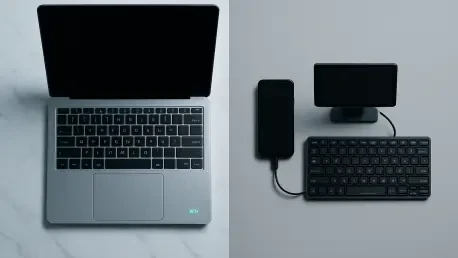
In response to being priced out of the traditional laptop market, a growing number of consumers are exploring mobile-centric solutions that bridge the gap between smartphones and traditional PCs. The development of sophisticated “desktop modes” for modern smartphones has allowed users to connect their mobile devices to external displays and peripherals, creating a functional workstation for basic productivity. For many households where the smartphone is already the primary hub for communication and data, the investment in an overpriced, mid-tier laptop is becoming harder to justify. This transition is being supported by the rise of web-based applications and cloud-native workflows that reduce the need for powerful local hardware. While a smartphone-based desktop may not replace a high-end workstation for video editing or 3D modeling, it offers a viable alternative for the “missing middle” of users who only need a browser and a keyboard. This shift suggests that the era of the $800 general-purpose laptop may be ending, as the functionality of the low-end PC is absorbed by mobile devices, and the high-end PC evolves into a specialized professional tool.
The transformation of the personal computing landscape throughout the mid-2020s necessitated a fundamental reassessment of how hardware was acquired and maintained. As the reliable middle class of laptops disappeared, buyers were forced to adopt more strategic purchasing habits, often prioritizing modularity and long-term support over the lure of annual updates. Many successfully turned to the refurbished market or invested in niche brands that emphasized repairability as a hedge against the planned obsolescence of budget-tier machines. It became clear that the industry’s focus on high-margin AI workstations provided significant power to a few, but it also left a substantial portion of the population searching for sustainable alternatives. Forward-thinking users ultimately sought out devices that offered a clear path for hardware upgrades, ensuring that their initial investment lasted through several software cycles. The era of the “disposable” mid-range laptop was replaced by a more fragmented environment where value was found in longevity rather than initial price tags. By looking back at these shifts, it is evident that the most effective solution for the modern consumer involved moving away from the luxury-or-budget dichotomy and demanding hardware that prioritized functional durability over marketing-driven AI features.