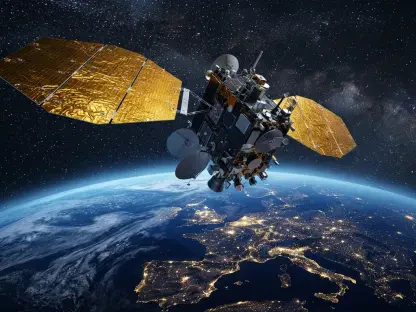

The recent announcement that Amazon has reached a definitive agreement to acquire Globalstar for $11.6 billion marks a seismic shift in the race for orbital dominance and seamless worldwide communication. This strategic move is not merely an infrastructure play but a fundamental redesign of how consumer devices interact with orbital assets to eliminate dead zones entirely across the planet. By integrating Globalstar’s established radio frequency spectrum and satellite fleet into the Amazon Leo network, the retail and cloud giant is positioning itself as a direct challenger to existing low Earth orbit providers. This transition reflects a broader industry trend where massive cloud ecosystems and satellite operators converge to provide a unified data layer that ensures connectivity remains uninterrupted regardless of geographic isolation. The primary objective is to facilitate direct-to-device communication, transforming standard smartphones from terrestrial-dependent tools into universal gateways that can access voice, messaging, and data services from any point on Earth.
Strategic Foundations: Merging Infrastructure and Spectrum
The integration of Globalstar’s L-band spectrum provides Amazon Leo with a vital competitive advantage in the increasingly crowded electromagnetic landscape of the modern era. Spectrum is a finite and heavily regulated resource, and by securing these specific rights, Amazon ensures its upcoming constellation of thousands of satellites has a protected lane to operate without interference from other emerging networks. This acquisition includes both the orbital assets and the terrestrial ground stations, giving Amazon an immediate operational foothold that bypasses the years of regulatory and technical development usually required to launch a global service. By leveraging this existing infrastructure, the company can accelerate its deployment cycles and begin offering commercial services much sooner than if it were starting from scratch. The focus is on creating a high-performance system that can scale to support hundreds of millions of users, providing a robust backbone for individual consumers, enterprise clients, and government entities alike.
The business logic behind the $11.6 billion valuation underscores the high stakes involved in capturing the next generation of global mobile data traffic. Leadership from both companies, including Panos Panay and Paul Jacobs, have highlighted the long-term technological synergy that this merger creates by combining vast cloud computing power with a proprietary delivery mechanism in the sky. This vertically integrated approach allows Amazon to offer a full-stack solution where it controls every aspect of the connection, from the data center to the user’s handheld device. This strategy mirrors the path taken by other tech behemoths to lock in market share and create high barriers to entry for potential competitors. The transition toward a unified network means that the distinction between satellite and cellular signals will eventually vanish for the end-user, as sophisticated software manages the handoff between different types of infrastructure automatically. This synergy is expected to drive higher efficiency and faster speeds than any legacy system currently in operation.
Industry Evolution: The Road Toward Universal Data Integration
This acquisition established a new paradigm for how global connectivity was managed and deployed across the telecommunications industry during this pivotal period of growth. Organizations and government agencies began reevaluating their reliance on traditional terrestrial networks, recognizing that a hybrid approach was the only way to ensure total coverage and operational continuity in an era of unpredictable climate and geopolitical events. The integration of Globalstar into the Amazon ecosystem provided the necessary spectrum and infrastructure to make direct-to-device satellite communication a standard feature rather than a niche luxury. For technical architects and business leaders, the takeaway was clear: connectivity had to be viewed as an omnipresent layer rather than a localized service tied to physical towers. Future strategies involved prioritizing devices that supported multi-network handoffs, ensuring that data remained fluid and secure as it traversed between orbital paths and ground-based fiber networks.
The industry moved toward optimizing the user experience by reducing the complexity of satellite interactions, ensuring that the transition between cellular towers and Amazon Leo satellites occurred without dropping signals. Engineers focused on ensuring that mobile manufacturers included more advanced antenna arrays and power-efficient chips capable of maintaining links with rapidly moving low Earth orbit constellations. Stakeholders across various sectors, from global logistics to emergency services, leveraged this unified network to gain real-time visibility into operations that were previously obscured by a lack of signal in remote regions. The action taken by Amazon to secure Globalstar’s assets served as a definitive blueprint for other technology giants looking to control their own distribution channels and reduce dependence on third-party carriers. Ultimately, the transformation laid the groundwork for a more resilient and inclusive global network where geographic location no longer dictated the quality of digital access or the speed of information transfer.