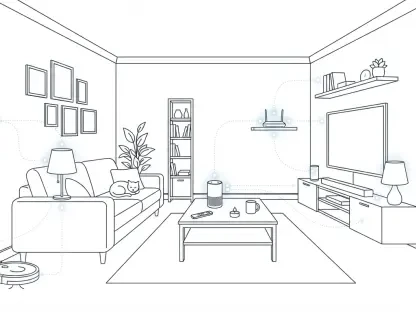

True hospitality value is created at the front-of-house when technology transforms data-entry clerks into high-level ambassadors for the guest experience. For years, the gold standard for this transformation was the RFID-enabled wearable, a piece of hardware that consolidated ticketing, room keys, and payment systems into a single wristband. While these devices revolutionized the theme park and resort landscape by reducing queue friction and streamlining logistics, the industry is now pivoting toward a more invisible solution. This shift is led by figures like John Padgett, whose current work with the Spaxial platform suggests that even the most convenient physical device represents a barrier between the guest and the environment. As we look toward the landscape of 2026 to 2028, the focus is transitioning from what a guest wears to how the environment perceives them. This evolution aims to provide a seamless journey that requires no active input or hardware, effectively making the technology disappear into the architecture of the resort itself.
The Shift from Physical Hardware to Ambient Software
Eliminating the Friction of Wearables and Smartphones
The transition toward ambient intelligence is driven by the realization that any physical requirement, no matter how small, acts as a point of friction during a vacation. Historically, guests had to remember to charge their wearables, pack them for their trip, or constantly look at their smartphones to manage dining reservations and queue times. This behavior often pulls individuals away from the immersive storytelling of a theme park or the relaxation of a luxury resort. By removing the need for a physical key to the experience, hospitality providers can return the focus to the physical world rather than the digital interface. The goal is to move past the era of the tap, where guests must pause their progress to interact with a sensor. Instead, the next generation of guest management focuses on a world where doors unlock as a person approaches and transactions occur without a single screen appearing. This allows for a deeper emotional connection to the destination, as the tech operates entirely in the background.
Furthermore, the reliance on smartphones as a primary guest interface has created a paradox in the leisure industry where the device meant to enhance the trip actually detracts from it through constant notifications and screen time. Modern travelers increasingly express a desire for digital detox opportunities, even while they demand the high-speed convenience of digital services. Ambient AI addresses this conflict by shifting the processing power and the interface away from the guest’s personal device and into the physical environment. By utilizing a network of low-energy sensors and sophisticated computer vision, a resort can maintain a high level of service without requiring the guest to ever reach into their pocket. This approach preserves the magic of the guest experience, ensuring that the technology facilitates the journey rather than defining it. As the industry moves through 2026, the success of a resort is measured by how little its technology is seen or felt by the average visitor during their stay.
The Three Pillars: The Foundation of the Spaxial Platform
The Spaxial platform achieves this level of invisibility by relying on three core technological pillars designed to work in harmony. First, it establishes a secure, frictionless identity for every guest, which serves as the foundation for all subsequent interactions. Unlike traditional biometric systems that might feel invasive, this identity layer is built on privacy-first protocols that authenticate a guest’s presence without requiring active scanning. Second, the platform utilizes precision spatial location technology that tracks movement with far greater accuracy than standard GPS. This allows the system to understand not just that a guest is in a specific building, but exactly which table they are sitting at or which exhibit they are viewing. This spatial awareness is critical for delivering location-based services, such as delivering a meal to a guest wherever they happen to be wandering in a park, rather than tethering them to a specific table number or waiting for them to check in at a counter.
The third and perhaps most vital pillar is the proprietary experiential AI, which acts as the central nervous system for the entire operation. This AI does not merely react to guest movements; it anticipates needs by analyzing historical data, real-time behavior, and operational constraints. For instance, if the AI detects a guest has been waiting longer than usual in a specific area, it can suggest a nearby alternative or alert a staff member to provide a personalized intervention. By synthesizing vast amounts of data from disparate sources, the platform creates a proactive service environment that feels intuitive to the guest. This represents a departure from the reactive technology of the past, where the guest had to initiate every request. By 2026, the integration of these three pillars has shown that the environment can become a living participant in the guest experience, adjusting its responses in real-time to match the unique profile and current context of every individual.
Operational Synergy and the Evolution of Service
Bridging Fragmented Systems and Empowering Staff
A major hurdle in traditional resort operations has been the lack of communication between various internal systems, such as property management, dining, and retail. These silos often mean that a guest’s preferences in the hotel are unknown to the staff at the theme park or the concierge at the restaurant. Spaxial addresses this by serving as a unified digital overlay that sits on top of existing legacy systems, pulling data from every touchpoint into a single, comprehensive view. This holistic management approach ensures that every department has access to the same high-level insights, allowing for a consistent service standard across the entire property. When a guest moves from the resort pool to a fine-dining establishment, the system carries their context with them, ensuring that their specific needs—such as a severe peanut allergy or a preference for a window seat—are known by the host immediately upon arrival, without the guest needing to repeat the information.
The true power of ambient AI lies in its ability to humanize technology rather than replace the human element. By providing staff with real-time, contextual insights, the technology allows employees to focus on meaningful interactions rather than administrative tasks like checking IDs or processing payments. When a staff member can greet a guest by name and ask about their specific experience earlier in the day, the guest feels seen and valued in a way that an automated kiosk could never achieve. This transformation of the workforce is central to the Spaxial philosophy, as it elevates the role of the employee from a service provider to an experience curator. Staff members are equipped with the information they need to be proactive, such as knowing when a guest’s favorite snack is available nearby or recognizing that a family might need extra assistance after a long day of travel, thereby creating moments of unexpected magic that define a luxury stay.
Shaping the Future: International Hospitality Standards
In the end, the evolution from wearables to ambient AI succeeded because it prioritized the human connection over the technical interface. Hospitality leaders learned that the most effective tools were those that faded into the background, leaving only the warmth of personal service and the thrill of immersive entertainment. To stay competitive, developers began investing in flexible software architectures that could adapt to changing guest behaviors from 2026 to 2030, rather than locking themselves into specific hardware cycles. This forward-looking strategy ensured that resorts remained relevant in an age of rapid digital transformation. By focusing on the front-of-house value mentioned at the outset, the industry successfully moved toward a model where technology empowered staff to be true ambassadors. The lessons learned during this transition proved that the ultimate luxury was not a high-tech gadget on one’s wrist, but a seamless environment that anticipated every need with grace and precision.
Moving forward, the industry must address the global implementation gap, as established parks with deep RFID investments face higher transition costs than new developments. Greenfield projects in Abu Dhabi and other emerging markets are currently serving as the laboratory for this post-wearable era, proving that a contactless, AI-driven infrastructure is both viable and preferred by modern travelers. For legacy operators, the actionable next step involved a phased integration, where ambient layers were added to existing systems to slowly acclimate guests to a world without physical tokens. This balanced approach allowed for the preservation of current assets while building toward an invisible future. As the technology matured throughout 2026, it became clear that the most successful destinations were those that used AI not to automate the guest, but to liberate them. The shift ultimately redefined hospitality as a proactive discipline, where the environment itself became the most attentive and capable host.