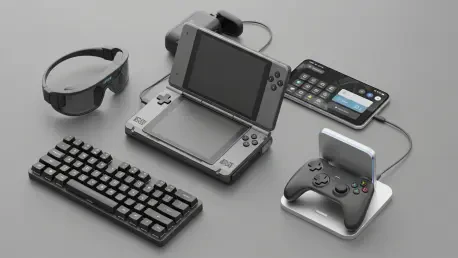

While many critics originally dismissed the Steam Deck as a mere portable extension of a digital storefront, it has fundamentally redefined the relationship between hardware and user agency through its unprecedented modularity and open architecture. This shift marks a departure from the traditional console life cycle where hardware is a static, isolated island. Instead, the device functions as a catalyst for a broader technological environment, proving that the value of a handheld lies not in its internal silicon alone but in how effectively it communicates with the devices surrounding it. By embracing an open-source philosophy, Valve has allowed a community of enthusiasts to transform a gaming machine into a sophisticated computing hub that challenges the utility of much larger systems.
Beyond the Handheld: Understanding the Steam Deck as a Modular Computing Hub
The evolution of the Steam Deck from a dedicated gaming peripheral to a central node in a personal technology stack is a testament to the power of user-driven development. Unlike contemporary consoles that utilize “walled garden” ecosystems to restrict software installation and hardware modifications, the Steam Deck operates on a foundation of transparency. This transparency invites users to treat the device as a modular computer rather than a consumer appliance. Consequently, the handheld serves as the “brain” for a variety of configurations, ranging from minimalist travel setups to complex home office environments where the Deck handles everything from local execution to complex network management tasks.
The significance of this open-source philosophy cannot be overstated, as it prioritizes long-term flexibility over short-term hardware lockouts. By utilizing a Linux-based operating system, the Steam Deck provides the necessary hooks for developers to create specialized drivers and interface layers that bridge the gap between disparate platforms. This architectural choice ensures that as new technologies like advanced spatial computing or high-fidelity audio protocols emerge, the Deck remains capable of integrating them. This adaptability allows the device to remain relevant far beyond the typical obsolescence curve of mobile hardware, as its utility scales with the complexity of the user’s peripheral ecosystem.
Integration of external high-resolution displays, professional-grade audio interfaces, and remote computing clusters transforms the handheld into a versatile powerhouse capable of handling demanding workflows. When the device is docked or connected via high-speed wireless protocols, the boundaries between mobile and stationary computing begin to blur. The transition is seamless; a user can shift from a handheld session on a train to a full desktop experience at home without losing state or performance, provided the right connectivity layers are in place. This fluidity defines the modern gaming ecosystem, where the physical form of the hardware is merely one of many possible interfaces for a unified digital experience.
Engineering a Unified Gaming Environment Through Advanced Connectivity
Breaking Hardware Barriers via High-Performance Network Streaming
The transition from local hardware execution to “Remote Play” has become a cornerstone of the modern handheld experience, effectively bypassing the physical performance caps of the Steam Deck’s APU. By utilizing tools such as Sunshine on the host PC and Moonlight on the Deck, users can stream high-fidelity games that would otherwise be unplayable on mobile hardware. This approach leverages the power of a dedicated desktop to handle the heavy computational lifting, while the Deck serves as an ultra-low-latency window into that power. Industry enthusiasts frequently highlight that these community-developed streaming protocols offer significantly better frame pacing and image clarity than the standard native solutions provided by traditional storefronts.
Despite the obvious benefits of streaming, technical challenges persist, particularly concerning the delivery of High Dynamic Range (HDR) content to the Steam Deck OLED model. While the hardware is more than capable of displaying vibrant colors and deep blacks, the software handshake between a Windows-based host and a Linux-based client often results in a “broken” metadata chain. Community-led workarounds currently fill this gap, involving specialized scripts and experimental builds of streaming clients that force HDR compatibility. This ongoing effort highlights a broader trend: the community often solves complex technical hurdles long before official manufacturers acknowledge the demand, ensuring that the Deck remains the most capable streaming client on the market.
Repurposing the Steam Deck as the Ultimate Desktop Interface
Beyond serving as a screen, the Steam Deck functions as a highly sophisticated input terminal for high-end PCs, utilizing its unique hardware features to enhance desktop gaming. The dual haptic trackpads and the high-precision gyroscope provide a level of control depth that standard gamepads cannot match. When used as a secondary interface, the Deck allows for mouse-like precision in strategy games or complex macro execution in productivity software. This capability offers a distinct competitive advantage over single-purpose streaming handhelds like the PlayStation Portal, which lack the input versatility and customization options necessary for a truly professional desktop integration.
Using the Deck as a secondary control surface in a multi-monitor setup introduces both risks and rewards that users must carefully weigh. On one hand, the ability to have a dedicated touch-screen interface for system monitoring or chat management is invaluable for streamers and power users. On the other hand, managing the wireless overhead and potential input conflicts requires a robust understanding of network priorities. However, for those who master the configuration, the Deck becomes more than a game machine; it becomes a macro-pad and a system controller that replaces multiple pieces of expensive, specialized hardware, further cementing its role as a hub for modular computing.
Bridging the Mobile Gap with Smartphone and Desktop Integration
The integration of smartphones into the Steam Deck workflow provides a critical bridge for navigating the Linux-based desktop mode, which can be cumbersome using only built-in controls. By leveraging KDE Connect, users can transform their mobile phones into wireless keyboards and high-precision trackpads. This synergy eliminates the need to carry a physical keyboard for quick terminal commands or web searches, maintaining the device’s portability while expanding its utility. This type of cross-device communication demonstrates that the handheld gaming experience does not need to be an isolated activity but can instead be an extension of a user’s existing mobile life.
Navigating the friction of cross-platform integration remains a challenge, particularly when dealing with the background process limitations of operating systems like iOS. These limitations can cause sudden disconnections or file transfer failures if the application is not kept in the foreground, highlighting the inherent tension between open and closed systems. Despite these hurdles, the ability to execute remote commands or move screenshots from the Deck to a mobile device for instant sharing is a powerful feature set. It challenges the assumption that mobile workflows are incompatible with enthusiast gaming hardware, proving that automated bash scripts triggered via a smartphone can streamline even the most complex system tasks.
Immersive Expansion via Augmented Reality and Spatial Computing
The rise of XR (Extended Reality) glasses has introduced a transformative display solution for the Steam Deck, offering a virtual 100-inch screen while maintaining total portability. Devices from manufacturers like XReal or Viture connect directly to the USB-C port, providing a private, high-resolution viewing experience that is ideal for travel. This integration effectively solves the problem of the Deck’s relatively small physical screen without requiring the user to be tethered to a traditional desk. By projecting the interface directly into the user’s field of vision, these glasses create an immersive environment that was previously only possible with bulky VR headsets.
Spatial computing features, specifically three degrees of freedom (3DoF) tracking, have a profound impact on user comfort during long gaming sessions. By allowing the virtual screen to remain “anchored” in a fixed position in space, the hardware prevents the motion sickness often associated with displays that move every time the user tilts their head. This technological leap allows for a more natural viewing experience, similar to looking at a physical monitor. However, the reliance on a single USB-C port for both power and video output remains a bottleneck. This necessitated the development of specialized “charge and play” dongles, which have become essential peripherals for anyone looking to maximize the duration of their spatial computing sessions.
Practical Blueprints for Optimizing Your Multi-Device Workflow
Building a cohesive ecosystem around the Steam Deck requires a strategic selection of software layers that enable communication with closed-platform peripherals. Tools like Decky Loader serve as the foundation for this customization, allowing for the installation of plugins that grant the Deck control over devices like AirPods or high-end Bluetooth codecs. Without these community-driven bridges, users would be locked out of the advanced features of their existing hardware, such as active noise cancellation or granular battery monitoring. Selecting the right software stack is therefore just as important as selecting the right hardware, as it defines the limits of the system’s interoperability.
Choosing between the native SteamOS and community-built alternatives like Bazzite is a decision that should be based on specific ecosystem needs. While the official OS offers the most stable and streamlined experience for pure gaming, alternative distributions often provide better support for advanced desktop features or specific hardware configurations found in other handhelds. For users who prioritize a unified experience across multiple portable PCs, these community-built operating systems offer a level of consistency that Valve’s official software may not yet provide. Maintaining a stable network infrastructure is the final piece of the puzzle, as high-bitrate streaming and low-latency audio both demand a clean, high-bandwidth wireless environment to function at their peak.
The Long-Term Trajectory of the Open Handheld Standard
The longevity of the Steam Deck was ultimately secured by its role as a modular system rather than by the raw power of its internal specifications. As newer, more powerful competitors entered the market, the Deck maintained its relevance through its superior software flexibility and the vast array of community-developed tools that expanded its functionality. Users discovered that having a device that can adapt to different roles—from a simple handheld to a desktop workstation—was more valuable than having a slight increase in frame rates on a locked-down platform. This shift in consumer priority proved that the open handheld standard is a sustainable model for the future of mobile computing.
Community-driven innovation played a decisive role in keeping the hardware at the forefront of the industry. Developers and enthusiasts consistently provided updates and features that addressed the evolving needs of the user base, often outpacing official support cycles. This collaborative environment ensured that the Steam Deck remained a versatile tool capable of integrating with the latest peripherals and software trends. By the time the industry moved toward more integrated spatial computing and remote execution models, the Deck had already established itself as the primary interface for these technologies.
Looking forward, portable devices became the primary “brain” for a variety of interchangeable peripheral screens and interfaces. The era of the isolated gaming console was replaced by a more fluid model of modular computing, where the handheld served as the portable core of a much larger, personal tech ecosystem. This transition was facilitated by the lessons learned from the Steam Deck, which demonstrated that hardware is most powerful when it is allowed to be flexible. The device eventually functioned as a universal controller and processor, proving that the future of personal technology lies in the ability to connect, adapt, and expand beyond the physical limits of a single screen.