
Achieving a seamless transition between various gaming ecosystems has become the ultimate benchmark for modern audio peripherals, requiring devices that can satisfy the high-fidelity demands of a home console while maintaining the lightweight agility needed for a mobile lifestyle. This shift toward multi-platform versatility has pushed manufacturers to innovate beyond simple wired connections, leading to a market where the lines between professional-grade gear and consumer-grade convenience are increasingly blurred. In this landscape, the OXS Storm A2 emerges as a fascinating subject of study, attempting to bridge the gap between high-end acoustic performance and an accessible price point that challenges the dominance of established industry giants.
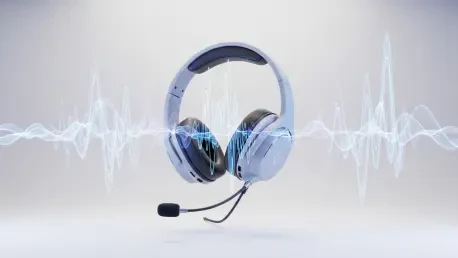
The Storm A2 is positioned as a sophisticated wireless gaming headset that attempts to balance the competing needs of budget-conscious users and those demanding premium features. It enters a market where products like the Sony PlayStation 5 and the Nintendo Switch set high expectations for immersive audio, and where rumors of upcoming hardware like a successor to the Switch keep consumers looking for future-proof investments. While the OXS Storm G2 serves as the brand’s entry-level offering with a bulkier frame and more basic sound, the A2 targets a more discerning demographic by offering advanced spatial algorithms and versatile connectivity that rivals elite peripherals like the Skullcandy Crusher PLYR 720.
These devices are no longer just accessories; they are essential instruments for gamers who split their time between competitive PC arenas, cinematic console experiences, and daily commutes. The ability of a single headset to manage these disparate environments determines its true value in a market saturated with options. By examining the Storm A2 against the standards set by the premium tier, it becomes clear that while raw technical specifications are important, the nuances of ergonomics, software integration, and microphone reliability often define the boundary between a good product and a great one.
Contextualizing the OXS Storm A2 and the Premium Gaming Market
The current gaming peripheral market is defined by a dichotomy between raw performance and functional versatility, a space where the OXS Storm A2 seeks to establish a firm foothold. As gamers move fluidly between platforms like the PlayStation 5, Mac, and various handheld devices, the demand for a “one-size-fits-all” solution has never been higher. The Storm A2 addresses this by providing a lightweight, feature-rich alternative to more expensive headsets, aiming to offer the same level of platform agnosticism found in top-tier brands. This positioning is critical, as it allows the A2 to appeal to a broad audience that includes both the hardcore competitive player and the casual mobile gamer.
When comparing the Storm A2 to its sibling, the Storm G2, the differences in design philosophy become immediately apparent. While the G2 focuses on being a functional, budget-friendly entry point, the A2 adopts a more refined approach to audio fidelity and portability. However, when the A2 is placed alongside premium peripherals such as those from Skullcandy or high-end Sony first-party gear, the competition becomes more rigorous. These premium products often command higher prices because they promise a level of polish and ecosystem integration that budget models struggle to replicate. The A2 must therefore prove that its core audio and connectivity features are strong enough to offset the lack of brand prestige and extensive software suites.
Furthermore, the rise of specialized gaming environments has turned the headset into a tool for both focused play and environmental awareness. In a crowded subway or a noisy living room, features like noise cancellation and spatial audio become as important as the physical comfort of the device. The Storm A2 attempts to navigate these requirements by including technologies that were once exclusive to the $250+ price bracket. This democratization of high-end features is a recurring theme in the gaming industry, where smaller brands frequently disrupt the market by offering comparable hardware at a fraction of the cost, provided the user can overlook a few mechanical or software-based trade-offs.
Technical and Performance Benchmarks
Acoustic Performance and Spatial Audio Algorithms
At the heart of the OXS Storm A2 are its 40mm full-range dynamic drivers, which are engineered to provide a soundstage that punches well above its weight class. These drivers deliver a crisp and remarkably balanced audio profile, ensuring that mid-tones are not overwhelmed by the bass, a common pitfall in lower-tier gaming headsets. In competitive titles like Counter-Strike 2, the clarity of the audio allows players to pinpoint subtle environmental cues, which is further enhanced by the proprietary Xspace 7.1 spatial algorithm. This software-driven surround sound creates a three-dimensional field that provides the directional awareness necessary for survival in high-stakes tactical shooters.
In contrast, premium competitors like the Skullcandy Crusher PLYR 720 often take a hardware-centric approach to audio enhancement. The Crusher series is famous for its specialized “Crusher” bass, which uses haptic feedback to physically vibrate the earcups during low-frequency events, providing an intensity that the Storm A2 cannot replicate with software alone. While the A2 offers a punchy and full low-end that adds weight to the cinematic atmosphere of games like Resident Evil Requiem, it lacks the bone-shaking physical sensation found in those higher-end specialized units. The A2 focuses more on a natural, high-fidelity reproduction of sound rather than a sensory-overload experience.
However, the pursuit of high-fidelity audio in the Storm A2 is met with some technical limitations that are typically resolved in the premium tier. One notable issue is a faint but persistent background hiss that can be detected during quiet moments, particularly when connected to a console like the PlayStation 5. Additionally, the thin padding on the earcups prevents a perfect acoustic seal, leading to audio leakage and a slightly less enclosed feeling than one might find with more expensive models. Premium peripherals usually solve these issues through superior acoustic chamber design and the use of denser, more isolative materials that ensure every decibel is directed into the ear canal without interference.
Connectivity Suites and Hardware Compatibility
Versatility is perhaps the strongest argument in favor of the Storm A2, as it boasts a connectivity suite that rivals the most expensive units on the market. It utilizes a 2.4GHz wireless dongle that features both USB-A and USB-C connectors, making it natively compatible with the PlayStation 5, Nintendo Switch, and PC without the need for additional adapters. This is complemented by Bluetooth 5.4, which provides a stable and low-latency connection for mobile devices and Mac computers. The inclusion of a “hot-switching” feature, activated by a simple button press, allows users to toggle between their gaming console and a smartphone almost instantaneously, ensuring they never miss a call during a gaming session.
When comparing this to premium industry standards, the Storm A2 holds its own in terms of raw compatibility, though it differs in the execution of its interface. Many high-end headsets from brands like Skullcandy or Sony rely on a deep integration with proprietary software to manage pairings, firmware updates, and device switching. The A2, however, utilizes hardware-level controls for almost all its functions. While this simplifies the user experience by removing the need for a background application, it can lead to slower initial Bluetooth pairing times compared to the “instant-on” experiences offered by peripherals that are deeply embedded in a specific manufacturer’s ecosystem.
Moreover, the connectivity versatility of the A2 is a major asset for users who own multiple gaming platforms. Being able to move from a desk-based PC setup to a handheld Nintendo Switch without reconfiguring settings is a significant quality-of-life improvement. Premium headsets often offer similar features, but they sometimes limit full functionality to their native platforms. The Storm A2 remains consistent across its supported devices, providing ANC and surround sound features regardless of the host hardware, provided the connection remains wireless. This platform-agnostic approach makes it a flexible tool for the modern gamer who refuses to be tied to a single brand or ecosystem.
Portability and Battery Longevity
The OXS Storm A2 is designed with a clear emphasis on mobility, featuring a lightweight chassis that weighs only 10.3oz or approximately 293g. This light footprint is achieved through a slender headband design and a foldable frame that allows the earcups to tuck inward, making the headset exceptionally compact for storage in a backpack or carry-on bag. This focus on portability is a direct response to the growing number of gamers who utilize handheld consoles and gaming laptops while traveling. In this regard, the A2 often outperforms heavier premium headsets that prioritize massive drivers and thick metal reinforcements over the convenience of a travel-friendly form factor.
Power management is another area where the Storm A2 demonstrates exceptional endurance, offering a 70-hour battery life that far exceeds the industry average. Many high-performance headsets that feature extensive RGB lighting or high-power haptic drivers struggle to reach half of that longevity, often requiring a recharge every two or three days. The A2’s ability to last through a full week of heavy use without being tethered to a cable provides a level of freedom that is highly valued by users who prefer a minimalist setup. It also supports “play-while-charging” functionality via a USB-C connection, ensuring that even if the battery eventually runs dry, the session can continue.
Despite these strengths, there are compromises in the accessories provided with the Storm A2 compared to those found in the premium market. High-end peripherals often include long, durable braided cables that are specifically designed to facilitate comfortable wired use over long distances. The Storm A2, by contrast, comes with a relatively short and basic USB-C cable that may feel restrictive if the user needs to charge the device while sitting several feet away from a console or PC. This suggests that while the headset itself is built for long-term wireless use, the out-of-the-box wired experience may require the purchase of third-party accessories for those who demand maximum flexibility in their setup.
Practical Obstacles and Design Trade-offs
The ergonomic design of the OXS Storm A2 represents one of the most significant hurdles for users who engage in marathon gaming sessions. While the headset is impressively light, the thinness of the earcup padding presents a structural flaw that can lead to physical discomfort. Because the cushions lack the depth found in premium memory-foam solutions, the hard plastic housing of the 40mm drivers can press directly against the user’s ears. This pressure often shifts the experience from an “over-ear” fit toward an “on-ear” sensation, which can cause minor aches and fatigue after several hours of continuous wear. This is a noticeable departure from the plush, luxury feel of higher-priced competitors that prioritize long-term cranial comfort.
A substantial technical gap between the Storm A2 and its premium rivals is the total absence of a companion software suite. In the current market, software like Skull-HQ for the Skullcandy PLYR 720 has become a standard requirement for high-end gear, offering users the ability to customize Equalizer (EQ) settings, adjust mic monitoring, and manage sidetone levels. The A2 lacks any form of digital interface for these adjustments, forcing users to rely on the factory-tuned sound profile. Furthermore, the lack of software means there is no clear path for consumers to download and install firmware updates, which are often necessary to fix bugs or improve the performance of the headset’s internal processing over time.
Communication quality also serves as a major point of contention, as the detachable gooseneck microphone on the Storm A2 struggles with both resolution and stability. Users have reported instances of audible crackling and low-resolution voice capture that can make communication difficult in high-intensity team environments. Unlike premium microphones that offer noise-gating and professional-grade clarity, the A2’s mic can sometimes require a full power cycle of the headset to resolve intermittent technical glitches. This instability, combined with a relatively short boom arm that is difficult to position perfectly in front of the mouth, makes the A2 a difficult recommendation for professional streamers or highly competitive players who depend on crystal-clear voice coordination.
Strategic Buying Guide: Choosing Between Value and Refinement
Navigating the choice between a value-driven workhorse like the OXS Storm A2 and a refined premium peripheral requires a careful assessment of individual gaming habits and priorities. The Storm A2 is an exceptional choice for the single-player enthusiast who values high-quality audio output and extreme battery longevity above all else. Its ability to deliver a cinematic soundstage in games like Resident Evil Requiem and provide a true 70-hour wireless experience makes it a formidable tool for those who do not require frequent voice communication. For these users, the A2 offers a “premium-sounding” experience at a significantly lower entry price, making it a logical investment for media consumption and solo adventures.
Conversely, for gamers whose primary focus is team-based competitive play or professional content creation, the refinement of a high-end peripheral remains a necessity. Investing in a device like the Skullcandy Crusher PLYR 720 provides the software-driven customization and microphone reliability that the Storm A2 currently lacks. The ability to fine-tune an EQ to hear specific frequencies in a competitive match or to rely on a stable, high-resolution microphone can be the difference between victory and defeat. Furthermore, the superior ergonomics and plush padding of premium models are essential for those who spend five or more hours a day with a headset on, as they prevent the ear fatigue that can plague users of the thinner A2 design.
Ultimately, the OXS Storm A2 serves as a highly capable bridge for the multi-platform gamer who frequently switches between a PlayStation 5, a Nintendo Switch, and a mobile phone. Its seamless connectivity and portability make it an ideal companion for the gamer on the move who wants a single device for all their hardware. While it may not offer the polished software ecosystem or the professional-grade microphone found in the top tier of the market, its raw performance in audio playback and wireless stability ensures that it provides genuine value. Prospective buyers must simply weigh their need for voice clarity and ergonomic perfection against the A2’s undeniable strengths in battery endurance and sonic fidelity.
The analysis of the OXS Storm A2 compared to the premium peripheral market demonstrated that value-oriented hardware made significant strides in audio reproduction and connectivity. While the headset solidified its reputation as a battery life champion with an impressive 70-hour runtime, it also highlighted the ongoing importance of ergonomic depth and software support in the high-end sector. Users who prioritized raw listening quality and multi-platform versatility found the A2 to be a reliable companion, even as they acknowledged the limitations of its microphone and padding. These findings suggested that while the gap in audio performance narrowed, the distinction in user experience remained rooted in the fine details of comfort and software integration. Moving forward, the industry likely anticipated a shift where more manufacturers would seek to include the firmware update paths and custom EQ profiles that were once reserved only for the most expensive units. For the gamer of the era, the decision rested on whether the cost savings outweighed the need for a perfectly tailored, software-managed audio environment.