
Understanding the Resilience of Fingerprint Authentication on macOS
The introduction of biometric security transformed the personal computing landscape by replacing cumbersome passwords with seamless physical verification. As Apple has successfully integrated Face ID into its mobile devices, many MacBook users wonder if the older Touch ID system remains a viable defense against modern threats. This analysis explores the technical integrity and practical reliability of fingerprint scanning in an era dominated by facial recognition. By evaluating the underlying architecture and security protocols, it becomes possible to determine if this hardware remains a gold standard for professional data protection. This article tracks the progression of the technology from its mobile origins to its current implementation on the latest silicon-based MacBooks, providing a clear picture of why this method persists as a cornerstone of the Apple ecosystem.
A Chronological Journey of Apple Biometric Innovation
2013: The Genesis of Secure Consumer Biometrics
The era of widespread biometric security began with the launch of the iPhone 5s, which debuted the first generation of Touch ID. While this was a mobile-first technology, it established the fundamental blueprint for the MacBook security systems that would follow years later. This period introduced the world to the sub-epidermal scanning technique, which peers beneath the outer layer of the skin to map unique ridges. More importantly, it saw the birth of the Secure Enclave, a dedicated hardware processor that ensures biometric data never leaves the device or enters the cloud. This breakthrough set a new expectation for privacy that would eventually define the professional laptop experience for millions of users worldwide.
2016: Bridging the Gap Between Mobile and Desktop Hardware
The transition of Touch ID to the MacBook Pro lineup marked a significant turning point for laptop security. For the first time, users could unlock their professional machines and authorize sensitive actions with a single touch, mirrored by the introduction of the T1 security chip. This event fundamentally changed how macOS handled user permissions and financial transactions. By integrating the sensor directly into the power button, Apple managed to provide a level of convenience that traditional passwords could not match, while maintaining a false match rate of one in fifty thousand. This implementation proved that high-level security did not have to come at the cost of user efficiency or design.
2017 to 2021: The Divergence of Face ID and Touch ID Paradigms
During this period, Apple introduced Face ID on the iPhone X, creating a perceived technological gap between mobile and desktop devices. While Face ID offered a superior false match rate of one in a million, the MacBook lineup continued to rely exclusively on Touch ID. This divergence was driven by the structural constraints of laptop lids and the specific workflow needs of computer users. Despite the rise of facial recognition, Touch ID was refined during these years to become faster and more resilient to environmental factors. The technology became a staple of the entire MacBook Air and Pro lines, proving its durability and continued relevance even as newer biometric methods gained popularity across the industry.
2022 to the Present: Modern Refinements and Ongoing Security Parity
In the current era of Apple Silicon, Touch ID has been fully integrated into the M-series architecture, further tightening the bond between the sensor and the hardware-level encryption. Modern updates have focused on making the authentication process nearly instantaneous while expanding its utility to include rapid user switching and third-party app integration. Even as rumors of Face ID for Mac persist, the current implementation of Touch ID remains a highly sophisticated tool that benefits from over a decade of optimization. It now stands as a mature technology that provides a unique balance of speed and security that many professionals still prefer over automated facial scanning.
Synthesizing the Evolution of Secure Enclave Standards
The most significant turning point in this timeline is the persistent isolation of biometric data through the Secure Enclave. This architectural choice has created a consistent theme of privacy that separates Apple from competitors who may store biometric information in less secure environments. Over time, the industry has shifted toward this hardware-first approach, recognizing that software-based security is inherently more vulnerable. The move from simple image matching to complex mathematical representations was a critical shift that mitigated the risk of fingerprint theft. While the false match rate of Touch ID is numerically lower than that of Face ID, the real-world impact of this difference is negligible for the vast majority of users, as the system is still vastly more secure than any alphanumeric password.
Examining Technical Nuances and Future Security Considerations
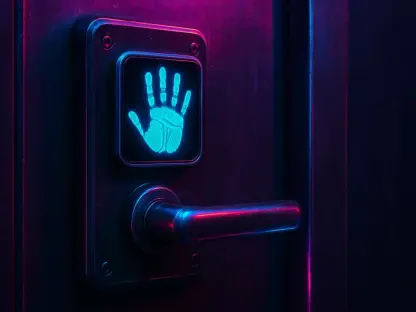
A common misconception is that Touch ID is easily fooled by high-resolution photos or lifted prints, but the sub-epidermal scanning technology makes such attacks extremely difficult in practice. Furthermore, Touch ID offers a unique advantage in specific biological scenarios, such as distinguishing between identical twins where facial recognition might struggle. Expert opinions often highlighted the intentionality of a finger press as a superior method for authorizing payments, as it prevented accidental triggers that can sometimes occur with always-on facial scanning. As development progressed, the emergence of multi-modal biometrics pointed toward a future where both technologies might eventually combine. For that period, Touch ID remained an impenetrable and highly effective tool. Its ability to facilitate profile switching on shared machines ensured that privacy was maintained even in multi-user environments. Future considerations involved the integration of more sensors, yet the foundational fingerprint technology provided the necessary reliability that professionals required. Managers and security researchers identified that maintaining hardware-level separation was the most effective way to prevent large-scale data breaches. Final assessments indicated that while Face ID represented the peak of probability-based security, Touch ID functioned as the most practical choice for the laptop form factor. Information regarding these updates suggested that users who prioritized tactile confirmation found the system to be an essential part of their daily digital hygiene.