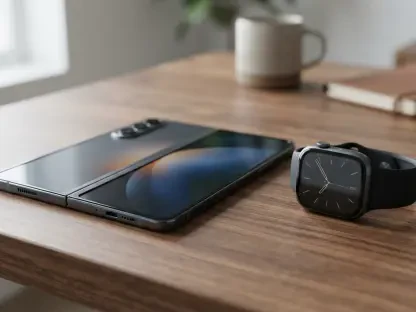

Early adopters of the iPhone Duo are discovering that revolutionary hardware designs can frequently lead to a loss of access to essential mobile financial services. The device, which officially debuted on October 23, represents Apple’s first major foray into the foldable market, yet its arrival has been marred by critical compatibility issues with high-security applications. Specifically, the KB Kookmin Bank mobile app has emerged as a primary point of failure, leaving thousands of customers unable to authenticate digital certificates or perform basic transfers. This friction underscores a growing disconnect between hardware manufacturers pushing the boundaries of aesthetics and the financial institutions that prioritize stable, verified security protocols above all else. While the foldable form factor offers a larger canvas for multitasking, the underlying shift in camera placement and internal sensor processing has created a barrier for users who rely on biometric verification for their daily livelihoods and financial transactions.
Hardware Innovation Meets Software Stalemate
Biometric Synchronization and Recognition Hurdles
Users interacting with the KB Star Banking app on their new devices have reported a persistent and frustrating error during the facial recognition phase. Despite having a clear and unobstructed face, the system frequently triggers a prompt asking the user to remove a mask, effectively locking them out of the authentication necessary for securing mobile certificates. This specific glitch has forced a significant number of professionals and casual users alike to seek unconventional workarounds, such as physically rotating the device or holding it in an inverted orientation to align the sensors correctly. For those unable to bypass the digital wall, the only remaining option has been a return to traditional banking methods, requiring physical visits to branch locations to obtain manual authorization codes. This regression into manual processes starkly contrasts with the high-tech promise of the iPhone Duo, highlighting how a minor discrepancy in sensor calibration can disrupt an entire financial ecosystem at the worst possible time.
The technical root of the problem appears to reside in the way the new foldable architecture handles image processing compared to its predecessors. KB Kookmin Bank is currently conducting a deep-dive investigation into whether the unique camera specifications or the logic governing internal image data differ significantly from standard iPhone models. It is theorized that the dual-screen configuration or the specialized lens housing required for a foldable chassis might be introducing artifacts or depth-perception variances that the bank’s security software misinterprets as a facial obstruction. While financial institutions are under immense pressure to update their mobile platforms, the process is far from instantaneous due to the rigorous testing required to maintain security integrity. The bank has indicated that a software patch is in development and expected within the week, but the incident has served as a reminder that hardware innovation is often at the mercy of third-party software utility and strict security validation.
Screen Optimization and Hardware Reliability
Beyond the immediate biometric failures, the iPhone Duo has also faced criticism for its lack of refined software optimization, which is particularly evident when running financial applications. Many users have observed large black margins on the internal foldable display, suggesting that developers have not yet adapted their interfaces to the device’s unconventional aspect ratio. This lack of full-screen support is more than just a visual annoyance; it can interfere with the placement of critical UI elements like submission buttons, making the mobile banking experience feel clunky and dated. The transition to a foldable medium requires a complete rethinking of how information is scaled and presented, yet it seems that the rapid release cycle has left software partners struggling to catch up. This optimization lag creates a fragmented user experience where the hardware feels years ahead of the software utility, leading to a sense of buyer’s remorse for those who expected a more seamless integration with essential tools.
In the final analysis, the challenges faced by the iPhone Duo served as a critical reminder of the fragile link between consumer innovation and financial security. While the foldable design represented a significant leap forward in mobile utility, the immediate loss of banking functionality demonstrated that hardware cannot exist in a vacuum. Industry experts reached a consensus that while new designs inevitably drive up development costs, the primary responsibility for maintaining a functional ecosystem remained a shared burden between tech giants and service providers. Moving forward, the most effective solution involved establishing more robust pre-launch testing protocols that prioritized high-security applications like mobile banking. Financial institutions that invested in proactive adaptation avoided the reputational damage associated with service outages, while manufacturers that prioritized software transparency found a smoother path to market. Ultimately, the successful adoption of future foldable technology depended on a commitment to ensuring that the most essential services remained accessible.