
Recent market data from the current fiscal year reveals a significant shift as consumers move away from the generic slate design that once dominated the consumer electronics landscape for over a decade. This transition suggests that the traditional model of a single, multipurpose device capable of serving every user from a casual reader to a high-end video editor is rapidly becoming obsolete. As manufacturers prioritize hardware optimization for specific niches, the industry is witnessing the birth of a more fragmented yet functional ecosystem. Instead of a middle-ground compromise, users are now demanding specialized performance that caters to distinct professional and recreational workflows. This evolution marks a departure from the “good enough” era, where a tablet was merely a larger version of a smartphone. Today, the focus has pivoted toward purpose-built engineering, where display technology, processing power, and input methods are meticulously tuned to satisfy the rigorous requirements of diverse sectors such as digital art and engineering.
Diversification of Hardware and Specialized Functionality
Tailored Engineering for High-Stakes Professional Environments
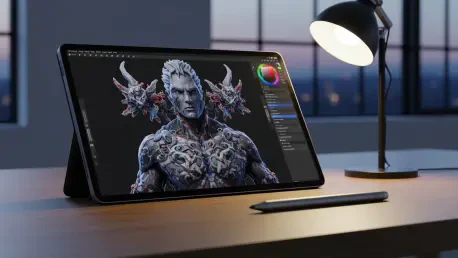
The rise of tandem OLED displays and ultra-low latency stylus integration has transformed the tablet from a media consumption device into a primary workstation for visual creators. High-end models now feature refresh rates and color accuracy metrics that rival professional-grade desktop monitors, allowing illustrators to work with a level of precision that was previously unattainable on a mobile platform. By integrating specialized chips like the M4 or the latest Snapdragon series, these devices handle complex layers and high-resolution rendering without the thermal throttling that plagued earlier generations. This hardware specificity ensures that the device is no longer a jack-of-all-trades but a master of creative execution. Furthermore, the inclusion of dedicated hardware accelerators for AI-assisted brush strokes and real-time lighting adjustments provides a competitive edge for artists working in fast-paced environments like game design.
In contrast to the delicate aesthetics of creative tools, the industrial sector has adopted ruggedized tablets that prioritize extreme durability and specialized connectivity. These devices have carved out a significant niche by offering certifications that allow them to function in extreme temperatures, high humidity, and dusty construction sites. Built-in barcode scanners, RFID readers, and hot-swappable batteries are now standard requirements for logistics and manufacturing deployments. By focusing on these utilitarian needs, manufacturers ensure that the device remains a reliable tool rather than a fragile liability. The shift toward modular expansion ports allows companies to customize hardware for specific field tasks, such as thermal imaging for electrical inspections or high-precision GPS for land surveying. This divergence from the standard consumer form factor highlights a broader industry trend where the physical properties of the device are as important as the software it runs.
Software Optimization and the Strategic Shift in Mobile Architecture
The convergence of mobile and desktop operating systems has fundamentally changed how users interact with tablet hardware in a professional capacity. Rather than forcing a mobile-first interface onto every user, developers are creating adaptive environments that transform based on the peripherals connected to the device. For instance, when a keyboard and trackpad are attached, the interface shifts to a windowed multitasking system that mimics a traditional laptop experience. This flexibility allows the hardware to serve multiple roles without sacrificing the efficiency of either mode. High-performance virtualization also enables these tablets to run full desktop applications, such as advanced CAD software or complex IDEs, which were previously restricted to stationary workstations. This architectural shift is supported by unified memory structures that allow for rapid data exchange between the CPU and GPU, ensuring that resource-heavy tasks remain fluid and responsive throughout the workday.
The transition from a monolithic tablet market to a diverse ecosystem of specialized tools provided a clear roadmap for hardware procurement strategies throughout the current decade. Decision-makers learned that prioritizing specific use cases over general utility resulted in higher productivity and lower long-term costs. It became evident that the “one-size-fits-all” philosophy failed to address the nuanced demands of the modern workforce. Companies that successfully integrated task-specific tablets into their operations saw immediate improvements in field data accuracy and creative output. Moving forward, the focus must remain on auditing internal workflows to identify where specialized hardware can eliminate existing bottlenecks. Stakeholders should evaluate upcoming hardware cycles based on their ability to integrate with existing software stacks and their capacity for modular upgrades. This proactive approach ensured that technology investments remained relevant in a landscape where general-purpose devices no longer sufficed.