
The mobile gaming landscape has shifted dramatically from casual puzzle-solving to complex competitive experiences that demand precision beyond what a standard glass screen can provide. While modern smartphones possess the immense processing power necessary to run console-quality titles, the tactile disconnect between a flat display and high-stakes gameplay often hinders the overall user experience. This widening gap has paved the way for sophisticated hardware innovations designed to bridge the distance between portable convenience and dedicated gaming performance. The emergence of the Scuf Nomad marks a significant milestone in this evolution, offering iPhone users a level of control and ergonomics previously reserved for professional-grade console controllers. By prioritizing the physical interaction between the player and the device, this accessory transforms the smartphone into a genuine gaming platform capable of handling intense shooters and intricate RPGs without the frustrations of ghost touches or cramped hands.
Hardware Engineering: The Mechanics of High-Performance Mobile Play
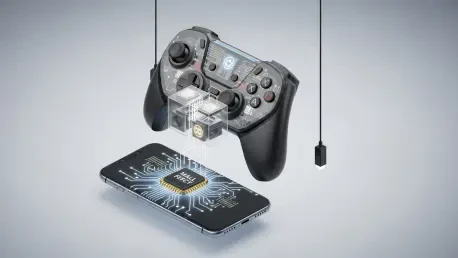
At the core of this hardware implementation is the integration of full-sized thumbsticks, which offer a range of motion and tension that miniature alternatives simply cannot replicate. Unlike the low-profile sticks found on many mobile peripherals, these components provide the resistance and travel distance required for fine-tuned aiming and precise movement in competitive environments. Furthermore, the inclusion of Hall effect sensor technology represents a critical advancement in durability and accuracy by using magnetic fields rather than mechanical friction to register inputs. This design choice effectively eliminates the risk of stick drift, a common failure point in traditional controllers that can render a device useless over time. By incorporating high-fidelity sensors and full-scale components, the hardware ensures that mobile players are no longer at a disadvantage when competing against those on dedicated consoles. This commitment to professional-grade components serves as a foundation for a more sustainable and reliable mobile gaming ecosystem in 2026.
Ergonomics play an equally vital role in the effectiveness of mobile gaming peripherals, as the thin profile of modern smartphones often leads to hand fatigue during extended sessions. The device addresses this by utilizing a contoured grip design that mimics the feel of a standard console controller, providing ample surface area for the palms to rest comfortably. This structural integrity is complemented by the inclusion of programmable back paddles, allowing players to map essential functions to the rear of the device. Such a configuration enables the execution of complex maneuvers without requiring the thumbs to leave the analog sticks, a necessity for high-level play in modern titles. The physical buttons are tactfully placed to ensure that users of varying hand sizes can maintain a natural grip while accessing all inputs. This thoughtful approach to physical geometry ensures that the transition from a living room setup to a mobile environment is as seamless as possible, maintaining high performance across different scenarios.
Strategic Ecosystem Integration: Software and Future Considerations
The evolution of mobile controllers successfully demonstrated that high-performance gaming was no longer tethered to a television or a desktop monitor. Industry leaders recognized that professional-grade inputs were the final piece of the puzzle for mobile platforms, leading to a surge in specialized hardware that prioritized the user’s tactile experience. For those looking to optimize their portable setups, the most effective strategy involved investing in hardware that utilized Hall effect sensors and offered comprehensive software customization without hidden costs. Developers responded to these advancements by creating more complex control schemes, knowing that the hardware could finally support them reliably. Prospective buyers examined their specific gameplay needs, prioritizing ergonomic comfort and input longevity over mere portability. As the market matured, the focus shifted toward creating a unified experience where the device in a pocket functioned as a legitimate extension of a primary gaming rig. This era proved that mobile gaming reached its peak when hardware limitations were finally addressed through deliberate engineering.