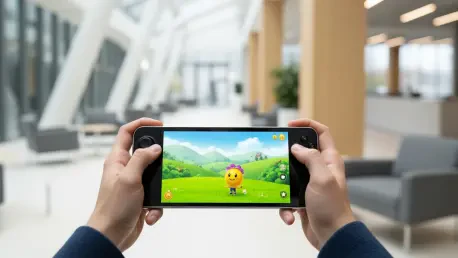

The recent global surge in downloads for Nintendo’s latest mobile offering demonstrates a profound shift in how audiences of all ages interact with established digital icons on portable devices. While many modern applications prioritize complex mechanics and high-fidelity graphics, the release of Hello Yoshi under the My Mario brand takes a decidedly different path by focusing on the fundamentals of tactile engagement. This free-to-play interactive title arrived on the Nintendo Switch eShop and mobile platforms with a clear mission to re-establish a connection with the youngest demographic of gamers, a group that has occasionally been overlooked in favor of more competitive or narrative-heavy experiences. By utilizing simple touch-screen gestures to interact with the iconic green dinosaur, the software provides an immediate sense of feedback that transcends language barriers and previous gaming literacy. This deliberate design philosophy caters to the need for accessible, wholesome content in an increasingly fragmented digital marketplace.
Global Reception: Beyond the Japanese Market
The transition of this interactive title from its initial domestic success in Japan to its widespread acclaim in the Western market highlights a universal appetite for low-stress digital companionship. Users on the iOS platform have responded with an exceptional level of enthusiasm, maintaining a perfect five-star rating, while Android participants have followed closely with a score of four point seven out of five. Such metrics are rare for free-to-play entries, yet they reflect a dual-layer appeal that satisfies both children and their parents. Beyond the primary target of younger users, many adults have found themselves drawn to the nostalgic charm and the soothing, rhythmic nature of the gameplay, which serves as an effective tool for decompression. This cross-generational interest suggests that Nintendo’s strength lies in its ability to leverage character recognition to create a shared family experience. The success is rooted in the platform’s ability to turn a simple interaction into a meaningful moment of connection.
The initial launch period established a solid foundation for Nintendo’s multi-platform strategy, though the long-term trajectory for content expansion remained a topic of intense discussion within the gaming community. Historically, the company often prioritized standalone experiences over continuous live-service updates for its smaller titles, suggesting that users should have appreciated the current version as a complete, albeit focused, digital product. Strategic observers noted that the real value of this release lay in its ability to act as a bridge between classic intellectual properties and modern mobile hardware. To maintain this momentum from 2026 to 2028, stakeholders encouraged a focus on seasonal thematic events rather than fundamental mechanic overhauls. This approach preserved the simplicity that made the game successful while providing enough variety to ensure the application remained a staple on family devices. The project proved that prioritizing emotional resonance over complex systems was a viable path for sustained brand loyalty.