
The pursuit of seamless immersion in extended reality has finally reached a critical milestone as hardware developers move beyond the bulky designs of previous generations to embrace ultra-compact display modules. For years, the primary obstacle to the widespread adoption of augmented and virtual reality was the compromise between visual fidelity and physical comfort. Users were often forced to choose between heavy headsets with high resolution or lightweight glasses with grainy, low-quality imagery. However, the introduction of next-generation high-density screens is rapidly closing this gap, allowing for a level of detail that mimics the natural acuity of the human eye. By focusing on pixel densities that exceed five thousand pixels per inch, engineers are effectively eliminating the “screen-door effect” that once plagued the industry. This shift is not merely an incremental upgrade; it represents a fundamental change in how digital content is integrated into daily life, setting the stage for a new era of unobtrusive and highly functional wearables.
Architectural Innovations in Near-Eye Displays
Micro LED: The Quest for Retina-Level Density
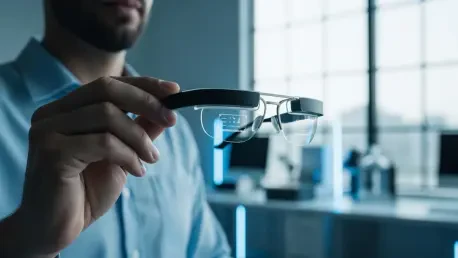
The cornerstone of this new technological wave is the 0.28-inch silicon-based Micro LED display, which represents a significant leap in miniaturization and clarity. Achieving a pixel density of 5131 PPI and a resolution of 1280×720, this panel is specifically engineered to fit into the compact frames of modern AI glasses. By utilizing monolithic integration on a silicon substrate, developers have created a display that is both incredibly sharp and remarkably small. This approach allows for a “retina-level” experience where individual pixels are indistinguishable to the naked eye, even when positioned just millimeters away. Such precision is vital for applications where text must be legible and digital overlays must appear as solid objects within the real world. The transition to silicon-based substrates also facilitates faster manufacturing processes and better integration with the underlying drive electronics, ensuring that the hardware remains responsive to the rapid data processing requirements of current AI systems and environmental sensors.
Beyond sheer resolution, the self-emissive properties of these Micro LED panels offer distinct advantages in terms of brightness and power efficiency. Because each pixel generates its own light, the displays can achieve high contrast ratios without the need for a bulky backlight, which is a critical factor for maintaining a slim device profile. This efficiency is particularly important for portable AR glasses that must last through a full day of use on a single charge while competing with the ambient light of outdoor environments. The ability to produce vibrant colors and deep blacks while consuming minimal energy allows designers to focus on ergonomics, reducing the overall weight of the glasses to a point where they are indistinguishable from traditional eyewear. As these components become more refined, the expectation is that they will serve as the standard interface for mobile computing, replacing the need for handheld screens in many professional and social contexts by providing a more natural and hands-free interaction model.
Real RGB G-OLED: Enhancing High-Fidelity Virtual Reality
While Micro LED technology dominates the lightweight AR sector, the 2.24-inch Real RGB G-OLED (Glass-based OLED) display is emerging as the preferred choice for high-fidelity virtual reality. Boasting 1700 PPI and a resolution of 2600×2784, this panel is designed for headsets that require a wider field of view and superior color reproduction. The use of a 120Hz refresh rate ensures that motion remains fluid and realistic, which is essential for preventing motion sickness during long periods of immersion. With a contrast ratio of 1M:1, this G-OLED solution provides the deep blacks and vivid highlights necessary for cinematic experiences and complex simulation environments. This dual-track strategy—utilizing Micro LED for portability and G-OLED for immersion—demonstrates a sophisticated understanding of the diverse needs within the XR market. It acknowledges that industrial designers and gamers require different hardware characteristics than those seeking a simple heads-up display for navigation or productivity tasks.
The technical complexity of these G-OLED panels also addresses the specific needs of professional and industrial users who demand high color accuracy. In fields such as medical imaging, architectural design, and remote mechanical repair, the ability to see minute details in true-to-life color can be a matter of safety and precision. The G-OLED architecture facilitates this by maintaining consistent performance across the entire surface of the screen, ensuring that there is no distortion or color shifting at the edges of the user’s vision. Furthermore, the high refresh rate and low latency of these panels are critical for real-time collaborative environments where multiple users must interact with the same digital assets without delay. By providing a stable and visually rich environment, these displays are helping to transition XR from a niche entertainment medium into a robust tool for global industry. This evolution suggests that the future of high-end headsets will rely heavily on the ability to balance these extreme performance metrics with cost-effective manufacturing.
Diversification Across the Extended Reality Spectrum
Specialized Panels: From LCD to Cockpit Integration
The broader strategy for display technology includes a variety of specialized solutions that cater to mid-range devices and specific industrial niches. For instance, the 2.48-inch LCD XR display, featuring 2200 PPI, offers a high-resolution alternative for manufacturers who require a balance between performance and production costs. Despite the rise of OLED and Micro LED, LCD remains a vital component of the ecosystem due to its mature supply chain and reliability. This particular display demonstrates that even traditional architectures can be pushed to extreme densities to meet the demands of modern XR hardware. By offering a high-density LCD option, developers can provide affordable entry points into the VR market without sacrificing the visual clarity that users now expect. This accessibility is key to growing the user base and encouraging developers to create a wider range of software and services that can run on a variety of different hardware configurations across the entire consumer electronics landscape.
In addition to consumer-facing hardware, specialized displays are being integrated into automotive and industrial cockpits to enhance situational awareness and safety. The 3.59-inch display specifically designed for cockpit-integrated XR experiences highlights the growing trend of utilizing digital overlays in high-stakes environments. In an automotive context, these screens can project vital navigation data and vehicle diagnostics directly into the driver’s line of sight, reducing the need to look away from the road. Similarly, in industrial settings, these panels can be used to monitor complex machinery or provide real-time instructions to operators. This technological diversification ensures that the benefits of high-density displays are not limited to personal entertainment but are integrated into the very infrastructure of modern transport and manufacturing. The focus here is on durability and legibility under varying light conditions, ensuring that the critical information remains visible and clear regardless of the external environment or the duration of the operational shift.
Strategic Framework: Overcoming Technical Barriers with APEX
The overarching philosophy guiding these developments, often referred to as the APEX framework, emphasizes the “X-Unlimited Imaginative Potential” of digital displays. This strategic push is focused on overcoming the three primary technical barriers: weight, battery life, and thermal management. High-performance screens typically generate significant heat and consume substantial power, which are difficult to manage in small, fanless wearables. However, by optimizing the pixel architecture and drive circuitry, engineers are managing to reduce the thermal footprint of these devices. This allows for longer usage times and more comfortable wear, which are the two most significant factors in long-term user retention. The goal is to create a seamless human-machine interface where the hardware disappears into the background, leaving only the digital content. This requires a holistic approach to design where the screen is not just a component but is deeply integrated with the processing units and the physical ergonomics of the device.
Looking toward the immediate future, the industry is positioning itself to supply a wide variety of sectors beyond just consumer electronics. The move toward technological diversification—spanning Micro LED, OLED, and LCD—allows for a flexible response to market demands. As more companies adopt XR for training, remote work, and digital twins, the demand for varied display specifications will only increase. By mastering these different architectures, display manufacturers are ensuring that they can provide the right tool for every specific use case, whether it is a lightweight pair of smart glasses for a field technician or a high-resolution headset for a specialized surgeon. The successful miniaturization of these high-performance screens marks the end of the experimental phase of XR and the beginning of its practical, everyday application. The industry’s ability to maintain visual integrity while reducing physical bulk has effectively unlocked the door for mass market adoption, ensuring that the digital and physical worlds will remain inextricably linked for the foreseeable future.
The transition toward high-density display modules provided a clear path for the next generation of wearable technology. Developers prioritized the elimination of visual artifacts and the reduction of power consumption to ensure that hardware remained both functional and comfortable for extended use. By diversifying display architectures across Micro LED, G-OLED, and high-PPI LCD, manufacturers addressed a broad spectrum of market needs from consumer entertainment to industrial safety. These advancements successfully overcame the long-standing technical hurdles that had previously limited the growth of the extended reality sector. Moving forward, stakeholders should focus on scaling the production of silicon-based Micro LED panels to further drive down costs and encourage integration into mainstream eyewear. Continued investment in thermal management and battery efficiency will remain essential to sustaining the momentum of these immersive platforms. The successful deployment of these screens effectively redefined the boundaries of human-machine interaction, making high-fidelity digital overlays a standard feature of the modern professional and personal landscape.