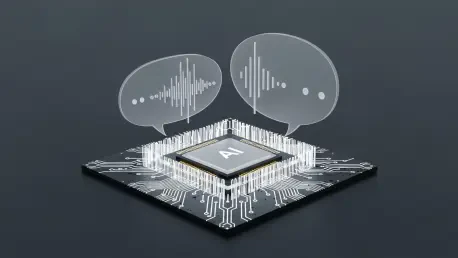

The relentless click-clack of mechanical keyboards, once the definitive soundtrack of the modern office, is gradually being replaced by a more rhythmic and human cadence: the sound of professionals speaking their thoughts directly into existence. This shift represents more than just a change in input methods; it signifies a fundamental restructuring of how human thought is translated into digital data. As AI-driven transcription tools move from niche accessibility aids to mainstream productivity powerhouses, the traditional keyboard-first paradigm is facing its most significant challenge since the invention of the mouse. This review examines the current state of voice-driven technology, exploring how Large Language Models have turned what was once a frustrating, error-prone exercise into a seamless, high-velocity interface for the modern digital workplace.
Evolution of Voice-Driven Interfaces in the Digital Workplace
The transition from manual keyboard input to vocal commands marks a departure from a physical constraint that has dominated computing for decades. For years, dictation software operated on simple pattern matching, often failing to handle accents, background noise, or the natural messiness of human speech. However, the current era of technology leverages sophisticated neural networks that do not just listen to sounds but actually understand the structure of language. This core principle—shifting from sound recognition to semantic understanding—allows modern tools to bridge the gap between a spoken thought and a polished written document. By integrating deep learning, these systems have transformed from passive recorders into active editors that anticipate the user’s next word and correct mistakes before they appear on the screen.
The integration of Large Language Models has redefined the value proposition of these tools by providing a layer of contextual intelligence. In the current landscape, dictation is no longer a “dumb” transcription of audio but a collaborative process between the speaker and an AI that understands grammar, tone, and professional standards. This evolution is particularly relevant as the digital workforce faces increasing “input fatigue.” In an environment where professionals must constantly generate strategy documents, code reviews, and complex emails, the cognitive cost of typing becomes a bottleneck. AI dictation offers a release valve, allowing for a more natural flow of ideas that matches the speed of human thought rather than the speed of finger movement.
This technological advancement is particularly crucial in high-intensity fields like software development and corporate strategy. As AI-driven coding assistants and automated planning tools become standard, the human operator’s role has shifted toward high-level prompting and oversight. Typing out long, detailed instructions for an AI agent is counterproductive when those same instructions can be spoken in a fraction of the time. Consequently, voice is emerging as the primary bridge between human intent and machine execution, positioning it as an essential component of the technological infrastructure rather than a mere peripheral feature.
Technical Paradigms and Core Features
Contextual Editing and LLM-Driven Transcription
Modern dictation tools have moved decisively beyond verbatim transcription, which often produced a confusing “word salad” of stammers and repetitions. Instead, these systems utilize the reasoning capabilities of LLMs to interpret user intent and deliver a refined output. When a user speaks, the AI acts as an invisible editor, filtering out disfluencies such as “um,” “like,” and “you know,” while simultaneously correcting tense shifts and agreement errors. This results in a transcript that reads like a professionally drafted document rather than a raw audio log. This feature is unique because it eliminates the secondary “editing phase” that was previously the biggest deterrent to using voice input for professional work.
The ability of these tools to automatically structure spoken thoughts into organized prose—complete with bullet points, paragraphs, and proper formatting—is a game-changer for productivity. By analyzing the prosody and pauses in a user’s voice, the software can infer when a new thought begins or when a list is being dictated. This contextual awareness ensures that the final text is not just accurate in terms of spelling, but also coherent in its logical flow. This implementation of AI moves the technology from a simple conversion utility to a sophisticated writing partner that understands the nuances of professional communication.
High-Velocity Output and Performance Metrics
Performance in the current generation of tools is measured not just by accuracy, but by the near-elimination of latency. Top-tier software now achieves latency levels often under 200 milliseconds, creating a real-time feedback loop that makes the user feel like the text is appearing as quickly as it is being thought. This speed is essential for maintaining a “flow state,” as even a one-second delay can break the speaker’s concentration. Compared to the average typing speed of 40 to 60 words per minute, vocal dictation easily reaches 150 to 180 words per minute, representing a massive increase in raw output potential for the average worker.
Furthermore, the inclusion of custom dictionaries and industry-specific “snippets” has significantly enhanced real-world accuracy. Users can now train their software to recognize specialized jargon, proprietary product names, or unique coding syntax that would typically trip up a general-purpose voice recognizer. This customization is what makes the technology viable for engineers, doctors, and legal professionals who rely on precise terminology. By allowing for these personalized vocabulary layers, modern AI dictation avoids the “generalization trap” where niche terms are frequently misidentified as common words, thereby ensuring that the efficiency gains are not lost to constant manual corrections.
The Competitive Landscape and Recent Innovations
The current market is characterized by a fierce competition between agile, high-growth startups and the established tech giants who are racing to integrate voice into their operating systems. Startups like Wispr and Superwhisper have gained significant traction by focusing on “cross-application” utility, meaning their tools function as a universal overlay that works in any text field—whether it is a specialized IDE for coding or a legacy CRM system. These newcomers often lead in innovation by being the first to implement the latest LLM breakthroughs, providing a level of responsiveness and feature density that general-purpose tools from Apple or Microsoft sometimes lack.
In contrast, the tech giants are leveraging their ecosystem dominance to move voice from a standalone app to a native OS-level feature. Microsoft’s integration of Copilot-driven dictation into the Office suite and Apple’s advancements with on-device Siri processing aim to make voice input a friction-less part of the desktop experience. However, the unique advantage of specialized startups lies in their ability to cater to “power users” who require deep customization and specific workflow integrations. The shift toward deep learning has lowered the barrier to entry for these smaller players, allowing them to compete on the quality of their models rather than just the size of their distribution networks.
The “LLM revolution” has essentially moved the goalposts for what constitutes a competitive product. It is no longer enough to have a 95% accuracy rate; the modern standard requires the tool to act as a primary interface that can handle complex commands and multi-step formatting. This has forced all players in the landscape to reconsider their UI/UX designs, moving away from the “dictation box” toward more invisible, system-wide integrations. As the technology matures, the distinction between “typing” and “speaking” is blurring, with many innovators focusing on a multimodal approach where voice and physical input work in tandem to maximize user efficiency.
Real-World Applications and Sector Deployment
In the practical sphere, technical engineering teams are among the most enthusiastic adopters of AI dictation, utilizing voice to interact with AI assistants during complex development tasks. The concept of “vibe-coding”—where a developer speaks high-level logic and architectural intent to an AI that then generates the corresponding code—has become a tangible reality. This allows engineers to maintain focus on the “what” and “why” of their work, leaving the “how” of syntax and formatting to the voice-driven AI. This deployment has transformed the developer experience from a series of keystrokes into a strategic conversation with the machine.
Internal communication within platforms like Slack or Teams has also been revolutionized by high-speed dictation. Instead of spending several minutes typing out a nuanced update or feedback, employees can record and transcribe their thoughts in seconds, maintaining the professional tone required for corporate environments. This use case is particularly effective for managers and executives who deal with high volumes of communication but have limited time for manual entry. By moving voice-to-text from an experimental utility to a necessary piece of infrastructure, organizations are seeing a reduction in the “communication lag” that often slows down project timelines.
Beyond general office work, voice-to-text is finding a foothold in rapid task management and field services. Professionals who are often on the move or whose hands are occupied—such as warehouse managers or on-site technicians—use these tools to update databases and manage inventories without needing to stop and sit at a desk. These real-world applications demonstrate that the technology has moved past the stage of simple novelty. It is now a critical tool for any industry where information needs to be captured quickly and accurately in environments that do not always accommodate a traditional keyboard and mouse setup.
Barriers to Universal Adoption and Implementation Challenges
Despite the technical triumphs, social etiquette remains a significant barrier to the universal adoption of voice dictation in shared workspaces. In the traditional open-plan office, a dozens of people speaking at their screens simultaneously would create an intolerable level of noise and distraction. This challenge has created a natural synergy between AI dictation and the remote work movement, where employees have the privacy to talk aloud without social friction. For the technology to truly penetrate the physical office, breakthroughs in directional microphones or silent speech recognition—where sensors pick up muscle movements without the need for audible sound—may be required.
Accuracy risks and regulatory hurdles also present significant challenges in high-stakes sectors like finance, law, or healthcare. While an AI can polish a casual email with great success, a misinterpretation of a single digit in a financial report or a specific drug dosage in a medical record could have catastrophic consequences. This necessitates a robust verification layer where the user can quickly scan and approve the AI’s output. The trade-off between the speed of voice and the absolute precision of typing remains a point of contention for many organizations, leading to a slower adoption rate in industries where the margin for error is non-existent.
Data governance and privacy are perhaps the most critical issues facing enterprise deployment. Organizations must navigate the distinction between “on-device” processing, where audio never leaves the machine, and “cloud-based” processing, which offers more power but introduces potential security risks. For many high-security firms, the idea of streaming continuous audio to a third-party server for transcription is a non-starter. This has led to a demand for local-first AI models that can provide LLM-level transcription quality without compromising data integrity. Balancing these technical requirements with the need for high-performance AI reasoning is the current “frontier” for developers in the dictation space.
Future Outlook: The Hybrid Interface Model
The trajectory of this technology suggests a move toward a hybrid interface model where voice supplements rather than replaces the keyboard. Just as the mouse did not eliminate the keyboard but rather added a new dimension of navigation, voice input is becoming the specialized tool for long-form creation and rapid communication. The future of the digital workplace will likely involve a fluid movement between inputs: a user might speak the bulk of a report, use the keyboard for precise edits, and use gestures or gaze-tracking for navigation. This multimodal approach allows each input method to play to its inherent strengths.
Breakthroughs in human-computer interaction will likely accelerate as accuracy thresholds continue to climb toward 99% and beyond. As latency drops to the point of being imperceptible, the psychological barrier to using voice will vanish, making it feel as natural as talking to a colleague. We are also likely to see the normalization of voice input at the OS level, where the operating system itself is designed to be “voice-first.” This will have a profound impact on accessibility, finally providing an even playing field for workers with physical disabilities or repetitive strain injuries, for whom the keyboard has long been a source of pain or limitation.
The long-term impact on the “written voice” will be a shift toward more conversational and authentic professional communication. As people dictate more of their work, the rigid and often robotic tone of traditional business writing may give way to a more natural, human style. This does not mean a loss of professionalism, but rather a gain in clarity and personality. The integration of AI as a contextual filter ensures that this transition remains polished, effectively allowing humans to communicate at the speed of speech while maintaining the precision of the written word.
Summary of Findings and Final Assessment
The evaluation of the current AI dictation landscape revealed that the technology reached a definitive tipping point where its utility outweighed its previous limitations. The analysis showed that the 300% increase in output potential was not merely a theoretical statistic but a practical reality for those who integrated these tools into their daily workflows. The shift from verbatim transcription to contextual polishing proved to be the specific innovation that allowed voice input to graduate from a niche accessibility tool to a standard professional utility. Researchers and early adopters found that the reduction in cognitive load provided by voice interaction allowed for greater focus on high-level strategy and creative problem-solving.
The findings also indicated that the successful implementation of these tools depended heavily on the environment and the specific needs of the sector. While remote workers adopted the technology with ease, those in open-office settings faced ongoing social and practical hurdles. Nevertheless, the development of localized, on-device processing addressed many of the initial data governance concerns, paving the way for wider enterprise acceptance. The competitive pressure between startups and tech giants ensured a rapid pace of innovation, resulting in features like custom snippets and ultra-low latency that were previously thought impossible.
In conclusion, the assessment confirmed that AI dictation has moved firmly into the mass-market integration phase. Actionable next steps for organizations included piloting these tools within specialized departments—such as engineering or legal—to establish best practices before a broader rollout. Future considerations should focus on the continued development of silent or low-volume dictation methods to overcome social barriers in the office. Ultimately, the transformation of the “written voice” into a standard professional tool was achieved not by trying to mimic the keyboard, but by leveraging the unique speed and nuance of human speech to create a more efficient and human-centric digital era.