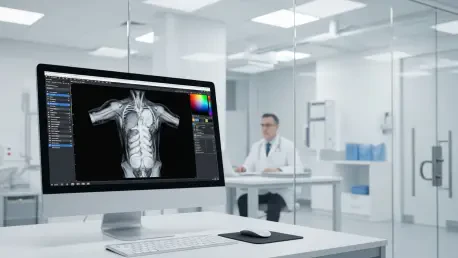

The landscape of clinical diagnostics is undergoing a seismic shift as high-performance consumer hardware begins to replace prohibitively expensive medical-grade workstations in modern hospitals. This transformation is driven by Apple’s strategic pivot toward the high-end medical imaging market, a move solidified by the recent FDA clearance of the Medical Imaging Calibration feature for the Studio Display XDR. Coupled with the release of the M5-generation Mac hardware, including the efficient MacBook Neo, the tech giant is moving beyond its traditional strongholds in creative sectors to challenge the entrenched, high-cost medical workstation industry. This shift is not merely about aesthetic hardware; it represents a systematic attempt to disrupt a global market valued at forty-two billion dollars. By integrating specialized hardware with proprietary silicon and advanced artificial intelligence, Apple is positioning itself as a primary provider for mission-critical infrastructure in a field that once relied exclusively on niche vendors.
Market Reorientation and Economic Accessibility
Disruption of Conventional Pricing Models
The traditional landscape of radiology and diagnostic imaging has long been gate-kept by specialized equipment manufacturers charging astronomical prices for high-resolution displays. While a Studio Display XDR priced at nearly three thousand dollars might appear expensive to a typical consumer, it represents a small fraction of the cost of legacy radiology workstations, which frequently exceed fifteen thousand dollars per unit. This pricing disparity is a cornerstone of Apple’s democratization strategy, allowing medical facilities to modernize their diagnostic suites at roughly twenty percent of the historical cost. By offering clinical-grade calibration on hardware that is also accessible to smaller private practices, the company is lowering the financial barrier to high-performance medical computing. This economic shift enables healthcare providers to allocate resources toward patient care rather than sinking excessive capital into single-use hardware that lacks the broader versatility found in the modern Mac ecosystem.
Versatile Infrastructure for Healthcare Providers
Beyond the initial purchase price, the operational resilience of the macOS ecosystem provides a significant reduction in the total cost of ownership for large-scale medical institutions. Hospitals are increasingly finding that the multi-purpose nature of Mac hardware allows for a more streamlined IT infrastructure where a single machine can handle demanding imaging tasks as well as routine administrative work. This versatility eliminates the need for maintaining separate, specialized systems for different departments, thereby reducing the complexity of technical support and maintenance contracts. Furthermore, the longevity of Apple’s custom silicon ensures that these investments remain viable for years, even as medical software becomes more resource-intensive. The transition to a unified tech stack simplifies the workflow for physicians who can now move seamlessly from patient records to high-resolution diagnostic scans on the same familiar interface. This practical migration is driven by a genuine need for better performance without the typical overhead of industrial-grade equipment.
Advanced Computing and On-Device Intelligence
Power of the M5 Silicon Architecture
At the heart of this medical revolution is the M5 processor family, which provides the immense computational power required to process massive datasets generated by modern MRI and CT scans. The integration of the MLX machine learning framework allows for sophisticated diagnostic analysis to be performed locally on the device, rather than relying on external cloud-based servers. This local processing capability is a critical differentiator, as it eliminates the data latency issues that often hinder real-time diagnosis in fast-paced clinical environments. For instance, identifying early-stage prostate cancer through complex MRI imaging requires significant throughput that the M5 Max chips handle with remarkable efficiency. By keeping the processing on-site, healthcare providers can ensure that high-resolution images are rendered and analyzed instantly, facilitating faster decision-making for surgical interventions. This shift toward edge computing in healthcare represents a significant departure from the cloud-dependency that has characterized many recent advancements in medical technology.
Security Protocols and Operational Stability
In the highly regulated healthcare sector, data confidentiality and system reliability are not just preferences but absolute requirements for any technology provider. Apple’s long-standing commitment to hardware-level security and its ability to run complex diagnostic tools on-device provides an inherent solution for HIPAA compliance and the protection of sensitive patient data. Because these systems do not need to transmit high-resolution scans to the cloud for analysis, the surface area for potential data breaches is significantly minimized. Furthermore, the stability of the macOS environment is being positioned as a life-saving feature, offering a secure alternative to operating systems that have historically been vulnerable to global software failures or system-wide crashes. The reliability of this platform ensures that critical medical imaging services remain operational during times of technical crisis, providing a level of resilience that is essential for mission-critical care. This focus on privacy and stability creates a robust framework for doctors who require dependable tools in the operating room.
Future Perspectives and Integrated Clinical Workflows
Validation through Clinical Partnerships
The transition into the clinical workflow is being supported by a growing body of academic and research-based validation that confirms the efficacy of Apple’s hardware in professional settings. Organizations like the Department of Radiology and Imaging Sciences at Emory University have produced white papers demonstrating that Mac-based workflows can meet or even exceed the performance of traditional workstations. This formal validation acts as the “seal of approval” necessary for large-scale hospital systems to justify switching their primary imaging infrastructure. Once the hardware is installed, it leverages professional software suites such as Visage Imaging 7 and OsiriX MD to provide a comprehensive diagnostic environment. The marriage of state-of-the-art display technology with powerful internal components has created a platform that researchers at the Institute of Cancer Research have found to be revolutionary for AI-augmented imaging. This growing consensus among industry experts indicates that the platform is no longer a secondary option but a primary tool for modern medicine.
Spatial Computing and Surgical Planning
The integration of spatial computing via visionOS offered a glimpse into a future where surgical planning and intraoperative guidance were performed in a three-dimensional environment. Collaborations with medical device companies like Stryker and Storz successfully expanded the ecosystem into the operating room, where surgeons utilized immersive displays to enhance precision during complex procedures. As AI-supported diagnosis became the standard of care, the unified stack of Apple hardware and software provided a ready-made platform for the next generation of medical applications. Hospitals that proactively adopted these integrated solutions gained a competitive advantage by improving diagnostic accuracy while simultaneously reducing technical overhead. Decision-makers within the healthcare sector focused on transitioning toward these versatile systems to ensure their facilities remained at the forefront of medical technology. This strategic evolution ultimately demonstrated that the intersection of consumer-grade accessibility and professional-grade performance was the most effective path forward for modern clinical workflows.