
The landscape of American dining is undergoing a radical shift as traditional point-of-sale terminals, often anchored to heavy counters by tangles of wires, are finally giving way to sleek mobile solutions that mirror the smartphones found in every diner’s pocket. For years, restaurant owners struggled with the high costs and logistical headaches of maintaining proprietary hardware that aged poorly and required specialized technician visits for every minor update or repair. However, the emergence of the partnership between KwickPOS and Samsung Electronics America signals a departure from these legacy constraints by introducing a software-driven architecture known as SoftPOS. This collaboration leverages standard Galaxy mobile devices to handle complex payment processing, effectively turning a common consumer product into a high-performance commercial tool. By removing the physical barriers between the server and the guest, this initiative addresses the growing demand for frictionless transactions that occur exactly where the customer is seated, whether that be in a quiet booth or at a bustling outdoor patio.
Modernizing the Hospitality Infrastructure: Beyond Static Terminals
Operational Agility: Enhancing Tableside Service and Staff Proficiency
The integration of Samsung Galaxy devices into the daily workflow of a restaurant provides an immediate advantage in terms of staff training and technological adoption. Because a significant portion of the hospitality workforce consists of younger individuals who are already proficient with Android interfaces, the learning curve for the KwickPOS system is remarkably shallow compared to the opaque systems of previous decades. Instead of wrestling with resistive touchscreens and confusing menu hierarchies, servers navigate a familiar environment that feels intuitive and responsive. This familiarity reduces the likelihood of order entry errors and allows waitstaff to focus more on guest interaction rather than troubleshooting a finicky machine. Furthermore, the lightweight nature of these handheld units means that employees are no longer tethered to a central station, allowing for a more dynamic presence on the floor. This mobility ensures that servers are always available to capture a spontaneous drink order or process a quick dessert request without leaving the side of the guest.
Beyond the internal benefits for employees, the implementation of “Tap-to-Pay” on Samsung devices directly translates to a faster and more satisfying experience for the modern diner. In a traditional setting, the payment phase of a meal often becomes a bottleneck where a customer must wait for the server to take their card, process it at a distant terminal, and return with a receipt for signing. By contrast, the SoftPOS solution enables the entire transaction to happen in seconds directly at the table or even in an outdoor seating area. This speed is critical for high-volume environments like lunch bistros or stadiums where every second of delay impacts the total daily throughput and potential revenue. When guests see their payment processed instantly via a secure tap of their card or digital wallet, it creates a sense of efficiency and modernity that reflects well on the establishment’s brand. Consequently, restaurants can increase their table turnover rates during peak hours without making the customers feel rushed, thereby maximizing the earning potential of the floor space.
Operational Resilience: Securing Transactions and Managing Business Intelligence
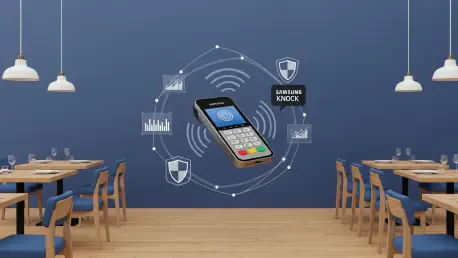
Security remains a paramount concern for any merchant handling financial data, and the KwickPOS partnership addresses this by utilizing the robust Samsung Knox platform for comprehensive protection. Unlike basic tablet solutions that may lack specialized security layers, Knox provides a defense-grade environment that protects sensitive information from the moment the device is powered on. This hardware-level security is essential in an era where cyber threats are increasingly sophisticated and targeted at small to medium businesses that may lack dedicated IT departments. By implementing a “chip-to-cloud” defense strategy, the system ensures that every transaction is encrypted and compliant with the latest industry standards, including PCI regulations. This high level of integrity prevents the unauthorized interception of credit card data and guards against malware that could compromise the entire restaurant network. Owners gain peace of mind knowing that their business is shielded by the same technology used by global financial institutions, allowing them to focus on culinary innovation.
The adoption of these mobile payment systems effectively transitioned many traditional eateries into data-driven enterprises that thrived in a competitive market. By consolidating various operational tasks like inventory management and loyalty programs into a single handheld interface, restaurant owners simplified their daily workflows and reduced the need for multiple expensive software subscriptions. Industry leaders noted that establishments prioritizing these mobile solutions saw marked improvements in customer retention and staff satisfaction. This evolution ensured that managers stayed informed about sales trends without being anchored to a back-office computer during busy shifts. The shift away from clunky, fixed terminals allowed for a more creative use of restaurant layouts, as floor space previously occupied by bulky registers was converted into additional seating or wait areas. Ultimately, the successful deployment of the KwickPOS and Samsung framework demonstrated that modernizing the payment process was a foundational asset for any growth strategy.