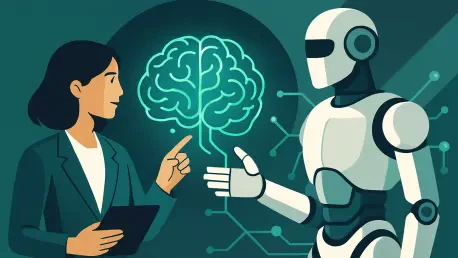

The modern enterprise is currently navigating a landscape where the sheer volume of digital signals often outpaces the human capacity to respond, creating a critical bottleneck in operational efficiency. ServiceNow has responded to this challenge by fundamentally shifting its business model, moving away from traditional workflow management to become what is now described as the “AI control tower” for the modern enterprise. This strategic pivot marks a significant departure from the fragmented, “sidecar” AI tools of the past toward a centralized, autonomous architecture designed to govern and orchestrate workflows across an entire organization. By integrating advanced generative AI directly into its core, the company aims to eliminate persistent data silos and create a unified environment where digital agents and human employees collaborate without friction. This reinvention is not merely a software update but a redefinition of how digital transformation is managed at scale. Instead of providing isolated tools for specific departments, the platform positions itself as the primary layer of intelligence that sits atop an existing infrastructure. This approach allows for a cohesive digital strategy, ensuring that every automated action is observed, managed, and aligned with broader business goals. The objective is to move beyond simple automation toward a state where the system understands intent and executes complex tasks with minimal oversight.
Building a Unified Architecture for Governance and Action
At the heart of this transition is the expanded AI Control Tower, which provides deep integration with major cloud providers including Microsoft Azure, Amazon Web Services, and Google Cloud Platform. This connectivity allows the platform to reach into critical enterprise applications such as SAP, Oracle, and Workday, ensuring that governance is not restricted to the ServiceNow environment but spans the entire multi-cloud landscape. A key innovation in this space is the management of “non-human identities,” which brings Internet of Things devices and AI agents under the same oversight umbrella for a truly comprehensive view of the business. By centralizing these identities, organizations can finally track the lineage of an automated decision back to its source, whether that source is a sensor on a factory floor or a script running in a cloud instance. This level of visibility is crucial for maintaining a secure and transparent digital ecosystem in an increasingly automated world.
To ensure these autonomous systems remain reliable, ServiceNow has introduced the Action Fabric, powered by an open architecture that can interact with any AI agent regardless of its origin. This foundation is reinforced by runtime observability tools and risk frameworks that align with international standards, such as the EU AI Act and NIST guidelines. These guardrails are essential for preventing the risks often associated with autonomous software, ensuring that every automated decision is both compliant and explainable to human supervisors. The integration of Traceloop technology specifically allows for the monitoring of agent behavior in real time, detecting anomalies before they escalate into systemic failures. By providing this rigorous oversight, the platform addresses the primary concern of contemporary IT leaders: the fear of “black box” AI making irreversible errors. The goal is to create a system that is not only powerful but also inherently trustworthy and auditable at every level.
Deploying Specialist Agents for an Autonomous Workforce
The platform is moving aggressively beyond general-purpose assistants to deploy a cohort of specialist AI agents focused on specific business functions. In the IT sector, these agents handle complex tasks like anomaly detection and incident triage, while in the CRM space, they manage sales qualifications and invoice disputes. This autonomous workforce is designed to take over high-volume, repetitive tasks that previously required human intervention, significantly reducing the administrative burden on employees. For instance, a specialist agent in Site Reliability Engineering can now autonomously manage postmortem documentation and incident remediation, tasks that once consumed hours of a developer’s day. This allows human workers to pivot away from mundane data entry and focus on creative problem-solving and strategic high-value interactions. The shift is not about replacing workers but about augmenting their capabilities with digital teammates that never sleep and maintain perfect consistency.
These digital teammates extend into HR, legal, and finance, where they navigate supplier management and compliance issues with precision and speed. In the realm of security, autonomous agents proactively identify vulnerabilities and assess third-party risks, moving organizations from a reactive to a defensive posture. By utilizing the Model Context Protocol, these agents can communicate across different software silos, fetching data from a procurement system to satisfy a legal requirement without human prompting. This horizontal integration is what differentiates the specialist agent from a standard bot; it possesses the contextual awareness to understand why a task is being performed, not just how to do it. As organizations deploy these agents across various departments, the cumulative effect is a significant reduction in operational friction. The result is an enterprise that moves at machine speed while maintaining the nuance and direction provided by its human leadership.
Humanizing AI Interactions Through Advanced Interfaces
To make these complex backend processes accessible to everyday users, ServiceNow introduced Otto, a sophisticated AI assistant that serves as the conversational front door for the enterprise. Otto sits atop the entire ecosystem, understanding user intent and routing requests to the appropriate specialist agent or human team without the user needing to navigate complex menus. Because Otto is governed by the AI Control Tower, every interaction remains within enterprise policy, providing a seamless and secure experience for employees navigating various corporate services. This interface represents a shift toward “intent-based” computing, where the technical details of a request are handled by the platform while the user only needs to specify the desired outcome. Whether an employee needs to order a new laptop or resolve a payroll discrepancy, Otto provides a single, intuitive point of contact that simplifies the fragmented landscape of modern corporate software.
While industry experts see this as a major milestone in democratizing AI, they also note that success depends heavily on the maturity of an organization’s data. If the underlying data graph is inaccurate or stale, even the most advanced agents will produce flawed results, leading to what researchers call data-quality-based hallucinations. Consequently, the strategy emphasizes a bundled approach that combines execution with strict governance, positioning the platform as the indispensable layer between complex enterprise data and the end-user. Organizations must prioritize data hygiene and provenance to ensure that their autonomous agents are reasoning based on “ground truth” rather than legacy errors. Moving forward, the focus for leadership should be on establishing robust data pipelines that feed these agents high-quality, real-time information. By treating data as the lifeblood of the autonomous workforce, businesses can unlock the full potential of agentic AI while minimizing the risks of automated misinformation.
Strategic Implementation: Moving Toward an Autonomous Future
The transition toward an agentic model requires a fundamental rethinking of how internal processes are designed and measured within the corporate structure. Organizations should begin by identifying high-frequency, low-complexity workflows that are currently bottlenecked by manual approvals or data siloes between departments. By deploying specialist agents in these specific areas first, companies can demonstrate immediate ROI while allowing their teams to become accustomed to collaborating with digital entities. It is essential to treat these agents as digital employees, providing them with the same level of onboarding, performance monitoring, and clear jurisdictional boundaries that a human hire would receive. This structured approach ensures that the introduction of AI does not lead to chaotic automation but rather to a refined and more agile version of existing operations. Success in this phase is measured not just by speed, but by the accuracy and reliability of the autonomous outputs.
Long-term success with an agentic architecture will ultimately depend on an organization’s ability to foster a culture of transparency and continuous oversight. Leaders were encouraged to view the AI Control Tower not just as a technical tool but as a central piece of corporate governance that bridges the gap between IT and the executive suite. As the platform continues to evolve through 2027 and 2028, the integration of non-human identities and IoT devices will become even more critical for managing the physical and digital aspects of a business in tandem. Enterprises that invest in these governance frameworks now will be better positioned to scale their AI initiatives without facing the security or compliance hurdles that have slowed down earlier adopters. By focusing on explainability and data integrity, businesses can ensure that their pivot to agentic AI results in a resilient, future-ready organization that balances the efficiency of machines with the strategic oversight of people.