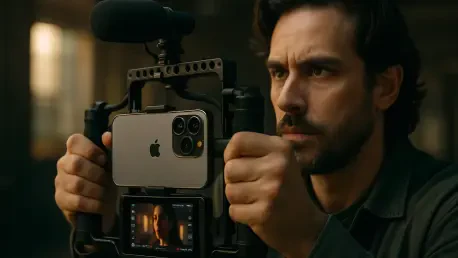

The cinematic landscape is currently witnessing a profound shift where the boundaries between dedicated cinema cameras and mobile devices are becoming increasingly blurred. Manual control over the physical aperture at the 24mm focal length represents a significant milestone in the evolution of mobile optical engineering. This advancement, integrated into the latest update of the Apple Final Cut Camera app, effectively bridges the gap between the spontaneous nature of smartphone photography and the rigorous requirements of high-end production. By providing a dedicated software environment that prioritizes technical precision over automated convenience, the app allows filmmakers to bypass the simplified constraints of the standard iOS interface. This strategic pivot transforms the iPhone 18 Pro into a primary instrument for professional capture, where every adjustment is intentional. As the industry moves further into 2026, the convergence of hardware and software is redefining mobile videography standards for professional creators.
Unlocking Advanced Optical Potential: Beyond Software Masking
The integration of specialized support for the iPhone 18 Pro’s variable aperture lens at the 24mm and 48mm focal lengths signifies a departure from the heavy reliance on computational photography. In previous iterations, achieving depth of field often required software-based background masking, which frequently resulted in unnatural edges and artifacts. Now, the Final Cut Camera app provides a direct interface for physical hardware breakthroughs, allowing videographers to achieve a natural bokeh and precise exposure through actual optical physics. This physical adjustment capability is essential for managing light intake in challenging environments, giving creators the power to manipulate the sensor’s exposure without compromising the integrity of the motion blur or the sharpness of the subject. By offering manual depth-of-field management, Apple has successfully moved the mobile platform into a realm where the laws of optics dictate the aesthetic, rather than just post-processing algorithms.
Furthermore, the app reinforces its professional utility by adopting a nomenclature that is immediately recognizable to experienced cinematographers around the world. Instead of using simplified consumer-friendly terminology like brightness or generic shutter speeds, the interface utilizes industry-standard shutter angles, Kelvin white balance scales, and focal lengths expressed in millimeters. This Pro-first philosophy is not merely a cosmetic change; it serves a functional purpose by allowing filmmakers to maintain the 180-degree shutter rule consistently across various frame rates. Maintaining this standard is critical for producing the natural motion blur that audiences associate with traditional cinema cameras. By aligning the software interface with established film industry protocols, the learning curve for professional operators is significantly reduced, making the iPhone a more viable candidate for professional sets where consistency and technical accuracy are non-negotiable requirements for delivery.
Precision Diagnostics: Implementing Mathematical Monitoring Tools
To ensure that every frame captured meets the stringent standards of a high-end production, the latest update incorporates sophisticated diagnostic overlays that provide real-time feedback on image quality. Features such as focus peaking and zebra indicators have been integrated to allow users to identify exactly which elements are in sharp focus and which areas of the frame are at risk of clipping or overexposure. These visual aids are indispensable for professionals working in dynamic or high-contrast lighting conditions, where the mobile screen alone may not provide an accurate representation of the final recorded data. By relying on these objective indicators, cinematographers can make informed decisions on the fly, ensuring that the captured footage remains within the usable dynamic range. This level of technical transparency is what separates a professional tool from a consumer app, allowing for a predictable and repeatable workflow that is essential for commercial projects.
Beyond basic visual overlays, the app now features advanced mathematical monitoring tools including waveforms, histograms, and false color mapping. These tools provide a geometric and chromatic representation of light distribution across the sensor, enabling precise exposure levels that are impossible to achieve with a simple brightness slider. False color mapping, in particular, is a game-changer for mobile filmmakers, as it allows for the perfect reproduction of skin tones by mapping specific luminance values to distinct, easy-to-read colors. By centralizing all of these critical diagnostics on a single, customizable screen, the app removes the friction and menu-diving often associated with mobile videography. This streamlined access allows the operator to focus entirely on the creative composition and the technical accuracy of the shot. The ability to monitor signal levels with such mathematical precision ensures that the final output is ready for professional color grading and high-end post-production.
Production Ecosystems: Streamlining Collaborative Workflows
One of the most impactful breakthroughs introduced in this update was the ability to record in Apple Log or Log2 color profiles using HEVC compression. Previously, capturing the high dynamic range and extensive color latitude of Log footage was often tethered to the massive file sizes of the ProRes format, which could quickly exhaust the internal storage of a mobile device during long production days. This new flexibility allowed creators to maintain the grading latitude required for high-end post-production while utilizing much more manageable file sizes. By optimizing the encoding process, the app made professional-grade workflows more sustainable for independent filmmakers and small production teams who did not have the infrastructure to manage terabytes of raw data on the go. This efficiency did not come at the cost of quality, as the HEVC implementation was finely tuned to preserve the nuances of the Log profile, ensuring that the highlights and shadows remained recoverable.
The final solidification of the iPhone’s role as a primary capture device occurred through the inclusion of clean HDMI output for external recorders and comprehensive support for external storage solutions. This development allowed the device to be integrated into existing high-end camera rigs, where it functioned as either a primary or secondary angle without sacrificing signal integrity. By providing a free, high-performance software tool that integrated perfectly with professional hardware, Apple successfully streamlined the filmmaking pipeline from capture to delivery. The transition to variable aperture support and advanced diagnostic tools ensured that creators had the physical and technical control over light that was once the exclusive domain of cinema systems. Moving forward, filmmakers focused on adopting these integrated workflows to maximize production value while maintaining a lean operational footprint. This strategic shift not only lowered the barrier to entry for high-quality cinema but also established a new benchmark.